
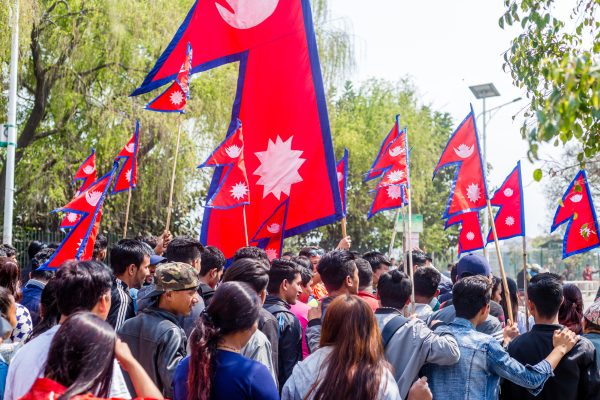
Nepal Election Debate and Regional Security Developments Ahead of March 5 Polls
Gyanendra demands postponing of March 5 elections in Nepal
He has said elections alone cannot resolve the complex political challenges of Nepal. Holding polls without prior consensus among all key stakeholders may not lead to meaningful stability.
“In a democracy, state mechanisms and processes should operate according to constitutional norms. Elections should proceed only after national consensus to avoid post-election conflict or unrest,” he has said. It may be recalled that in recent months, Nepal had witnessed widespread agitations demanding the restoration of monarchy in the Himalayan country.
Meanwhile, the Indo-Nepal border will remain completely closed for 72 hours from March 2 until the midnight of March 5 for the general election in Nepal. Chief District Officer of Jhapa Shivram Golal said on Friday that the border would be sealed for 72 hours prior to March 5 polling day to ensure a peaceful environment during voting.
He also said that only emergency movements, including medical emergencies, would be allowed during such standard periods from March 2 to early on March 5. An emergency meeting between officials of India and Nepal was held on Thursday evening when it was decided that all the border points would be closed for 72 hours before polling for the House of Representatives. The meeting focused on strengthening security arrangements for the Nepal elections.
The meeting also decided to prevent illegal cross-border movement, smuggling of arms, drugs and counterfeit currency across the border. The meeting was attended by senior officials from India’s SSB and Nepal’s Armed Police Force to enhance joint patrolling. The APF, the Nepal Police and the Nepal Army have already started monitoring the unauthorised entry of third-country nationals and potential criminal infiltration.
Officials from the two nations also pledged to continue close coordination to curb illegal cross-border activities along the Indo-Nepal border at Panitanki and Kakarvitta. Officials asked travellers and common people to make their trip before March 2 so that they did not have to face any kind of problems.
Photo: Security personnel patrolling at the Indo-Nepal border gate at Kakarvitta ahead of the March 5 elections.
Poland Withdraws from Anti-Personnel Mine Treaty Citing Security Concerns
Poland withdraws from treaty banning anti-personnel mines, will use them to defend against Russia
PTI, Feb 20, 2026, Warsaw: Poland will use anti-personnel as well as anti-tank land mines to defend its eastern border against the growing threat from Russia, Poland's deputy defence minister told The Associated Press on Friday as the country officially left an international convention banning the use of the controversial weapons.
The 1997 Anti-Personnel Mine Ban Treaty, also known as the Ottawa Convention, prohibits signatories from keeping or using anti-personnel mines, which can last for years and are known for having caused large-scale suffering among civilians in former conflict zones in countries including Cambodia, Angola and Bosnia and Herzegovina. Poland, which ratified the document in 2012 and completed the destruction of its domestic anti-personnel mine stockpile in 2016, withdrew from the treaty on Friday and says it plans to renew manufacturing weapons.
“These mines are one of the most important elements of the defence structure we are constructing on the eastern flank of NATO, in Poland, on the border with Russia in the north and with Belarus in the east,” Pawel Zalewski, Poland's deputy defence minister, said. He said Poland needed to defend itself against Russia, a country which “has very aggressive intentions vis a vis its neighbours” and which itself never committed to the international landmine ban treaty.
Since Russia's full-scale invasion of Ukraine, nearby countries have been reassessing their participation in the international treaty. Last year, Warsaw joined Finland, the three Baltic states of Estonia, Latvia and Lithuania, and Ukraine to announce it would leave the treaty. Russia is one of nearly three dozen countries that have never acceded to the Ottawa Treaty, alongside the United States.
Zalewski said that Poland will begin domestic production of both anti-personnel and anti-tank landmines, adding that the government would cooperate with Polish producers. He said Poland was aiming for self-sufficiency.
Land mines are an explosive weapon that's placed on or just under the ground and blows up when a person or a vehicle crosses over them. Anti-tank mines, which are designed not to be triggered by a person's weight, are not forbidden by the Ottawa Convention.
Speaking on Thursday after attending a demonstration of Bluszcz, an unmanned vehicle designed to distribute anti-tank mines produced by Polish company Belma SA and a military research institute, Polish Prime Minister Donald Tusk said Poland would “soon” have the ability to mine its eastern borders within 48 hours in case of a threat. Given the length of the country's eastern borders, he said, “a lot” of land mines will be needed. Poland says it will only use mines in case of realistic threat of Russian 'aggression'.
Lady Diana had played a leading role in the worldwide campaign against anti-personnel mines, helping in the adoption of the Ottawa Treaty.
0 Response to "Nepal Election Debate and Regional Security Developments Ahead of March 5 Polls"
Post a Comment
Disclaimer Note:
The views expressed in the articles published here are solely those of the author and do not necessarily reflect the official policy, position, or perspective of Kalimpong News or KalimNews. Kalimpong News and KalimNews disclaim all liability for the published or posted articles, news, and information and assume no responsibility for the accuracy or validity of the content.
Kalimpong News is a non-profit online news platform managed by KalimNews and operated under the Kalimpong Press Club.
Comment Policy:
We encourage respectful and constructive discussions. Please ensure decency while commenting and register with your email ID to participate.
Note: only a member of this blog may post a comment.