
.png "Nepal President Dissolved House; Sushila Karki Sworn in as Interim Prime Minister, Making History as the Country’s First Woman Premier")
Nepal President Dissolved House; Sushila Karki Sworn in as Interim Prime Minister, Making History as the Country’s First Woman Premier
.png)
The President’s decision to dissolve Parliament immediately before Karki’s appointment resolved a protracted deadlock over whether the dissolution should precede or follow her swearing-in. Presidential Press Adviser Kiran Pokhrel confirmed that Karki’s newly appointed Cabinet convened its first meeting directly after the oath. At this meeting, the Cabinet formally recommended the dissolution of the legislature, which President Paudel swiftly endorsed, bringing the dissolution into effect nationwide from midnight.
This decisive move directly fulfilled the core demand of Nepal’s Gen Z protest movement, which has spearheaded large-scale demonstrations against corruption and political stagnation. Earlier in the day, a faction of the movement known as We Nepali Group declared that it was prepared to accept Karki’s leadership, provided Parliament was dissolved. “Dissolving Parliament remains one of our core demands. Only after that can we move ahead with other processes,” Sudan Gurung, the group’s president, told reporters.
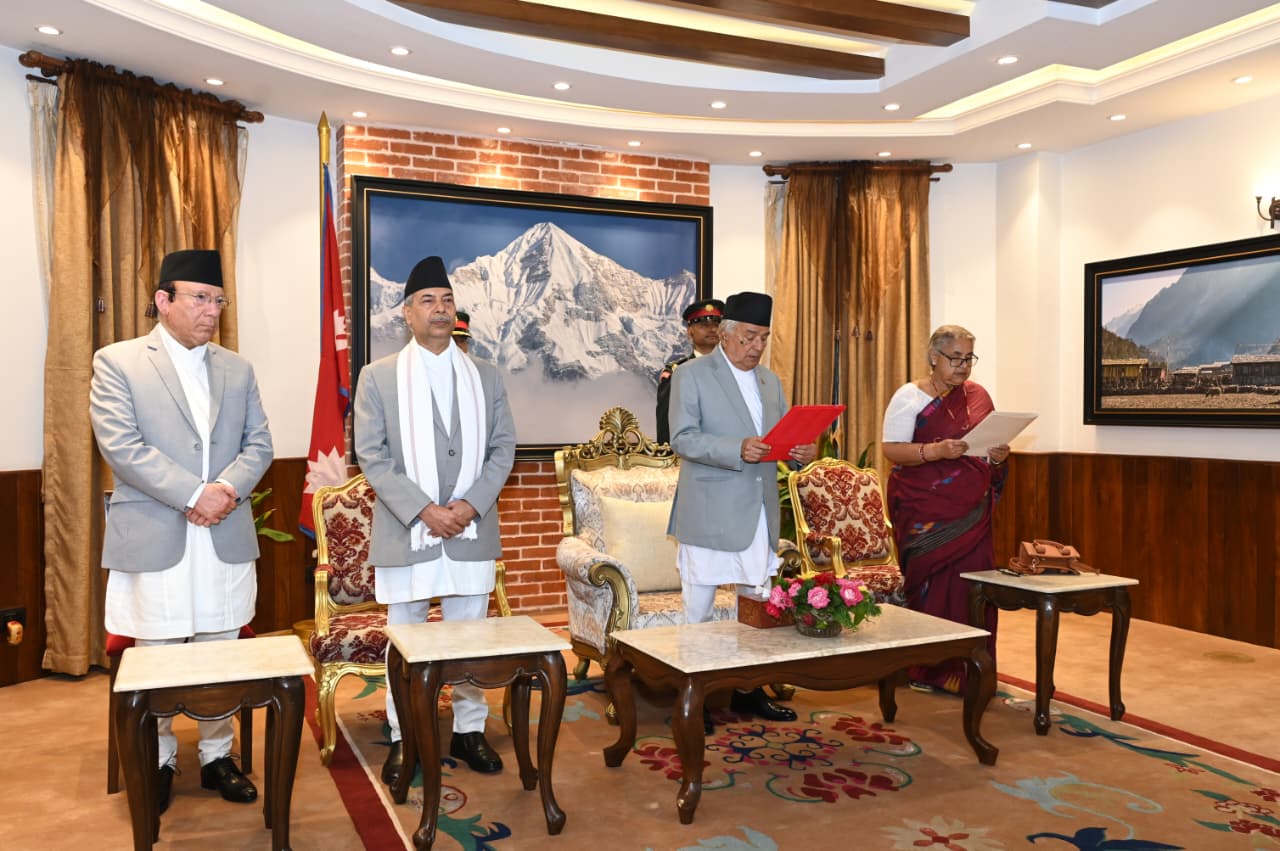
The day-long negotiations at Shital Niwas — involving President Paudel, the Army Chief, leaders of the Gen Z movement, and political representatives — culminated in a compromise: Karki would assume office as interim Prime Minister, and her Cabinet’s immediate task would be to recommend dissolution of Parliament. The agreement ended a tense standoff, as Gen Z representatives had insisted that the legislature must be dissolved prior to Karki’s appointment, while the President had initially urged that the dissolution follow her installation in office.
A veteran jurist with a reputation for her uncompromising stance on corruption, Karki now heads a caretaker government entrusted with three primary responsibilities: organizing fresh elections, investigating the tragic incidents during the September 8–9 protests that left 51 people dead nationwide, and launching sweeping anti-corruption and asset probes into political leaders.
Nepal Police confirmed the death toll from the protests, reporting that among the 51 deceased were three police officers, one Indian national, and 47 Nepali citizens. Of these, 36 bodies were kept at Tribhuvan University Teaching Hospital in Maharajgunj, where post-mortems began on Friday.
President Paudel justified his actions under Article 61 of the Constitution, emphasizing that his decisions were intended to safeguard Nepal’s unity and uphold constitutional order at a time of unprecedented turmoil.
Karki’s swearing-in is also a landmark moment in Nepal’s history, as she has now achieved two historic firsts: she was the country’s first woman to serve as Chief Justice, and she has now become Nepal’s first woman Prime Minister. Her appointment has added a new political distinction to her hometown, Biratnagar, which has long been regarded as the cradle of Nepal’s political leadership.
Traditionally known as the nation’s industrial capital, Biratnagar has played a central role in Nepal’s democratic movements and is widely recognized as a birthplace of political leadership. With Karki’s appointment, Biratnagar has now earned an even broader identity as the “city that produces prime ministers.” Previously, the city gave Nepal five prime ministers:
-
B. P. Koirala – Nepal’s first elected Prime Minister
-
Matrika Prasad Koirala – Influential Congress leader
-
Girija Prasad Koirala – Served four times after the restoration of multi-party democracy
-
Manmohan Adhikari – Nepal’s first Communist Prime Minister
-
Nagendra Rijal – Prime Minister during the Panchayat era
With Sushila Karki now added to this list as the sixth, and the nation’s first female head of government, Biratnagar’s role in shaping the political direction of Nepal has only deepened.
Karki’s assumption of office marks not only a historic step for women’s leadership in the country but also a critical moment of transition for Nepal, as the nation braces for fresh elections and a renewed push to confront corruption and restore political stability.
0 Response to " Nepal President Dissolved House; Sushila Karki Sworn in as Interim Prime Minister, Making History as the Country’s First Woman Premier"
Post a Comment
Disclaimer Note:
The views expressed in the articles published here are solely those of the author and do not necessarily reflect the official policy, position, or perspective of Kalimpong News or KalimNews. Kalimpong News and KalimNews disclaim all liability for the published or posted articles, news, and information and assume no responsibility for the accuracy or validity of the content.
Kalimpong News is a non-profit online news platform managed by KalimNews and operated under the Kalimpong Press Club.
Comment Policy:
We encourage respectful and constructive discussions. Please ensure decency while commenting and register with your email ID to participate.
Note: only a member of this blog may post a comment.