
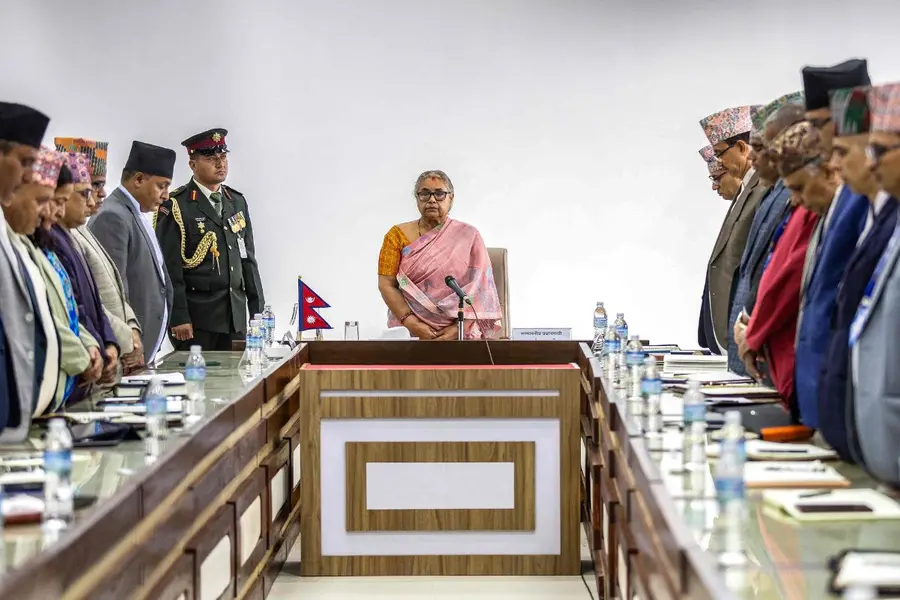
Nepal Government Announces 19 Decisions from Recent Cabinet Meeting
Agencies, September 29, 2025, Kathmandu ; The Cabinet of Nepal has announced a series of decisions following its recent meeting, which took place on Thursday. Minister of Communication and Information Technology, Jagdish Kharel, shared the details of the decisions in a press conference on Friday.
Key Cabinet Decisions:
-
Departmental Reallocations:The Revenue Investigation Department and the Asset Recovery Investigation Department, previously under the Prime Minister's Office, have now been transferred to the Ministry of Finance, while the National Investigation Department will now come under the Ministry of Home Affairs.
-
Appointments :The Cabinet appointed Janak Raj Sharma as the Chair of the vacant Board of Directors at the Nepal Insurance Authority, until further notice.
-
Government Division Amendments:The Cabinet approved the Nepal Government Organizational Division (Third Amendment) Regulation, 2082.
-
Global Review and Reporting:Nepal’s national report for the Fourth Cycle of the Universal Periodic Review (UPR) was approved for submission to the UN Human Rights Council via the Ministry of Foreign Affairs.
-
International Engagements:The Cabinet has granted approval for the Minister of Finance and the Secretary of Finance to attend the World Bank Group and International Monetary Fund (IMF) Annual Meetings in the United States.
-
Foreign Aid Acceptance:The Cabinet accepted grants for various projects, including a $2.2 million USD aid for the restoration of forest and mountain ecosystems in Far Western Nepal from the Global Environmental Facility (GEF) through the UN Food and Agriculture Organization (FAO). Additionally, a $870,000 USD grant for climate-resilient paddy farming in Mid Nepal and a $419,000 USD grant for a local climate adaptation program were also accepted.
-
Public Institutions and Salaries:The term of the task force chaired by former Secretary Ram Prasad Gaudel, which is looking into the remuneration and benefits for officials and employees of public institutions, boards, and committees, has been extended by 45 days.
Regulatory Measures: The Cabinet decided that property transactions exceeding NPR 3 crore in six metropolitan cities and 11 sub-metropolitan cities will require a license. This will be officially published in the Nepal Gazette.
Military Promotions: The Cabinet decided to promote two Major Generals to the position of Lieutenant General, nine Brigadiers to the rank of Major General, and three Colonels to the rank of Brigadier General.
Organizational Surveys: The government granted pre-approval for conducting an organizational and management survey of the Ministry of Federal Affairs and its sub-departments.
Promotions in Government Services: The government promoted two senior officials: Chiranjeevi Chattuth was promoted to the post of Secretary in the Nepal Engineering Service, and Krishna Prasad Kapri was promoted to Secretary in the Nepal Administration Service.
Resignations Accepted: The Cabinet accepted the resignations of two Deputy Secretaries, Dr. Ram Govind Aryal and Ramesh Sharma Paudel, both senior officers in the Nepal Information Technology Service. Minister Jagdish Kharel stated that these decisions are part of the government’s ongoing efforts to streamline operations, improve governance, and address long-standing issues in the public sector.
Formation of New Political Committees: The Cabinet has also formed various new committees to strengthen governance and improve policy coordination. These include: Political Committee, Economic and Infrastructure Committee, Administrative Committee, Foreign Affairs Committee and Social Committee These committees will focus on different key sectors of governance and are expected to bring more structure and efficiency to the decision-making process.
Insurance Sector Governance: In an effort to ensure the continued stability and governance in Nepal's insurance sector, the Cabinet appointed Janak Raj Sharma as the interim Chair of the Nepal Insurance Authority's Board of Directors. The position has been vacant for some time, and the appointment aims to ensure smooth operations in the sector.
Special Focus on Public Infrastructure: The Cabinet’s decisions also highlight a special focus on infrastructure development, particularly in the wake of the recent unrest in the country. The government is now focused on ensuring that public infrastructure—damaged during protests or other social movements—will be rebuilt with a careful eye on minimizing unnecessary expenditures. As a part of its fiscal discipline efforts, the Cabinet has also authorized funds to cover these rebuilding projects with an emphasis on sustainable development.
Strategic Vision for Government Operations: With a series of key decisions, including the restructuring of various governmental departments, the Cabinet aims to improve administrative efficiency. The shift of several departments, including the Revenue Investigation and Asset Recovery Investigation units, to their new respective ministries, will reduce bureaucratic bottlenecks and allow for more specialized attention in addressing key issues such as corruption and financial crimes.
Fiscal and Economic Priorities: In line with its broader fiscal policy, the government has laid down clear priorities. It will focus on curbing unnecessary expenses and channeling resources towards essential developmental projects. Several international partnerships for environmental conservation and agricultural development are expected to bolster Nepal's resilience against climate change and economic challenges.
Environmental and Climate Programs: The approval of aid for environmental restoration projects, particularly in the forest and mountain ecosystems of Far Western Nepal, signals the government's commitment to addressing climate change and supporting sustainable agricultural practices. These programs will aim to enhance food security and promote eco-friendly agricultural techniques in rural areas, helping farmers adapt to changing weather patterns.
Implementation of Paperless Governance: In line with the government's vision for digitalization, the Cabinet has also approved new digital tools for governance. The move towards paperless operations aims to improve the speed and efficiency of government functions, reduce corruption, and ensure accountability in public administration. This includes implementing new systems for document management, attendance tracking, and approvals, which will be digitized using electronic signatures.
Looking Ahead:
The Cabinet's decisions are being seen as a proactive step towards improving governance, promoting transparency, and addressing critical national issues ranging from economic development to environmental sustainability. As Nepal navigates its political and social challenges, these measures represent an effort by the interim government to lay the groundwork for long-term stability and growth.
The government has promised that it will continue to prioritize the nation’s development goals, working closely with international partners to enhance Nepal's global standing, economic resilience, and environmental sustainability. The upcoming months are crucial as Nepal heads towards its next set of national elections, with promises of reform and governance at the forefront of the political agenda.
With these decisive actions, the government has set its course for an era of greater accountability, stronger public institutions, and a more transparent political system. The implementation of these 19 decisions marks a significant step in the government's ongoing efforts to rebuild Nepal's economic and political infrastructure.
0 Response to "Nepal Government Announces 19 Decisions from Recent Cabinet Meeting"
Post a Comment
Disclaimer Note:
The views expressed in the articles published here are solely those of the author and do not necessarily reflect the official policy, position, or perspective of Kalimpong News or KalimNews. Kalimpong News and KalimNews disclaim all liability for the published or posted articles, news, and information and assume no responsibility for the accuracy or validity of the content.
Kalimpong News is a non-profit online news platform managed by KalimNews and operated under the Kalimpong Press Club.
Comment Policy:
We encourage respectful and constructive discussions. Please ensure decency while commenting and register with your email ID to participate.
Note: only a member of this blog may post a comment.