
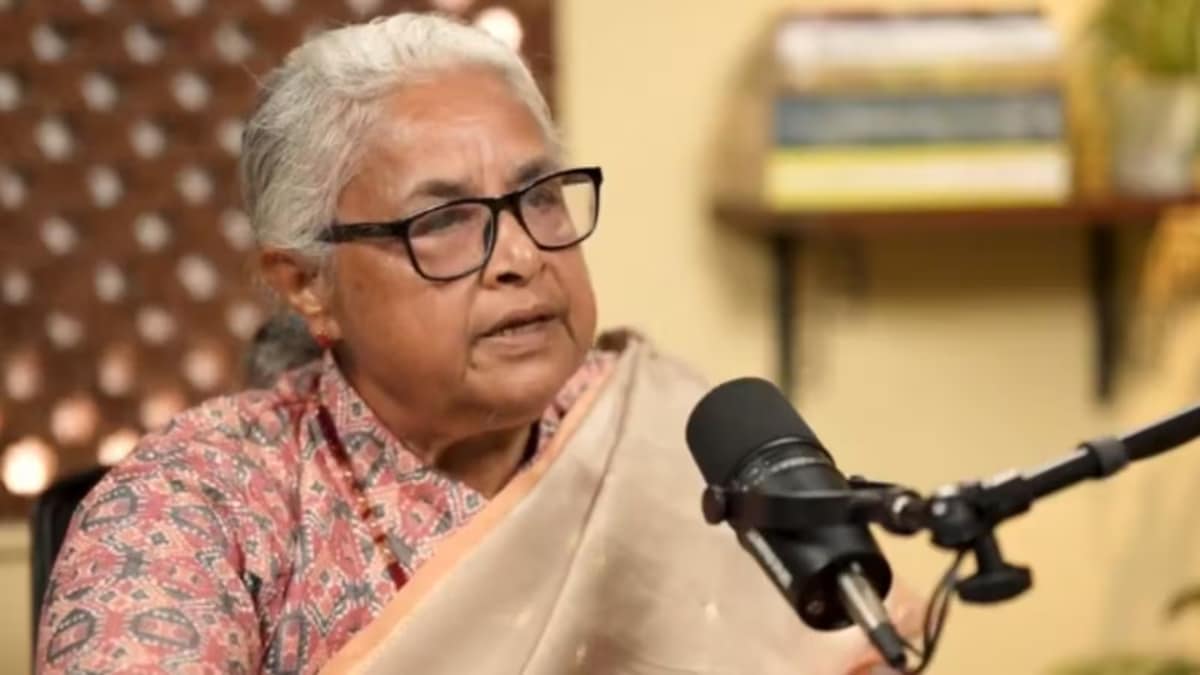
HISTORIC SHIFT IN NEPAL'S POLITICS: PRESIDENT SET TO APPOINT FORMER CJ SUSHILA KARKI AS INTERIM PRIME MINISTER TODAY
In an unprecedented political development amid youth-led nationwide protests, Nepal prepares to name its first female Prime Minister. With the appointment of Sushila Karki, Nepal stands at the cusp of a historic transformation — both in terms of democratic process and gender representation. As youth movements reshape the political narrative, all eyes are now on the interim government to deliver stability, accountability, and a path toward a new election.
This landmark development follows days of intense consultations and late-night deliberations led by the President, involving leaders of major political parties, constitutional experts, and military officials. The urgency of the situation was underscored by growing pressure from the youth-led Gen-Z movement, which has demanded the dissolution of Parliament and the establishment of an independent interim government. Throughout the day, there were rounds of talks between the President, the Army Chief, the Speaker, and the Gen Z representatives regarding dissolution of the parliament.
In a dramatic turn of events this evening, Nepal’s political leadership reached a breakthrough agreement to appoint former Chief Justice Sushila Karki as the head of an interim government, immediately following the dissolution of the House of Representatives. The decision came after a full day of tense negotiations among top leaders, culminating in what observers describe as one of the most decisive political shifts in recent years.
The push for Parliament’s dissolution—long demanded by Generation-Z protesters and backed by several political factions—gained unstoppable momentum on Friday. Sources from Shital Niwas, the official residence of the President, confirmed that President Ram Chandra Paudel, who had until recently stood firm on the condition that Sushila Karki could only be appointed after the House was dissolved, has now yielded under mounting public and political pressure.
According to those present during internal deliberations, President Paudel admitted he could no longer withstand the scale of discontent sweeping across the country. The turning point reportedly came after youth protesters warned they would encircle Shital Niwas if the President failed to act swiftly. Faced with the possibility of escalating demonstrations, the President informed senior leaders of his decision to proceed with both dissolving the House of Representatives and appointing Karki without further delay.
“The President said he was going to dissolve the House and prepare to swear in Sushila Karki immediately,” a senior source confirmed late Friday.
As of tonight, urgent preparations are underway inside Shital Niwas to formalize the process. Officials are drafting two critical documents: one declaring the dissolution of the House of Representatives, and the other officially appointing Sushila Karki as Prime Minister of the interim government.
This move marks a historic political moment for Nepal, as Karki is set to become the first former Chief Justice to lead a government in the nation’s history. The decision is expected to reshape the political landscape, at least in the immediate term, while addressing demands for a leadership reset driven by the country’s restless younger generation.
High-Level Consultations and Political Backing
On Thursday, President Poudel conducted a series of separate consultations with key political leaders and constitutional experts to secure consensus on the appointment. Those consulted included top leaders such as former Prime Ministers KP Sharma Oli, Pushpa Kamal Dahal "Prachanda," Madhav Kumar Nepal, and Nepali Congress President Sher Bahadur Deuba, who is currently undergoing medical treatment.
In a significant meeting with Army Chief General Ashok Raj Sigdel, President Poudel also met outgoing Prime Minister KP Sharma Oli. The President reportedly informed Oli about the plan to appoint Karki, emphasizing that the decision was being taken within constitutional bounds and after consulting all stakeholders. Oli is said to have responded: “If it’s within the constitutional process and you’ve consulted others, then that’s fine.”
Meanwhile, Congress President Deuba, in a phone conversation, expressed support for the decision, saying: “Do it according to the constitution. I have no objection.”
The President also met Congress Vice President Purna Bahadur Khadka and Maoist Centre Deputy General Secretary Barshaman Pun at Sheetal Niwas. He reportedly told all leaders, “There is intense pressure to appoint a Prime Minister today itself. I cannot hold off any longer.”
Input from Constitutional Experts and Legal Pathways
In a key round of discussions that began at 4 p.m. on Thursday, President Poudel consulted a group of prominent constitutional scholars, including Purnaman Shakya, Bhimarjun Acharya, Bipin Adhikari, Chandra Kanta Gyawali, Lalit Bahadur Basnet, and Surya Dhungel. The experts unanimously recommended that the President act within the framework of the constitution while also fulfilling his duty as its guardian and enforcer.
Referencing Article 61(4) of Nepal’s Constitution, which mandates the President to uphold and protect the Constitution, the experts suggested that the appointment of an interim Prime Minister could be justified under this clause in the current extraordinary circumstances. Given the political deadlock and security challenges, formal procedures such as calling a parliamentary session or introducing a constitutional amendment are reportedly unfeasible at this time.
One constitutional expert involved in the discussion clarified, “In such a crisis, the President, as the protector of the Constitution, has the authority to appoint a Prime Minister without explicitly stating under which Article it is done. We have advised the President to proceed with this interpretation.”
Gen-Z Movement and Public Pressure
The decision to appoint Sushila Karki comes amid surging demands from the Gen-Z movement, which has staged mass demonstrations across the country calling for sweeping political reform. Protesters have rejected traditional party politics and demanded an interim government led by an independent figure.
Karki, known for her integrity and independence during her tenure as Chief Justice, emerged as the preferred candidate of the Gen-Z coalition after internal discussions between youth representatives and military officials at a secure location earlier this week. Legal advisor and Gen-Z representative Advocate Om Prakash Aryal, who is also affiliated with Kathmandu Mayor Balen Shah, participated in consultations with the President, advocating for youth representation and nonpartisan leadership.
Karki reportedly responded positively to the proposal and later held discussions with both the President and Army Chief Sigdel. Sources confirm that she declined to meet with leaders from any political party, maintaining her stance of political neutrality.
Unresolved Questions and Constitutional Hurdles
Despite broad consensus on her leadership, legal complexities remain. Under the existing constitution, the Prime Minister must be a sitting Member of Parliament — a condition Karki currently does not fulfill.
Two possible constitutional routes were discussed:
-
Constitutional Amendment: Parliament could amend the constitution to allow a member of the National Assembly to be appointed Prime Minister. The President could then appoint Karki as a National Assembly member, following the resignation of an existing member, and have her elected as PM under Article 76(5). However, the security situation and parliamentary gridlock make this route impractical at the moment.
-
Election Route: Another option involves facilitating Karki’s election to Parliament through an open seat in Rupandehi, where by-elections are scheduled for November. Major parties would agree not to field candidates, ensuring her unopposed election. However, this process would require prior dissolution of Parliament.
Given these challenges, the President appears to be proceeding with a direct appointment under extraordinary powers as guardian of the Constitution.
Efforts to form an interim government under former Chief Justice Sushila Karki remain paralyzed by a sharp dispute over whether Parliament should be dissolved before her swearing-in. While Gen-Z protest leaders and Karki herself demand dissolution as a precondition, President Ram Chandra Paudel is seeking a solution within constitutional bounds, even as the Army has warned of emergency rule if the deadlock persists.
Sudan Gurung, leader of the Gen-Z movement and chair of Hami Nepal, reiterated on Friday that protesters would not compromise on their demand for dissolution. “We are firm in our position. Without dissolution, the same old leadership will return,” Gurung said. Speaking on social media, he added that he had already waited nine hours for President Paudel but had only been approached by advisors and legal representatives. “I told them clearly—I will only talk directly with the President, not with his secretaries or lawyers. Bring the President. I will not negotiate without my Gen-Z team present.”
Despite mounting pressure, President Paudel has delegated initial talks to his advisors, stating he intends to engage directly only alongside the Gen-Z team. According to sources at Shital Niwas, the president has proposed invoking Article 61(4) of the Constitution to appoint Sushila Karki as interim prime minister, who would then recommend a new cabinet and declare fresh elections. Paudel argues that once elections are announced, Parliament will automatically stand dissolved, resolving the procedural conflict. Before presenting this proposal, Paudel consulted with the Chief Justice, the Speaker, and the Chairman of the National Assembly, who reportedly assured him that the move would not face constitutional challenges.
However, the Army, the courts, and political parties have yet to endorse Paudel’s formula, while protesters remain firm that dissolution must occur first. Karki has echoed their stance, stating she will not assume the premiership until Parliament is dissolved. “The mandate of the protest movement is clear—dissolve Parliament, appoint a new prime minister, declare elections, and let the new government fulfill its duties,” she maintained.
Despite mounting pressure, President Paudel has delegated initial talks to his advisors, stating he intends to engage directly only alongside the Gen-Z team. According to sources at Shital Niwas, the president has proposed invoking Article 61(4) of the Constitution to appoint Sushila Karki as interim prime minister, who would then recommend a new cabinet and declare fresh elections. Paudel argues that once elections are announced, Parliament will automatically stand dissolved, resolving the procedural conflict. Before presenting this proposal, Paudel consulted with the Chief Justice, the Speaker, and the Chairman of the National Assembly, who reportedly assured him that the move would not face constitutional challenges.
However, the Army, the courts, and political parties have yet to endorse Paudel’s formula, while protesters remain firm that dissolution must occur first. Karki has echoed their stance, stating she will not assume the premiership until Parliament is dissolved. “The mandate of the protest movement is clear—dissolve Parliament, appoint a new prime minister, declare elections, and let the new government fulfill its duties,” she maintained.
Scope of the Interim Prime Minister’s Role
Constitutional experts have discussed the responsibilities of the interim Prime Minister. Karki's primary tasks would include:
-
Overseeing the dissolution of the current Parliament.
-
Recommending the date for general elections.
-
Conducting free and fair elections to form a stable government.
-
Initiating independent investigations into recent protests, including allegations of state repression, youth fatalities, and destruction of public property.
A source close to the deliberations confirmed, “The interim Prime Minister will have a clear but limited mandate: to facilitate elections and ensure accountability for the violence during the protests.”
Gen-Z leaders have expressed satisfaction with Karki’s likely appointment, calling it a "historic moment" and celebrating the prospect of Nepal appointing its first female Prime Minister.
Clarifying Rumors of Army Takeover
In response to circulating rumors, constitutional experts who visited Sheetal Niwas clarified that while the front section of the presidential residence was damaged during protests, the newer wing remains operational. The President is safe and remains fully in control. They also dismissed claims of a military takeover as entirely unfounded.
Final Discussions and Timeline
Final discussions between President Poudel, Army Chief Sigdel, and Sushila Karki continued past midnight at Sheetal Niwas. The appointment is expected to be formalized early Friday morning.
According to multiple credible sources, the oath of office will be administered shortly after the official announcement, marking a pivotal transition in Nepal's political history.
0 Response to " HISTORIC SHIFT IN NEPAL'S POLITICS: PRESIDENT SET TO APPOINT FORMER CJ SUSHILA KARKI AS INTERIM PRIME MINISTER TODAY"
Post a Comment
Disclaimer Note:
The views expressed in the articles published here are solely those of the author and do not necessarily reflect the official policy, position, or perspective of Kalimpong News or KalimNews. Kalimpong News and KalimNews disclaim all liability for the published or posted articles, news, and information and assume no responsibility for the accuracy or validity of the content.
Kalimpong News is a non-profit online news platform managed by KalimNews and operated under the Kalimpong Press Club.
Comment Policy:
We encourage respectful and constructive discussions. Please ensure decency while commenting and register with your email ID to participate.
Note: only a member of this blog may post a comment.