
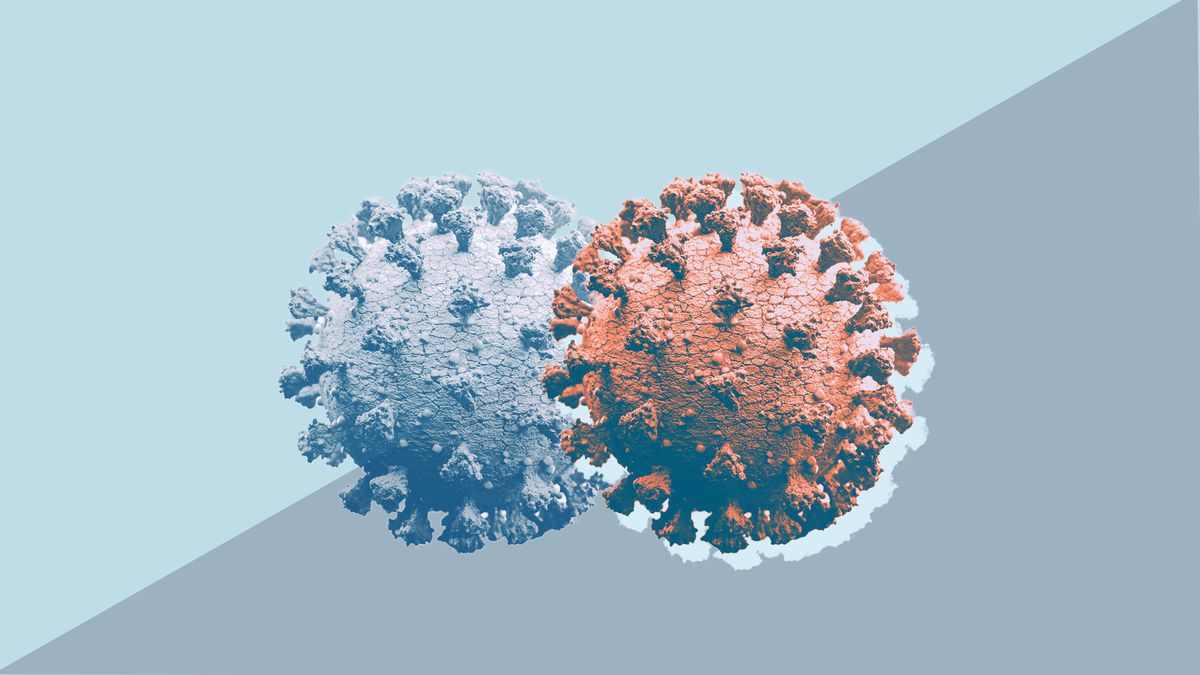
New coronavirus variants leave experts worried
6 Sept 2021
Comment
PARAG BISWAS, SNS, SILIGURI,. 5 SEPTEMBER 21: Mutations have been at the heart of fears around impending waves of Covid-19 in India as in the rest of the world since November last year.
A new variant detected in nine countries is causing concern among scientists in our country as it is believed to he non transmissible and resistant to vaccines than other variants of the coronavirus.
According to a pre-print non-peer reviewed study that emerged last week, the new variant that is assigned to the PANGO lineage and is called C.I.2, which was first detected in South Africa in May, has since then been found in China, Botswana, Mauritius, Portugal, Switzerland, New Zealand, Democratic Republic of the Congo and the United Kingdom.
There are four major variants of concern among scientists-Alpha, Beta, Gamma and Delta-and another four variants of interest-Eta, Iota, Kappa and Lambda-in global circulation. Alpha, Beta and Delta have had the most impact globally in terms of transmission and immune evasion. But experts in north Bengal as in other parts of India, who fear that the C.1.2 strain might reach our country soon, feel that it could result in immune escape here and thus pose a challenge for the nationwide vaccination drive if allowed to spread.
According to a senior professor of the Department of Biotechnology, University of North Bengal, Dr Ranadhir Chakraborty, the newly-discovered variant did not only seem to have an unusually high mutation rate, but also more mutations than other variants of concern. "The mutations that took place in the Alpha, Beta, Gamma, Delta, Eta, Iota, Kappa and Lambda variants so far were all confined to the spike protein of the cooronavirus. In 0.1.2, mutations have taken place both in the spike protein and other structural protein domains, namely ORF 3a, ORF 9h, Envelope (E) proteins, Membrane (M) proteins and N (Nucleocapsid). There are in all 40 to 59 mutations in the variant with in respect to the original Wuhan sequence. There are six mutations and three deletions in the spike protein and the rest of the changes are in the structural proteins," he said.
According to Dr Chakraborty, the new variant, which was discovered in South Africa's third wave of Covid-19 infections in May, was found to contain m any mutations that were found in variants of concern and three variants of interest, but due to three specific mutations in its spike protein, the vials could possibly become more transmissible and evade protection provided by vaccines. "Like several other variants of concern, 0.1.2 has accumulated a number of single amino-acid substitutions and deletions beyond what would be expected from the background SARS CoV-2 evolutionary rate. This suggests the likelihood that these mutations arose during a period of accelerated evolution in a single individual with prolonged viral infection through virus-host co-evolution. Normally, mutations take place during transmission of the virus from one host to the other. In C.1.2, the mutations have evolved through replications within the body of a patient suffering from prolonged infection. Three of these mutations - all in the spike proteins of the Virus are a matter of serious concern because they may make the C.1.2 strain resistant to antibodies and vaccines. The three mutations are CI 36F, Y449H and N679K. In C136F, which has occurred in the N- terminal domain, Cysteine has changed into Phenylalanine, while in Y449H, which has taken place in the receptor binding domain, Tyrosine has changed into Histidine. In N679K, which is seen adjacent to the furin cleavage site, Asparagine has changed into Lysine. Due to the mutations in the recepto binding domain and in the furin cleavage site the virus may be able to bind with theACE-2 receptors in our bodies faster and better and this may lead to a higher transmissibility," he said.
The senior microbiologist, however, dismissed the fear that C.1.2 might prove to be more transmissible than the Delta variant.
"The variant has evidently lost in competition to the Delta strain. The impact of the mutations in the new strain is most unlikely to give the virus a competitive advantage over the Delta variant. The National Institute for Communicable Diseases in South Africa, where the strain was first detected, said on Monday that despite the presence of 0.1.2 in their country, the Delta variant was still the most dominant strain of the coronavirus there. As of August 20, there were 80 cases of C.I.2 found and only3 percent of positive cases were found to he suffering from the new strain, while the Delta variant was found in over 89 percent of the cases. A lot of the project ions regarding the G 1.2 are still speculative and more experiences are st ill needed to properly judge the efficacy of the current Covid-19 vaccines against the new strain. We should, however, be cautious in India as travelers to and from South Africa may carry the strain to India and pose a new and additional challenge of at least some magnitude to the government, which is trying to vaccinate a vast section of the Indian population in double quick time and the health workers and health authorities in the country, who are still struggling to contain the spread of the Delta and other variants here," he cautioned.
0 Response to "New coronavirus variants leave experts worried"
Post a Comment
Disclaimer Note:
The views expressed in the articles published here are solely those of the author and do not necessarily reflect the official policy, position, or perspective of Kalimpong News or KalimNews. Kalimpong News and KalimNews disclaim all liability for the published or posted articles, news, and information and assume no responsibility for the accuracy or validity of the content.
Kalimpong News is a non-profit online news platform managed by KalimNews and operated under the Kalimpong Press Club.
Comment Policy:
We encourage respectful and constructive discussions. Please ensure decency while commenting and register with your email ID to participate.
Note: only a member of this blog may post a comment.