
Nepal-Tibet flash floods: Death toll rises to 362; nearly 1,500 missing as fresh flood threat looms
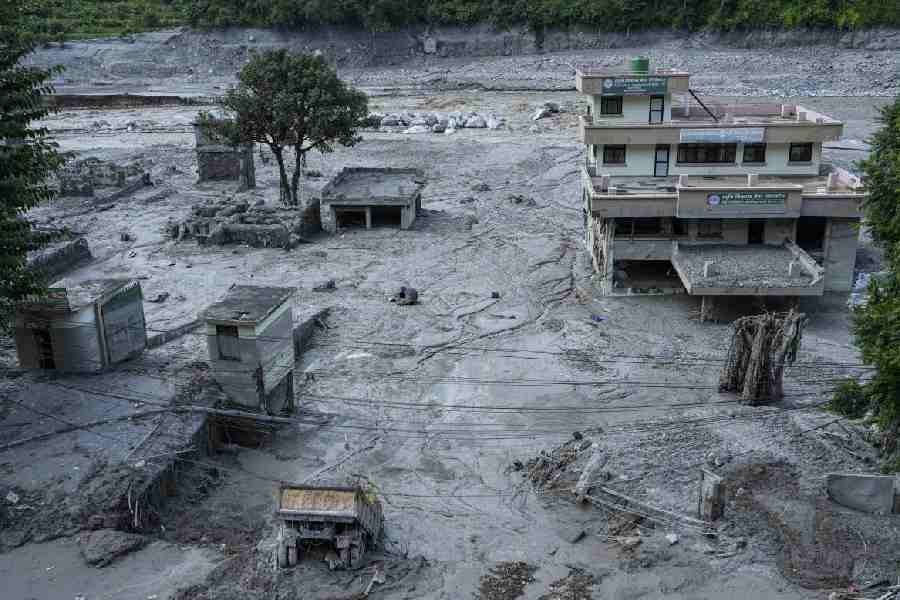
An ice-rock avalanche triggered by a glacial collapse near the Nepal-Tibet border sent a torrent of water, mud and debris downstream through central Nepal on Wednesday, devastating towns and villages, washing away homes, vehicles, roads and bridges, and damaging hydropower projects.
A fresh flood threat persisted downstream after a new barrier lake formed near the source of the Bhote Koshi river system, with authorities warning that a possible breach could trigger another surge in the river and downstream areas.
Nepal authorities reported 910 people missing, as rescuers searched river corridors clogged by mud and debris and families crowded hospitals in a desperate hunt for loved ones.
The disaster also left 558 people missing in Tibet, officials said, taking the number of people reported missing on the two sides of the border to 1,468.
The disaster has also triggered an urgent effort by India to trace its nationals, with the Ministry of External Affairs (MEA) saying 290 Indian nationals remain uncontactable.
New Delhi is making "urgent efforts" to ascertain their whereabouts and coordinate their rescue, the ministry said.
The MEA said 84 Indian nationals had been rescued, including 63 workers employed at the under-construction Trishuli-I run-of-river hydroelectric project and 21 from Tamil Nadu.
Around 200 Indian nationals on the Tibet side have sought assistance for evacuation, the MEA said.
External Affairs Minister S Jaishankar, after a high-level meeting attended virtually by India's envoys in Kathmandu and Beijing, said urgent efforts were under way to ascertain the status and well-being of Indians in the flood-affected areas.
He said the ministry was coordinating with the Nepalese side, other ministries, state governments, tour operators and relevant authorities.
India has also stepped up relief assistance to Nepal. After sending 10 tonnes of Humanitarian Assistance and Disaster Relief (HADR) material on Wednesday, it sent another 37.5 tonnes of HADR material, medicines and food packets on Thursday in a military transport aircraft, taking the total dispatched to 47.5 tonnes.
Chinese authorities estimated that about 2 million cubic metres of water had accumulated in the new barrier lake by Thursday morning, with another 3 million cubic metres potentially flowing into it over the next three days, raising concerns that the natural barrier could breach.
The lake has formed near the confluence of the Chhochen Khola and Purepu Tsangpo rivers, which originate in Tibet and flow into Nepal as part of the Bhote Koshi river system.
Nepal's Department of Hydrology and Meteorology said it had received information from Chinese authorities about the lake and warned of a continuing risk of flooding in the Bhote Koshi and Trishuli river areas. It urged people to stay away from riverbanks and remain in safe places. Travellers, security personnel and search-and-rescue teams were also advised to remain alert.
Chinese authorities are monitoring the lake and carrying out flood simulations and risk assessments. A Chinese rescue team with communications and detection equipment has reached Gyirong to assess the upstream blockage, which officials fear could cause a secondary disaster and complicate ongoing rescue work.
Nepalese security personnel have so far evacuated more than 800 people from affected districts, while helicopters, drones and ground teams continue to search isolated settlements, riverbanks and downstream areas.
The floods first devastated Rasuwa district, about 160 km from capital city Kathmandu, after the ice-rock avalanche and debris flow near the Nepal-Tibet border. A torrent of water, mud, rocks and debris tore through settlements including Timure and Rasuwagadhi before surging downstream through the Bhote Koshi and Trishuli river system.
A preliminary assessment by Nepalese authorities and a revised analysis by the US Geological Survey (USGS) have identified a glacial collapse and debris flow, rather than an earthquake, as the trigger for the disaster.
The ice-rock avalanche struck the Lhende river, temporarily blocking its flow before the natural barrier gave way and unleashed a massive surge downstream into the Bhote Koshi and Trishuli river system.
Nepal's disaster management authority said a debris-laden flood occurred in the Lhende river following an ice-rock landslide near the Nepal-China border, about 20 km northeast of Rasuwagadhi border city. The same flood subsequently entered the Trishuli river after passing through Timure, it said.
0 Response to "Nepal-Tibet flash floods: Death toll rises to 362; nearly 1,500 missing as fresh flood threat looms"
Post a Comment
Disclaimer Note:
The views expressed in the articles published here are solely those of the author and do not necessarily reflect the official policy, position, or perspective of Kalimpong News or KalimNews. Kalimpong News and KalimNews disclaim all liability for the published or posted articles, news, and information and assume no responsibility for the accuracy or validity of the content.
Kalimpong News is a non-profit online news platform managed by KalimNews and operated under the Kalimpong Press Club.
Comment Policy:
We encourage respectful and constructive discussions. Please ensure decency while commenting and register with your email ID to participate.
Note: only a member of this blog may post a comment.