
Catastrophic Nepal-Tibet Flash Floods Claim Hundreds of Lives as Rescuers Race Against Time Amid Threats of Secondary Deluge and Cross-Border Diplomatic Friction
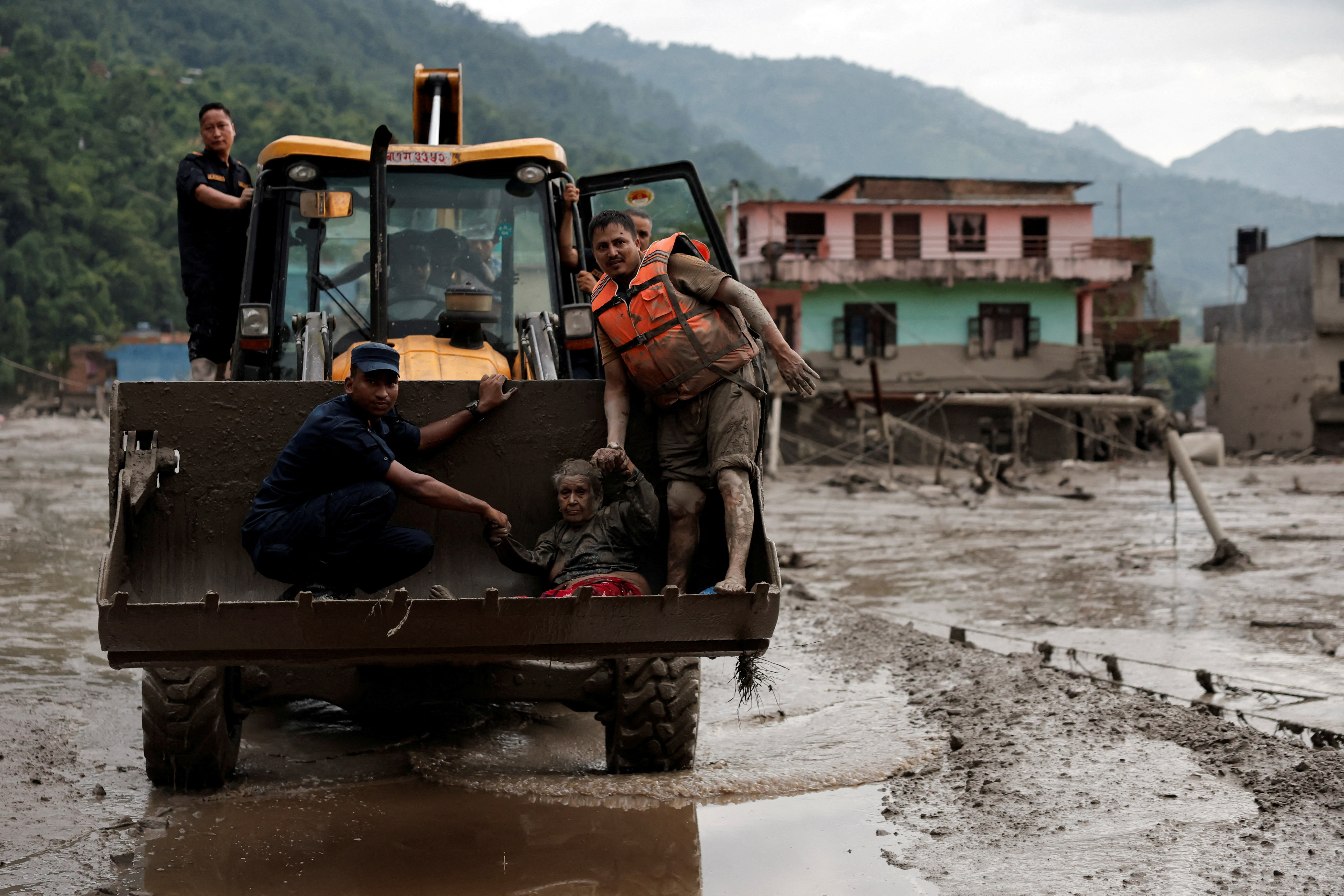
The catastrophe unfolded on Wednesday, August 26, when an enormous ice-rock avalanche—prompted by a glacial collapse along the high-altitude border—unleashed a violent surge of water, mud, and debris through central Nepal's river valleys. The resulting deluge pulverized entire settlements, tore down key transit bridges, swept away vehicles and roads, heavily damaged vital hydropower infrastructure, and buried the border transit corridors under thick layers of sludge.
According to official updates from the Nepal Police and disaster management authorities, the domestic toll in Nepal has surged to at least 389 fatalities, while 910 individuals remain unaccounted for as desperate families search overwhelmed medical facilities and emergency centers.
Cross-border figures also account for three confirmed deaths and 558 people missing in the Tibet Autonomous Region, bringing the combined missing toll to 1,468 across both nations. Compounding the international gravity of the humanitarian crisis, India's Ministry of External Affairs confirmed that 290 Indian nationals in the region remain completely uncontactable. Despite treacherous terrain and blocked passages, intensive multi-agency air and ground operations have successfully evacuated 1,592 survivors from devastated zones, including 796 airlifted individuals—among them 50 foreign tourists—alongside another 796 rescued via overland relief corridors.
The immediate humanitarian peril remains severe as hydrologists warn of an impending secondary disaster. A newly formed barrier lake near the confluence of the Chhochen Khola and Purepu Tsangpo rivers—originating in Tibet before flowing into Nepal as the Bhote Koshi, a major tributary of the Trishuli river—is already overflowing.
China's Ministry of Water Resources reported that the impounded water volume stood at approximately 2 million cubic meters on Thursday, with forecasts projecting an inflow of another 3 million cubic meters over the next 72 hours, creating a dangerous probability of an outburst flood that could unleash a second catastrophic surge into downstream settlements like Timure and Syaphrubesi.
Alongside emergency relief efforts, the disaster has ignited substantial debate over early warning protocols and transboundary disaster management. Public discourse and prominent figures in Nepal, including former National Planning Commission Vice Chair Dr. Govind Raj Pokharel, have voiced profound concern over the absence of advance alert systems and satellite data sharing.
Critics highlighted the dangerous gap between the flood hitting Kerung in Tibet and reaching Nepal, arguing that advanced satellite and monitoring capabilities should have enabled real-time hazard transmission to protect downstream communities and local first responders.
In response, the Chinese Embassy in Nepal firmly rejected claims attributing the disaster to the collapse of a Chinese geological dam or an intentional withholding of disaster warnings, dismissing such allegations as inaccurate and counterproductive.
Chinese diplomatic officials clarified that the crisis stemmed from a powerful seismic event or an earthquake-like glacial collapse on the Nepali side of the Gyirong-Rasuwagadhi border corridor, which triggered severe landslides affecting communities on both sides. Beijing emphasized that Chinese emergency services, armed forces, and engineering teams have mobilized over 1,500 personnel alongside air assets, heavy machinery, and emergency aid, urging that collaborative cross-border rescue operations take precedence over blame to safeguard lives against further secondary disasters.
0 Response to "Catastrophic Nepal-Tibet Flash Floods Claim Hundreds of Lives as Rescuers Race Against Time Amid Threats of Secondary Deluge and Cross-Border Diplomatic Friction"
Post a Comment
Disclaimer Note:
The views expressed in the articles published here are solely those of the author and do not necessarily reflect the official policy, position, or perspective of Kalimpong News or KalimNews. Kalimpong News and KalimNews disclaim all liability for the published or posted articles, news, and information and assume no responsibility for the accuracy or validity of the content.
Kalimpong News is a non-profit online news platform managed by KalimNews and operated under the Kalimpong Press Club.
Comment Policy:
We encourage respectful and constructive discussions. Please ensure decency while commenting and register with your email ID to participate.
Note: only a member of this blog may post a comment.