
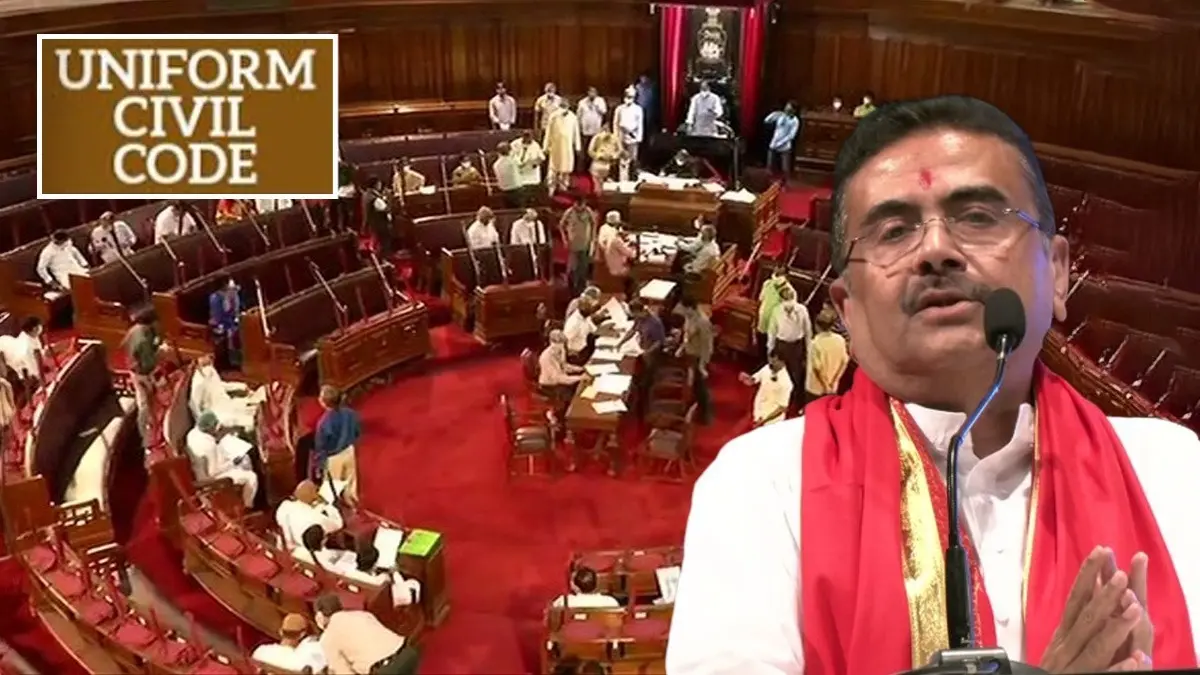
West Bengal Moves Ahead with Uniform Civil Code: Draft Bill, Key Provisions, Exemptions, and Legislative Roadmap
The proposal fulfils a major commitment made by the Bharatiya Janata Party (BJP) in its 2026 Assembly election manifesto, which pledged to implement the Uniform Civil Code within six months of assuming office. Union Home Minister Amit Shah had also highlighted the promise extensively during the election campaign.
What is the Uniform Civil Code?
The Uniform Civil Code seeks to establish one common set of civil laws governing personal matters for all citizens, irrespective of religion. It proposes replacing religion-specific personal laws with a single legal framework while protecting constitutionally recognised exemptions for certain communities.
The proposed legislation covers civil matters only and does not deal with criminal law.
Matters Covered Under the Proposed UCC
The draft legislation is expected to regulate several important aspects of family and civil life, including:
Marriage
- Uniform legal marriageable age:
- 21 years for men.
- 18 years for women.
- Mandatory registration of every marriage.
- Equal legal standards for marriages across all communities covered under the Act.
Divorce
- Uniform procedures for dissolution of marriage.
- Equal rights and responsibilities for both spouses.
- Standardised legal remedies irrespective of religion.
Adoption
- Common legal framework governing adoption.
- Equal adoption rights under one civil law.
Inheritance and Succession
The proposed law seeks to replace different religious inheritance laws with uniform provisions covering:
- Property inheritance.
- Succession after death.
- Rights of spouses.
- Rights of sons and daughters.
- Rights of parents.
- Gender-neutral succession principles.
Maintenance and Family Rights
The legislation aims to provide equal legal protections concerning:
- Maintenance obligations.
- Family responsibilities.
- Spousal rights.
- Children's legal protections.
Live-in Relationships
One of the notable features of the proposed legislation is the regulation of live-in relationships.
The draft proposes:
- Mandatory registration of live-in relationships.
- Legal recognition through registration.
- Penalties for failure to register where required under the Act.
Polygamy
The proposed UCC seeks to prohibit:
- Bigamy.
- Polygamy.
The objective is to establish one uniform marital standard applicable to all persons covered by the legislation.
Who Will Be Exempted?
The West Bengal government has clarified that several constitutionally protected communities will remain outside the scope of the proposed Uniform Civil Code in order to preserve their customary traditions and legal practices.
The proposed exemptions include:
Scheduled Tribes (Adivasis)
All recognised Scheduled Tribes and Adivasi communities will remain exempt from the proposed law.
Indigenous Communities
Recognised indigenous communities with traditional customary practices will continue to be governed by their existing customs.
Kurmi Community
The Kurmi community has specifically been identified among those proposed to remain outside the ambit of the legislation.
Other Recognised Ancient Ethnic Communities
Other recognised ancient tribal and indigenous communities enjoying constitutional protection will also remain exempt.
The government has stated that these exemptions are intended to safeguard traditional customs, cultural identity, and constitutionally recognised community rights.
Who Will Be Covered?
Subject to the final provisions of the legislation, the Uniform Civil Code would apply to all other citizens residing in West Bengal who are not covered by the exempted categories.
Since Scheduled Tribes and certain indigenous communities are excluded, the law is expected to primarily affect communities presently governed by religion-specific personal laws, including those relating to Hindu, Muslim, Christian, Parsi and other personal law systems, wherever applicable under the final legislation.
High-Level Committee to Examine the Draft
Before the Bill is introduced in the Assembly, the government has constituted a high-level committee headed by retired Supreme Court Justice Ranjana Prakash Desai.
The committee also includes:
- One retired IAS officer.
- One legal expert.
- One educationist.
- One social worker.
- One Additional Secretary of the State Government, who will serve as the committee's administrative secretary.
The committee has been tasked with conducting a comprehensive examination of family laws in the state, consulting stakeholders where necessary, and submitting its recommendations within four weeks.
Legislative Timeline
According to the government's announced roadmap:
- July 2, 2026: State Cabinet to consider in-principle approval of the draft UCC.
- Following four weeks: Review by the Justice Ranjana Prakash Desai Committee.
- August 2026: Introduction of the revised Bill in the West Bengal Legislative Assembly after incorporating the committee's recommendations.
Model Followed by West Bengal
The Chief Minister stated that the proposed legislation draws inspiration from the Uniform Civil Code frameworks adopted by states such as Uttarakhand, Gujarat and Assam, while incorporating constitutional safeguards for tribal and indigenous communities.
Objective of the Proposed Law
According to the state government, the principal objective of the Uniform Civil Code is to establish a common civil legal framework for matters relating to marriage, divorce, inheritance, succession, adoption and family rights, ensuring equal treatment under one law while preserving constitutionally protected customary practices of exempted communities.
The final scope and provisions of the Uniform Civil Code will depend on the recommendations of the high-level committee and the version of the Bill ultimately passed by the West Bengal Legislative Assembl
0 Response to "West Bengal Moves Ahead with Uniform Civil Code: Draft Bill, Key Provisions, Exemptions, and Legislative Roadmap"
Post a Comment
Disclaimer Note:
The views expressed in the articles published here are solely those of the author and do not necessarily reflect the official policy, position, or perspective of Kalimpong News or KalimNews. Kalimpong News and KalimNews disclaim all liability for the published or posted articles, news, and information and assume no responsibility for the accuracy or validity of the content.
Kalimpong News is a non-profit online news platform managed by KalimNews and operated under the Kalimpong Press Club.
Comment Policy:
We encourage respectful and constructive discussions. Please ensure decency while commenting and register with your email ID to participate.
Note: only a member of this blog may post a comment.