
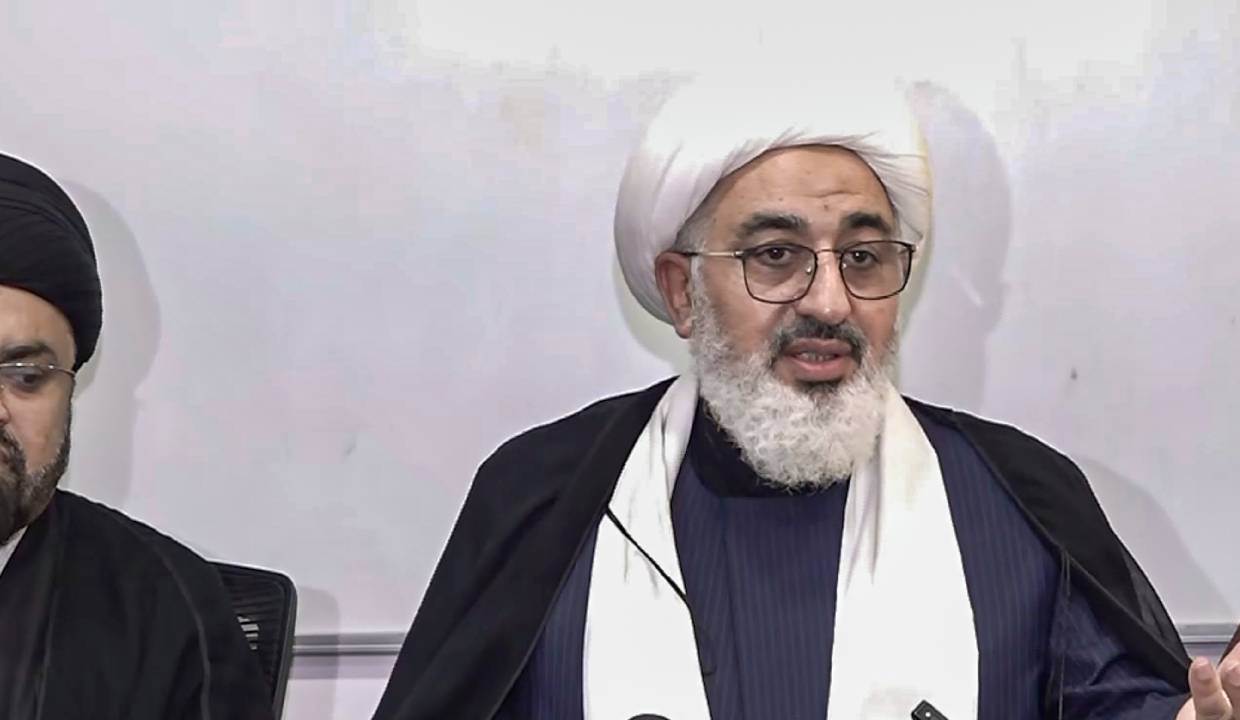
Iran envoy in India describes situation as ‘no war, no peace’
Calling for an immediate halt to the conflict, Ilahi said global stability hinges on those who initiated the war.
He questioned why countries affected by the war and suffering from the energy crisis are not pressuring the US and Israel to stop the aggression.
Addressing a press conference here, Ilahi said Iran did not want the conflict, but was compelled to respond amid continued attacks, even as negotiations were expected to continue.
"Iran didn't want this war, but Iran was forced by the war and several times Iran tried to avoid this war... I don't know what is the condition of these people and these countries (US-Israel)... they want to impose on other countries what they want, and who gave them this authority," he questioned.
Recalling the negotiations Iran held in Oman, he said talks later moved to Geneva and made progress before being disrupted by sudden attacks.
Ilahi claimed that airstrikes and missile attacks led to the deaths of Iran's supreme leader Ayatollah Ali Khamenei, ministers, commanders and civilians.
"They killed a lot of civilians... They attacked a primary school, and they killed 175 innocent girls," he said, claiming over 4,000 deaths, more than 40,000 injuries, and widespread damage to houses, hospitals, universities and public infrastructure.
Despite these losses, he said Iran resisted calls for "unconditional surrender" and stood firm and defended itself.
"They wanted unconditional surrender. Which no one-no one can accept it. Iran said, 'Okay, we are ready to be sacrificed,' but we are not ready to submit ourselves," he added.
Ilahi argued that they (US-Israel) proposed the current ceasefire only after realising that they could not achieve any of their objectives after 40 days of conflict.
The envoy further claimed that the ceasefire is not an actual ceasefire, but a "no war, no peace" situation.
Explaining the current situation in Iran, he said conditions remain stable and people are going about their daily lives.
"They are working ...(leading) their ordinary life. They are working-they're going farming and they do everything....and they aren't scared of anything. And they are ready to defend themselves," he added.
Addressing the crisis in the Strait of Hormuz, he said the situation was stable before February 28 and all countries benefited from it.
"(For) 10,000 years, the Strait of Hormuz was open... and Iran daily yearly spent a lot for providing security in the Strait of Hormuz... so no one even complained anything about the Strait of Hormuz. Everyone was free... and even our enemies their warship was passing through the Strait of Hormuz," he said.
0 Response to " Iran envoy in India describes situation as ‘no war, no peace’"
Post a Comment
Disclaimer Note:
The views expressed in the articles published here are solely those of the author and do not necessarily reflect the official policy, position, or perspective of Kalimpong News or KalimNews. Kalimpong News and KalimNews disclaim all liability for the published or posted articles, news, and information and assume no responsibility for the accuracy or validity of the content.
Kalimpong News is a non-profit online news platform managed by KalimNews and operated under the Kalimpong Press Club.
Comment Policy:
We encourage respectful and constructive discussions. Please ensure decency while commenting and register with your email ID to participate.
Note: only a member of this blog may post a comment.