
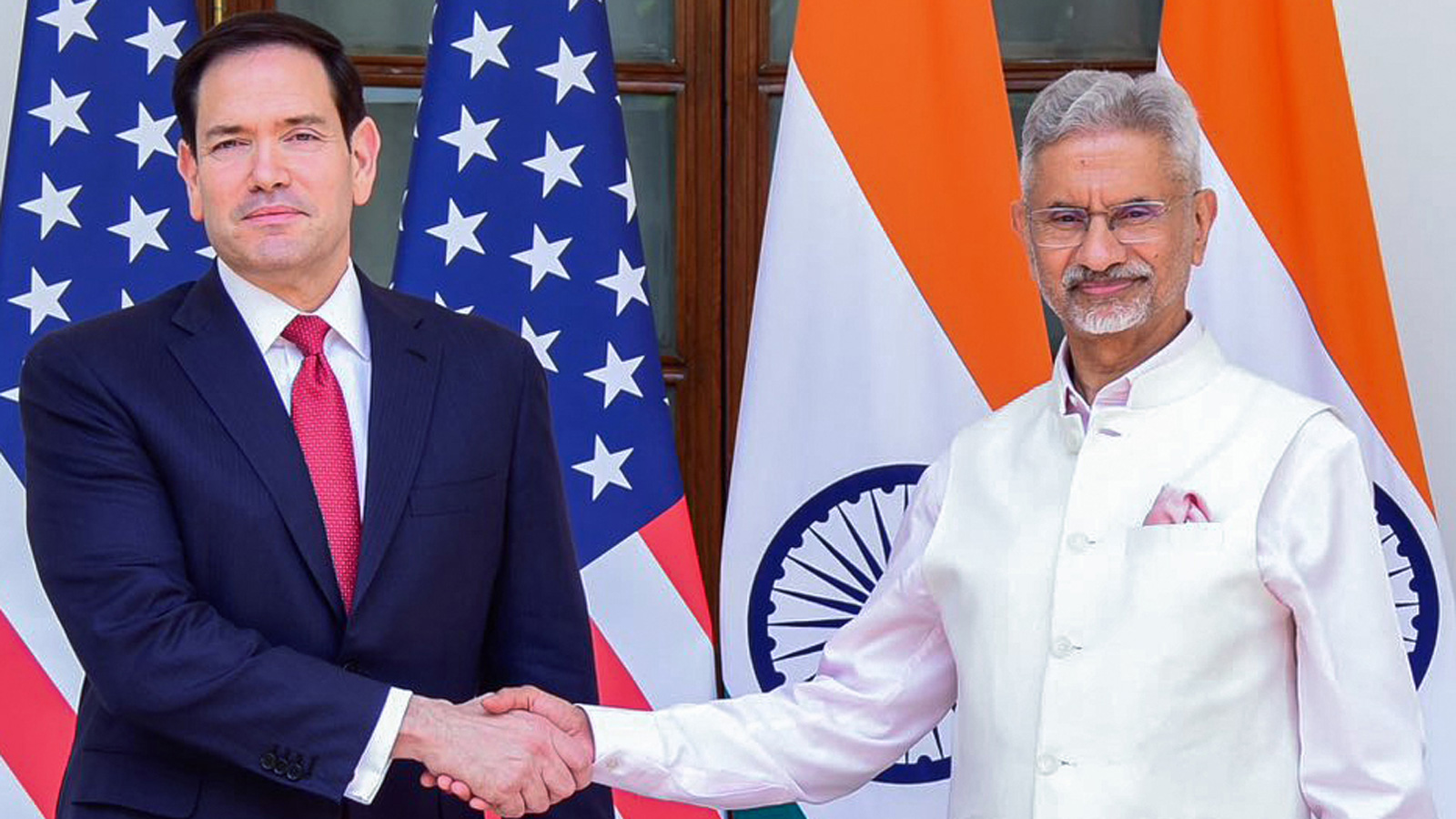
India and US Sign Critical Minerals Cooperation Framework
The framework on securing supplies of mining and processing of critical minerals was signed on the sidelines of the Quad foreign ministers’ meeting in New Delhi.
“It is something very timely and critical,” External Affairs Minister S Jaishankar said in the presence of US Secretary of State Marco Rubio.
“This framework aims to deepen our cooperation across the entire critical minerals and rare earth supply chain, including mining, processing, recycling and related investment,” he said.
Critical minerals are considered vital for high-end technology products, including electric vehicles (EVs), drones and battery storage.
China has been a dominant player in the critical minerals supply chain globally. India has been looking at a steady supply of rare earth minerals to fuel its economic growth.
China accounts for around 70 per cent of global rare earth mining, making it a very dominant player in the global supply chain of the critical minerals.
In his remarks, the External Affairs Minister said the framework will strengthen resilient and diversified supply chains, help finance projects, and ensure effective management of critical minerals and rare earths.
“It is one more sign of how close our cooperation has been in a world where there are so many challenges but also so many opportunities,” he said.
In his remarks, Rubio highlighted the strategic partnership between the US and India and its importance for the respective national interests of both countries.
“It is a tangible example of that,” Rubio said, referring to the signing of the pact.
“We are two countries that have strategic interests in ensuring reliable long-term access to critical minerals and supply chains that are important for our innovation economy,” he said.
A readout by the US said the agreement marked a milestone in the strategic partnership between the two nations to ensure that the foundational elements required for advanced technology and energy are available within trusted networks.
Through this framework, the US and India will engage in international efforts to protect sensitive supply chains from coercive market practices and reduce collective vulnerability to single-source monopolies, it said.
The US government is mobilising unprecedented resources to secure critical mineral supply chains, supporting projects with more than USD 30 billion in investments, loans and other support in partnership with the private sector.
These investments, along with Pax Silica and “our reinvigorated diplomatic and commercial engagement”, are having a multiplier effect, mobilising private capital many times greater than government outlays, the readout said.
Rubio also mentioned the US-backed Pax Silica initiative.
“The groundwork was laid for this on February 4 when you joined us at the Critical Minerals Forum that we hosted in Washington DC,” he said, adding it gained momentum after India signed on to Pax Silica.
“Today, because we both have a strategic and shared interest in the fact that vibrant innovation economies such as ours cannot afford to leave the foundational materials of these industries vulnerable to single-source monopoly that could deny us these things, not just in a time of conflict, but as a leverage point contrary to our sovereign national interests,” he said.
0 Response to "India and US Sign Critical Minerals Cooperation Framework"
Post a Comment
Disclaimer Note:
The views expressed in the articles published here are solely those of the author and do not necessarily reflect the official policy, position, or perspective of Kalimpong News or KalimNews. Kalimpong News and KalimNews disclaim all liability for the published or posted articles, news, and information and assume no responsibility for the accuracy or validity of the content.
Kalimpong News is a non-profit online news platform managed by KalimNews and operated under the Kalimpong Press Club.
Comment Policy:
We encourage respectful and constructive discussions. Please ensure decency while commenting and register with your email ID to participate.
Note: only a member of this blog may post a comment.