
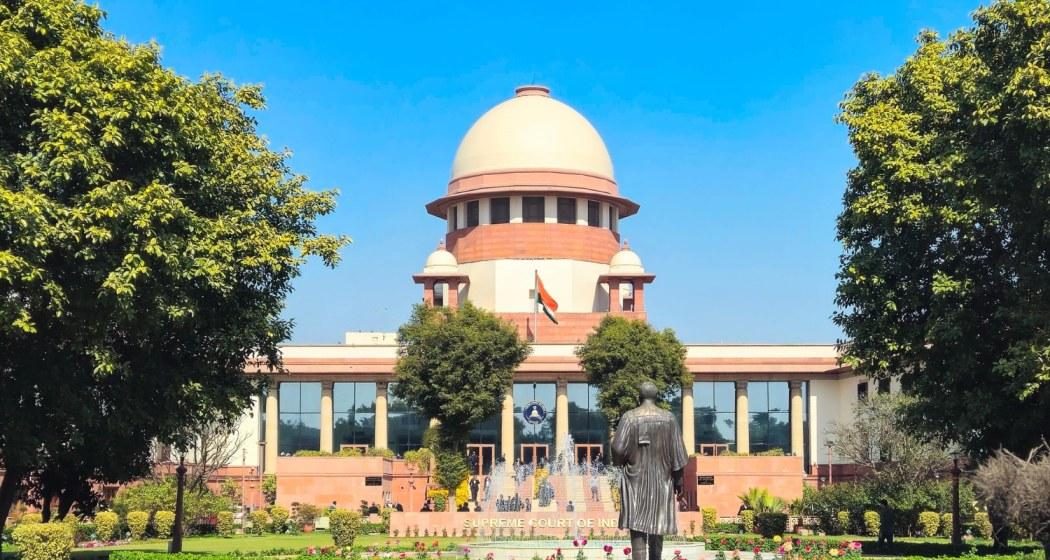
Supreme Court Observes Inclusive Access to Temples is Vital for Social Harmony
The remark by a nine-judge Constitution bench came while hearing petitions related to discrimination against women at religious places, including the Sabarimala Temple in Kerala, and on the ambit and scope of religious freedom practised by multiple faiths.
The bench comprises Chief Justice Surya Kant and Justices B. V. Nagarathna, M. M. Sundresh, Ahsanuddin Amanullah, Aravind Kumar, Augustine George Masih, Prasanna B. Varale, R. Mahadevan, and Joymalya Bagchi.
Senior advocate C. S. Vaidyanathan, appearing for organisations including the Nair Service Society, Ayyappa Seva Samajam, and Kshetra Samrakshana Samiti, submitted that a denominational temple can give permissive rights and have worship or confine it only to the denomination.
At this juncture, Justice Nagarathna remarked, “There is one apprehension. If you say the right of entry, in the context of Venkataramana Devaru, where they said anybody other than Gowda Saraswat Brahmin is excluded, it will affect negatively Hinduism.”
The Supreme Court judge added: “Everybody must have access to every temple and math. Keep aside the controversy in Sabarimala judgement. But if you say it is a practice and it is a matter of religion that I will exclude others and only my section, my denomination will attend temple and nobody else. That is not good for Hinduism. Let the religion not be adversely affected. It will be counterproductive for the denomination.”
Concurring, Justice Kumar said such exclusion will divide society.
Vaidyanathan submitted that if temples serve only their denomination, they cannot seek funds either from the state or private donors or from the public because they are not dependent on them.
If a law is to be made, it has to pass the test of public order, morality or health, he asserted.
In the Devaru judgment, the apex court had upheld the Madras Temple Entry Authorisation Act, affirming that while the temple remains open to all Hindus, certain ceremonial practices reserved for the Gowda Saraswat Brahmins are constitutionally permissible.
The nine-judge bench has framed seven questions on the scope of religious freedom.
0 Response to "Supreme Court Observes Inclusive Access to Temples is Vital for Social Harmony"
Post a Comment
Disclaimer Note:
The views expressed in the articles published here are solely those of the author and do not necessarily reflect the official policy, position, or perspective of Kalimpong News or KalimNews. Kalimpong News and KalimNews disclaim all liability for the published or posted articles, news, and information and assume no responsibility for the accuracy or validity of the content.
Kalimpong News is a non-profit online news platform managed by KalimNews and operated under the Kalimpong Press Club.
Comment Policy:
We encourage respectful and constructive discussions. Please ensure decency while commenting and register with your email ID to participate.
Note: only a member of this blog may post a comment.