
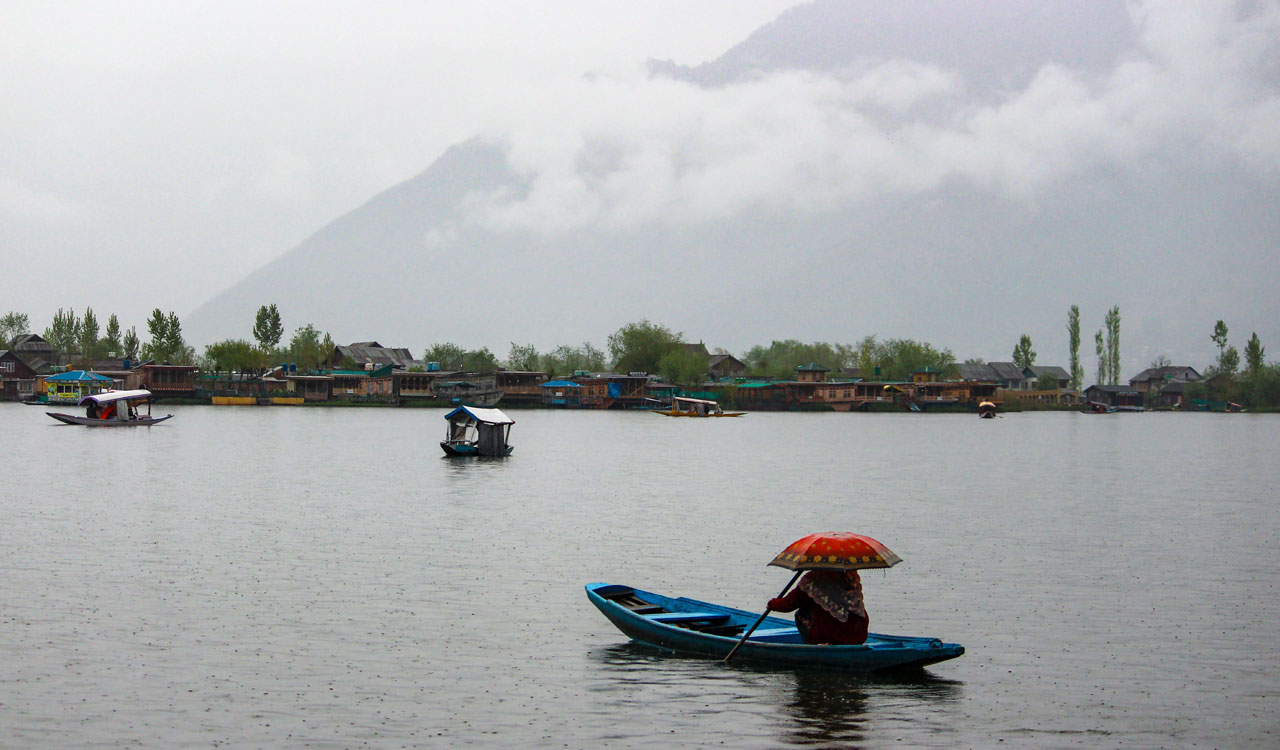
CAG Flags Significant Decline in Jammu and Kashmir’s Lakes, Urges Conservation Measures
As per the CAG report on the conservation of lakes in the Union Territory for the year ended March 31, 2024, out of the total 697 lakes with a total area of 28,990 hectares, as many as 315 lakes covering 1,537.07 hectares have disappeared, while the area of 203 lakes shrank by 1,314.19 hectares.
“There was total decrease and disappearance of area of 2,851.26 hectares in 518 lakes,” the report stated.
The CAG strongly recommended a series of measures for effective conservation and management of lakes in Jammu and Kashmir, stressing the need for a structured and time-bound approach.
It said this large-scale shrinkage has resulted in loss of flora and fauna, disruption of ecological services, and adverse impacts on water, food and biodiversity.
It also said the reduction in lake area has contributed to climate insecurity and was one of the factors behind the devastating Jammu and Kashmir floods in September 2014, highlighting that lakes act as natural flood buffers.
Jammu and Kashmir, endowed with 697 natural lakes spread across 20 districts in two divisions, holds immense ecological and socio-economic significance, it said.
These include 185 major lakes larger than five hectares, such as the Wular Lake, the largest freshwater lake in India, along with several other prominent water bodies.
The audit report revealed that 150 lakes recorded an increase in area by 538.22 hectares, while 29 lakes remained unchanged. However, it pointed out that the reasons behind the increase in lake areas were neither analysed nor monitored by the departments concerned.
Of the disappeared lakes, 80 fell under the jurisdiction of the forest department, while 235 were under the revenue and agriculture departments.
Among the 203 lakes that recorded shrinkage, 63 have lost more than 50 per cent of their area, putting them at high risk of extinction, it added.
The CAG attributed the disappearance and degradation of lakes primarily to changes in land use within lake bodies and their catchment areas, along with deforestation, climate change and unregulated human activities.
The CAG observed that conservation efforts were limited to only six lakes — Dal, Wular, Hokersar, Manasbal, Surinsar and Mansar — while no structured programmes existed for the remaining 691 lakes.
It further pointed out the absence of a dedicated legal framework for lake conservation, with only fragmented provisions existing under various laws and policies.
“Multiple agencies handling lake management have also led to lack of coordination and accountability,” the report said.
Recommending urgent action, the CAG called for enactment of a comprehensive law for conservation and management of lakes and the establishment of a centralised, specialised authority to ensure coordinated efforts.
It said that generic lake management activities such as survey, categorisation, sewage treatment, flushing etc. need to be planned and carried out in a time-bound manner.
CAG recommended that the Government of Jammu and Kashmir increase its budgetary allocation for the conservation and management of lakes, highlighting the need for greater financial commitment to protect these vital natural resources.
0 Response to "CAG Flags Significant Decline in Jammu and Kashmir’s Lakes, Urges Conservation Measures"
Post a Comment
Disclaimer Note:
The views expressed in the articles published here are solely those of the author and do not necessarily reflect the official policy, position, or perspective of Kalimpong News or KalimNews. Kalimpong News and KalimNews disclaim all liability for the published or posted articles, news, and information and assume no responsibility for the accuracy or validity of the content.
Kalimpong News is a non-profit online news platform managed by KalimNews and operated under the Kalimpong Press Club.
Comment Policy:
We encourage respectful and constructive discussions. Please ensure decency while commenting and register with your email ID to participate.
Note: only a member of this blog may post a comment.