
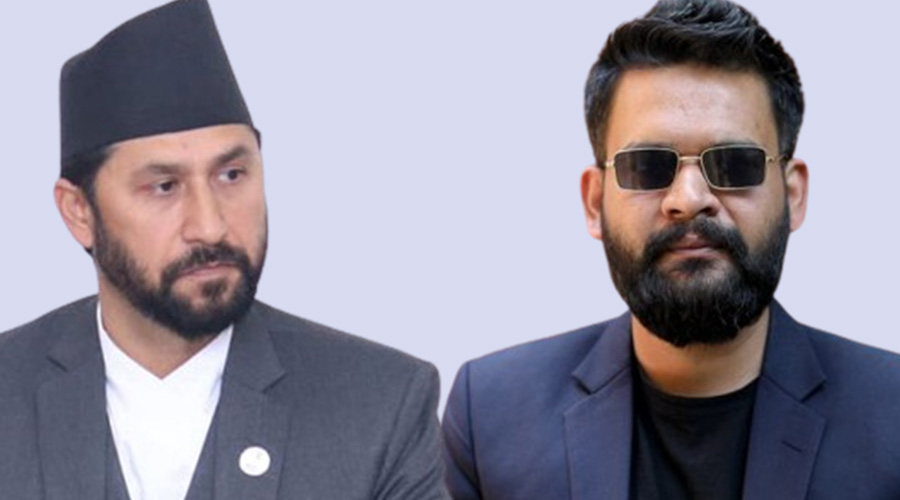
Balen Shah Emerges as Prime Ministerial Contender as Nepal Election Results Draw Nationwide Attention
Balen, Ravi, Prachanda, Tosima, Mahabir Pun wins
KalimNews, March 7, 2026, Kathmandu: Balendra Shah, popularly known as Balen, has emerged as one of the most prominent figures in Nepal’s ongoing general elections, strengthening his position as a leading prime ministerial contender of the Rastriya Swatantra Party (RSP). His dramatic victory has become one of the most widely discussed developments of the election, drawing attention across Nepal as vote counting continues in several constituencies and the political landscape rapidly evolves.
One of the most dramatic and widely discussed outcomes of the election has come from Jhapa–5, where Balendra Shah secured a landslide victory over K. P. Sharma Oli, the chair of the Communist Party of Nepal (Unified Marxist–Leninist) (CPN-UML).
Shah received 68,348 votes, while Oli managed 18,734 votes, giving Shah a decisive margin of 49,614 votes in a constituency widely regarded as the epicentre of this election. The result has drawn national attention particularly because the Rastriya Swatantra Party had already announced Shah as its candidate for prime minister. In the 2022 parliamentary election, Oli had defeated Khagendra Adhikari of the Nepali Congress by a margin of 28,576 votes, making this year’s outcome even more significant.Mahabir Pun
Before entering national politics, Balendra Shah served as the Mayor of Kathmandu Metropolitan City from May 2022 until January 2026, when he resigned to contest the national elections. Born in Naradevi, Kathmandu, into a Madhesi family, he is the son of the late Ram Narayan Shah, a distinguished Ayurvedic physician. Shah combines both technical and artistic backgrounds and, before his political rise, actively participated in rescue operations and structural mapping following the 2015 Gorkha Earthquake.
Apart from politics, he is also an accomplished rapper, songwriter, and music producer who launched his music career in 2012. Initially aligned with the Bibeksheel Party, Shah won the 2022 Kathmandu mayoral election as an independent candidate. Later, in late 2025, he joined the Rastriya Swatantra Party and became one of the key figures in the party’s campaign for the 2026 General Elections, positioning himself as a prominent contender for Nepal’s premiership.
In Chitwan District–2, Rabi Lamichhane of the Rastriya Swatantra Party has been elected with 54,402 votes, defeating Meena Kumari Kharel of the Nepali Congress by a margin of 39,838 votes.
Meanwhile, in Rukum East District–1, Pushpa Kamal Dahal of the Nepal Communist Party was elected by securing 10,240 votes.
In Rautahat–4 of Madhesh Province, where 37 candidates contested the election, Ganesh Paudel of the Rastriya Swatantra Party was declared the winner with 15,865 votes. Veteran journalist Rishiraj Dhamala, who contested from the Aam Janata Party (Ekal Chunab Chinha), received 655 votes.
Another well-known candidate who lost the election is Kulman Ghising of the Ujaylo Nepal Party, who received 11,171 votes. In the same contest, Raju Nath Pandey of the Rastriya Swatantra Party secured 18,756 votes and was declared elected.
In Myagdi–1 of Gandaki Province, renowned innovator Mahabir Pun emerged as the lone independent candidate to win, securing 22,850 votes. His nearest rival, Harikrishna Shrestha of the CPN-UML, received 7,919 votes.
In Sunsari District–1, Harka Raj Rai, widely known as Harka Sampang and representing the Shram Sanskriti Party, is currently leading with 16,458 votes, while his nearest rival Goma Tamang of the Rastriya Swatantra Party has received 10,485 votes so far.
Another significant victory for the Rastriya Swatantra Party came from Lalitpur–3, where Tosima Karki secured the seat with 43,096 votes.
Several other constituencies have also reported notable developments as counting continues. Social activist Aashika Tamang, contesting from Dhading District–1, is leading by 31,194 votes. In Gorkha District–1, popular Gen Z candidate Sudhan Gurung of the Rastriya Swatantra Party is leading by 1,732 votes.
As vote counting progresses across the country, results from 87 seats have been declared so far, while counting continues in the remaining constituencies. According to the results announced so far, the Rastriya Swatantra Party has secured 69 seats and is still leading in 54 seats, followed by the Nepali Congress with 11 seats, CPN-UML with 4 seats, the Nepal Communist Party with 3 seats, the Rastriya Prajatantra Party with 1 seat, and Independent candidates with one seat.
Vote counting is still underway in several constituencies, and the final results will be confirmed once the counting process is completed. These elections are being closely followed across Nepal, as they highlight changing political dynamics, the emergence of new leadership, and the growing participation of voters in shaping the country’s democratic future.
0 Response to "Balen Shah Emerges as Prime Ministerial Contender as Nepal Election Results Draw Nationwide Attention "
Post a Comment
Disclaimer Note:
The views expressed in the articles published here are solely those of the author and do not necessarily reflect the official policy, position, or perspective of Kalimpong News or KalimNews. Kalimpong News and KalimNews disclaim all liability for the published or posted articles, news, and information and assume no responsibility for the accuracy or validity of the content.
Kalimpong News is a non-profit online news platform managed by KalimNews and operated under the Kalimpong Press Club.
Comment Policy:
We encourage respectful and constructive discussions. Please ensure decency while commenting and register with your email ID to participate.
Note: only a member of this blog may post a comment.