
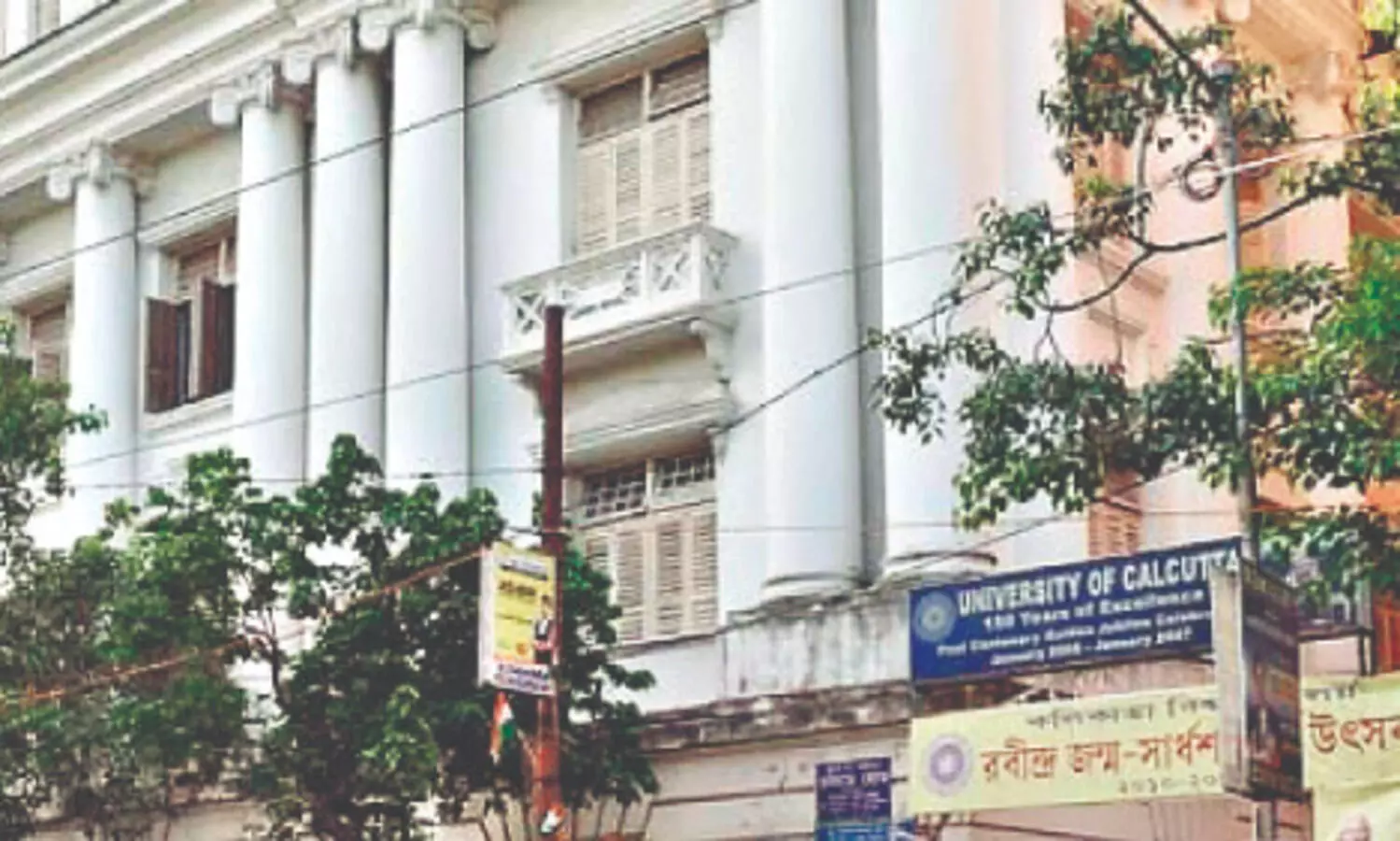
New Regulations: CU plans 10% cap on AI use in PhD thesis
“The details will be made public after approval by the upcoming Syndicate meeting,” a senior CU official said. University sources said CU already uses University Grants Commission (UGC)-approved plagiarism-detection software to check copying from existing research papers and books. The university now plans to deploy specialised software to detect the extent of AI usage in academic work. If it is found that more than 10 per cent of a research paper or thesis has been generated using AI, the submission will be rejected.
Also Read – SC cautions EC on voter revision, asks Bengal to replace ‘micro-observers’
“We already have a system to examine research papers. We are now bringing in controls on the use of artificial intelligence, and the software is being upgraded for this purpose. The Syndicate will take the final decision,” another senior CU official said. CU will be the first university in the state to implement such specific measures on AI usage. Several universities across the country have already adopted similar systems, with conditions attached.
Sanatan Chatterjee, general secretary of the Calcutta University Teachers’ Association, said the trend of researchers using AI tools available online to prepare research papers was a serious concern. “This practice is extremely harmful to higher education and needs to be controlled. That is why the university has taken up the issue. The upper limit for such plagiarism should be below 10 per cent,” he said.
At Indian Institute of Technology Bombay and Indian Institute of Technology Kanpur, the use of AI is permitted for coding or technical work, provided researchers clearly justify its use. At the Indian Institute of Science, the use of AI to generate images is treated as scientific misconduct. Jawaharlal Nehru University and University of Delhi use specialised software to identify AI-generated text, rejecting papers where AI use exceeds 10 per cent.
0 Response to "New Regulations: CU plans 10% cap on AI use in PhD thesis"
Post a Comment
Disclaimer Note:
The views expressed in the articles published here are solely those of the author and do not necessarily reflect the official policy, position, or perspective of Kalimpong News or KalimNews. Kalimpong News and KalimNews disclaim all liability for the published or posted articles, news, and information and assume no responsibility for the accuracy or validity of the content.
Kalimpong News is a non-profit online news platform managed by KalimNews and operated under the Kalimpong Press Club.
Comment Policy:
We encourage respectful and constructive discussions. Please ensure decency while commenting and register with your email ID to participate.
Note: only a member of this blog may post a comment.