
Electoral Roll Revision Triggers Political Confrontation in Bengal Ahead of Assembly Polls
Bengal braces for post-SIR rolls today as voter revision turns into pre-poll flashpoint. SC refuses to entertain state's objection to EC training module for judicial officer.
The February 28, 2026 publication, classifying 7.08 crore electors as "approved", "deleted" or "under adjudication", marks a pivotal moment in an exercise that has travelled far beyond bureaucratic correction to become the central flashpoint before the polls.
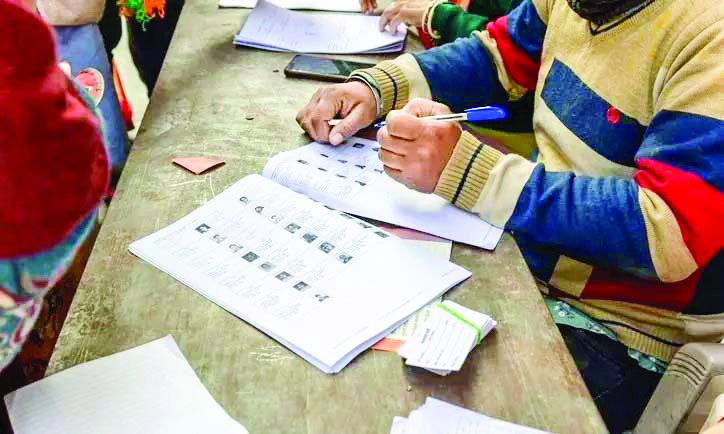
The Special Intensive Revision (SIR), the first statewide exercise since 2002, was conceived by the Election Commission as a statutory clean-up ahead of a major election. Draft rolls published on December 16 saw the electorate shrink from 7.66 crore to 7.08 crore, with over 58 lakh names deleted due to death, migration, duplication or untraceability.
The second phase covered hearings for 1.67 crore electors — 1.36 crore flagged for "logical discrepancies" and 31 lakh lacking mapping. Around 60 lakh voters remain under adjudication. The EC maintains the exercise is "routine and necessary to ensure accuracy". But in Bengal’s politically charged environment, numbers have rarely remained just numbers.
The ruling TMC has mounted fierce resistance, branding the SIR as "NRC through the backdoor". Chief Minister Mamata Banerjee, in an unprecedented move, appeared in the Supreme Court "as a common citizen", seeking that the next Assembly election be conducted on the existing 2025 rolls.
"Lakhs of genuine voters are at risk of exclusion. This is not revision, this is omission," Banerjee said, alleging that genuine names were "surreptitiously removed" under the pretext of discrepancies.
The BJP has backed the revision unequivocally. "A clean and transparent roll is the foundation of democracy. Infiltrators and duplicate voters cannot decide Bengal's mandate," a senior leader said, arguing that questionable entries had distorted past outcomes.
The CPI(M) and the Congress have opposed the timing and manner of the exercise. "Transparency is welcome, but panic-inducing processes erode trust," CPI(M) leader Sujan Chakraborty said.
The most disturbing layer of the SIR saga has been the alleged deaths linked to fears of disenfranchisement. The TMC has claimed at least 120 deaths since the beginning of the exercise on November 4, including alleged suicides by voters and booth-level officers during the process.
The BJP has dismissed attempts to link the alleged deaths directly to the revision, accusing the ruling party of "fear-mongering for political mileage". Yet on the ground, confusion among marginalised groups has been palpable. Among the most affected are sections of the Matua community, many migrants from Bangladesh decades ago, and Bengali-speaking Muslims in border districts. The insistence on linking entries to 2002 legacy data has triggered uncertainty among those lacking older documentation.
In minority-dominated belts, comparisons with NRC exercises elsewhere have amplified apprehensions. The EC has reiterated that the SIR is not a citizenship determination exercise and that aggrieved voters have avenues for redressal. Crucially, in the list to be published, those marked "under adjudication" will not be permitted to vote until cleared and included in supplementary rolls. Names tagged "deleted" will remain visible but ineligible unless reinstated. Supplementary lists will continue in phases.
Saturday's publication may be only a procedural snapshot, but with the Assembly polls two months away, it is set to trigger a sharper TMC-BJP duel, each framing the SIR to consolidate its core vote — one invoking "Bengali identity and the poor", the other pitching "national security and clean rolls."
At its core, the SIR has exposed the tightrope between electoral cleansing and social reassurance in a border state where citizenship and identity are deeply intertwined.
As Bengal readies for the categorised rolls, parties will dissect every name with forensic zeal, turning what began as a routine revision into a high-stakes political duel that could shape not just the 2026 electorate, but public trust in the democratic process itself.
Meanwhile, the Supreme Court on Friday refused to entertain the West Bengal government's objection over the training module issued by the Election Commission for judicial officers deployed in the Special Intensive Revision (SIR) of electoral rolls in the state. A bench of Chief Justice Surya Kant and Justice Joymalya Bagchi said the judicial officers would not be "influenced by anything" and the orders passed by the apex court in the matter were as clear as daylight.
Senior advocate Kapil Sibal, appearing for West Bengal, mentioned the matter before the bench.
0 Response to "Electoral Roll Revision Triggers Political Confrontation in Bengal Ahead of Assembly Polls"
Post a Comment
Disclaimer Note:
The views expressed in the articles published here are solely those of the author and do not necessarily reflect the official policy, position, or perspective of Kalimpong News or KalimNews. Kalimpong News and KalimNews disclaim all liability for the published or posted articles, news, and information and assume no responsibility for the accuracy or validity of the content.
Kalimpong News is a non-profit online news platform managed by KalimNews and operated under the Kalimpong Press Club.
Comment Policy:
We encourage respectful and constructive discussions. Please ensure decency while commenting and register with your email ID to participate.
Note: only a member of this blog may post a comment.