

Clair Unveils Revolutionary Wearable for Continuous Hormone Tracking
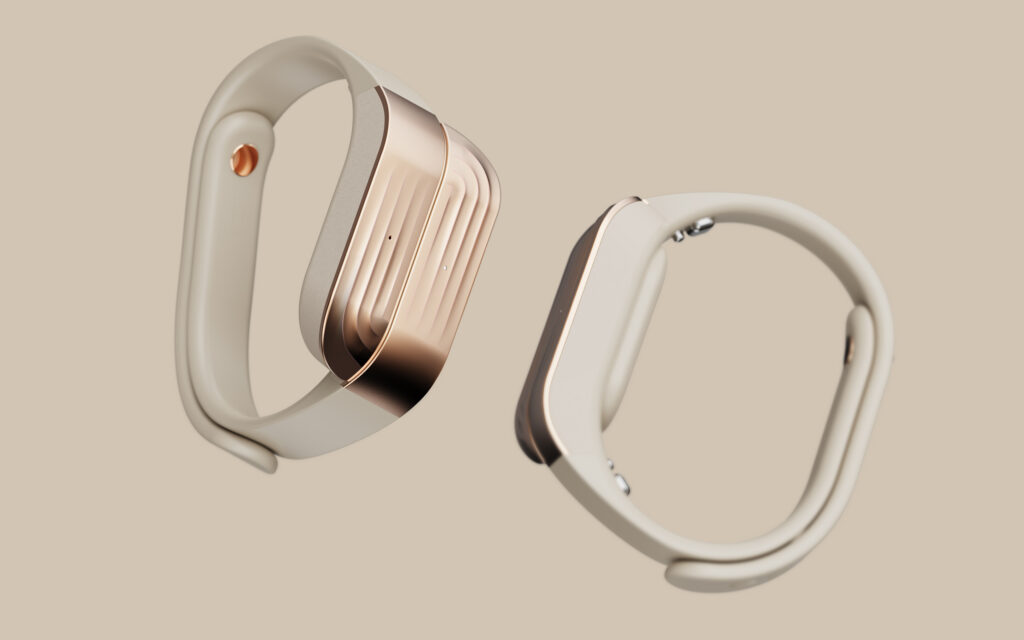
Duan and Agarwal met in spring 2025 and quickly began developing Clair, refining both its technology and the company’s mission over the following six months. The wearable, which resembles a bracelet, connects to a mobile app, allowing all data processing to occur directly on the user’s phone rather than external servers, ensuring maximum privacy.
“The device connects with an app so all of the processing happens on the app itself, not in a data centre like other devices. This is especially important given the current political climate around data privacy,” Agarwal said.
Addressing Gaps in Women’s Healthcare
Women have long been underrepresented in medical research and clinical trials, resulting in limited data and slower progress in understanding women’s health conditions. Clair seeks to close this gap by providing continuous, noninvasive hormone insights.
According to Clair advisor and Stanford Medicine professor Brindha Bavan (B.A. ’10, M.D. ’15, M.A. ’22), hormone tracking in reproductive healthcare “improves our understanding of the function of and communication between the brain’s pituitary gland and ovaries or testes.”
Hormonal health, Bavan emphasizes, extends far beyond fertility or reproduction—it influences mental health, metabolism, energy levels, and overall wellbeing.
“Hormone tracking can provide insight into menstrual cycle patterns and can aid with both diagnosing and assessing treatment for [various] conditions,” Bavan said.
“Clair enables patients [to] gain insight into their personal hormone fluctuations over different time periods and share this information at healthcare visits to better understand and correlate any medical issues they are facing and avoid repeat blood draws.”
A Wearable Built for Real Life
Clair packs ten biosensors into its sleek wristband to monitor over 130 physiological signals, including skin temperature, heart rate, HRV, breath rate, electrodermal activity, and sleep patterns. AI models trained specifically on female physiology then estimate levels of four key reproductive hormones—estrogen, progesterone, luteinising hormone (LH), and follicle-stimulating hormone (FSH)—in real time, with 94% accuracy in cycle-phase classification.
“Today’s wearables track steps, heart rate, and sleep, but they tell women nothing about the hormones that fundamentally shape how they feel, perform, and age,” Agarwal said.
The device is designed to benefit women across life stages, including those with irregular cycles, PCOS, athletes, or anyone navigating perimenopause. By aligning training schedules, tracking energy, and monitoring hormonal shifts, Clair could even help reduce injuries like ACL tears in female athletes.
Clinically Credible and FDA-Focused
Unlike many consumer wearables, Clair is pursuing FDA approval to position itself as a medically credible device rather than solely a lifestyle gadget. The company plans to launch a clinical trial at Stanford Medicine this spring, testing the device with around 150 women over three months. The research data will be published independently in peer-reviewed journals before FDA submission.
“We’ll be seeking Food and Drug Administration (US FDA) approval. First, it will be a Class I medical device or a Class I general wellness device. And then once it gets FDA approval, it will be sold as a Class II medical device,” Agarwal explained.
Class I devices are low-risk products subject to general controls, while Class II devices require more rigorous oversight to demonstrate safety and effectiveness.
From Stanford Classrooms to Real-World Impact
Duan’s passion for women’s health began as an undergraduate, attending speaker events and building apps focused on endometriosis at TreeHacks 2024. A course on Philanthropy for Sustainable Development (POLISCI 236) further inspired her:
“It was this class that sparked my interest in building a solution in [the women’s healthcare] space,” Duan said.
Clair is an example of how academic experiences can transform into life-changing innovation, bridging gaps in research while empowering women to understand their own bodies like never before.
Privacy and Data Security at the Forefront
Given the sensitivity of reproductive health information, Clair stores data locally on users’ phones by default, with optional encrypted cloud backup.
“From wearable data, you can recreate a fertility history—when someone got pregnant, when they may have had a miscarriage. That’s why we’ve built the entire architecture around privacy,” Agarwal said.
The Future of Women’s Health
Experts highlight that continuous hormone tracking could revolutionize reproductive and hormonal health. Dr. Uma Vaidyanathan, Director (Obstetrics and Gynaecology) at Fortis Hospital, New Delhi, explains:
“Blood tests remain the medical gold standard, but they are invasive and only give us a single snapshot in time… Continuous monitoring can move women’s health away from symptom-based treatment towards preventive and personalised medicine.”
Similarly, Dr. Suman Mehla, Director (Obstetrics & Gynaecology) at Fortis Hospital, Greater Noida, notes that such technology enables data-driven, individualized care.
When and How to Get Clair
The Clair app enters beta this February, with the wearable device slated to ship in November 2026. Women interested in joining the waitlist can visit wearclair.com, which offers discounts and lifetime app access.
If successful, Clair will not just be another wearable—it could fundamentally expand how women monitor their health, bringing reproductive and hormonal insights closer to how we track heart rate or glucose levels.
Clair is not only advancing technology but also transforming the way women experience their health, from the first period through menopause, offering personalized insights, privacy, and empowerment—all on the wrist.
0 Response to "Clair Unveils Revolutionary Wearable for Continuous Hormone Tracking"
Post a Comment
Disclaimer Note:
The views expressed in the articles published here are solely those of the author and do not necessarily reflect the official policy, position, or perspective of Kalimpong News or KalimNews. Kalimpong News and KalimNews disclaim all liability for the published or posted articles, news, and information and assume no responsibility for the accuracy or validity of the content.
Kalimpong News is a non-profit online news platform managed by KalimNews and operated under the Kalimpong Press Club.
Comment Policy:
We encourage respectful and constructive discussions. Please ensure decency while commenting and register with your email ID to participate.
Note: only a member of this blog may post a comment.