
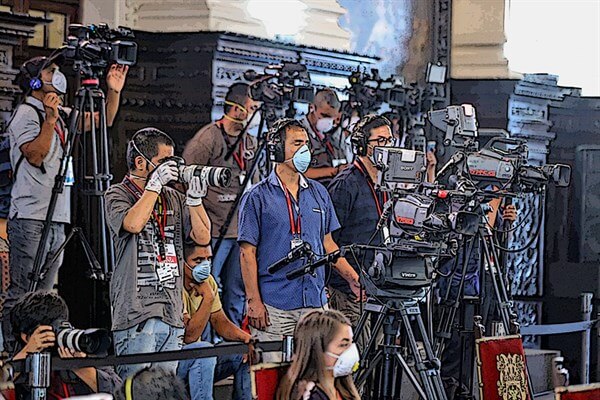
Press Freedom Under Threat: ANP Reports 458 Attacks on Journalists in 2025
The data shows that threats and acts of harassment (127) and physical and verbal assaults (114 cases) constituted most of the attacks. This adds to the recurring use of legal and administrative mechanisms as a form of pressure: 46 cases of judicial intimidation and 4 cases of sanctions or administrative pressure were recorded, a trend evidenced by the use of the state apparatus to discourage journalistic investigations. The average is 38 attacks per month, more than one attack per day.
The annual balance sheet is particularly serious because of the lethal impact of violence. Four journalists were killed in 2025 (Gastón Medina, in Ica; Raúl Célis, in Iquitos; Fernando Nuñez in Pacasmayo; and Mitzar Castillejos, in Aguaytía), confirming that the exercise of the profession continues to be a high-risk activity in the country. These crimes occurred in a context of structural impunity, where investigations do not proceed with the speed or due diligence.
The most critical month was September, with 75 attacks recorded, followed by October (48) and July (47), revealing spikes of conflict associated with high-tension political and social confluences.
Officials and Law Forces as Major Aggressors
Analysis by aggressor type shows that public officials topped the list, with 217 attacks, followed by security officers (121). Overall, these state actors concentrated more than 70% of registered assaults, a figure that raises serious concerns about the state’s role not only as guarantor but also as a participant in violations of press freedom.
Attacks committed by civilians (71) and unidentified subjects (45) were also recorded, as well as cases attributable to employers, reflecting workplace precariousness and lack of internal protection in some workspaces.
Digital Journalism the Most Targeted
By type of medium, digital journalism was the most affected, with 219 attacks, far above television press (108), print media (66), and radio (65). The figure confirms that the digital space — key to investigation and scrutiny — has become one of the main targets of assaults, including speech stigmatization and threats.
In terms of gender impact, men experienced 231 attacks, while women journalists faced 93 assaults, many of them including elements of symbolic violence, harassment, and discredit.
A Deterioration Affecting Democracy
The 2025 balance sheet leaves a clear conclusion: attacks on the press are not isolated events, but part of a systematic pattern that seeks to silence critical voices, inhibit journalistic research, and restrict public debate. In the context of increasing polarization and institutional weakness, the deterioration of conditions for the exercise of journalism has a direct impact on the democratic quality of the country.
Four Journalists Murdered. 458 Attacks on the Press.
They try everything, by all means. The goal is one: to silence us. To silence critical voices. To gag those who investigate. Either through laws or through bullets.
When a journalist is murdered — and in 2025 there were four: Gastón Medina (January, Ica), Raúl Célis (May, Iquitos), Fernando Nuñez (December, Pacasmayo), and Mitzar Castillejos (December, Aguaytía) — the message they want to send to all journalists is clear: Do not mess with us! They aim to instill fear, to paralyse through terror, letting shock and horror settle in.
In this objective, they are aided by the inability of state institutions to identify and bring the perpetrators of these crimes to justice. Who? That is the question awaiting further answers… because the clues about why lie in the journalistic work of our colleagues.
Gastón, Raúl, Fernando, and Mitzar were practicing journalists — colleagues from regional areas, which demonstrates the heightened vulnerability of journalists working outside the capital. They were critical of local and regional authorities, incisive in their work of oversight through the media. Communicators who knew how to use their microphones to echo the voice of the public.
All four were killed by hitmen — in none of the cases does robbery even appear as a plausible motive. All were targeted while heading to conduct their news programmes or returning from journalistic coverage.
These crimes in 2025 place Peru only behind Mexico in lethal violence against journalists. Today, our country is at greater risk than Ecuador, Colombia, Haiti, or Central American countries, with all the implications that entails.
The word “murder” now appears in reports on attacks against journalists in Peru, and it does so categorically. We had gone eight years without needing to apply this category of aggression, previously reporting years of harassment and intimidation — disturbing, too, but these murders change everything. They even disrupt any quantitative analysis when assessing the state of the press in Peru over the past twelve months.
Moreover, these crimes occur in a context of permanent harassment of journalists from all three branches of the state. Particularly notable are: the push for “gag” laws, requests for legislative powers (both under Dina and Jerí) to disguise provisions that criminalise journalistic work, demands by justice operators to lift professional confidentiality, and the instrumentalisation of laws on the prevention of violence against women and families to silence criticism and allegations, accusing journalists of surveillance, criminal organisation membership, or harassment, thereby misrepresenting normal journalistic activity.
2026 is an election year, with general, regional, and local elections. The risks to journalistic practice rise in these contexts — as much or more than during coverage of protests — so the outlook for the coming period is far from hopeful.
2025 leaves an undeniable truth: In Peru, reporting can cost you your life. And the truly dangerous thing is to become accustomed to it.
0 Response to " Press Freedom Under Threat: ANP Reports 458 Attacks on Journalists in 2025"
Post a Comment
Disclaimer Note:
The views expressed in the articles published here are solely those of the author and do not necessarily reflect the official policy, position, or perspective of Kalimpong News or KalimNews. Kalimpong News and KalimNews disclaim all liability for the published or posted articles, news, and information and assume no responsibility for the accuracy or validity of the content.
Kalimpong News is a non-profit online news platform managed by KalimNews and operated under the Kalimpong Press Club.
Comment Policy:
We encourage respectful and constructive discussions. Please ensure decency while commenting and register with your email ID to participate.
Note: only a member of this blog may post a comment.