
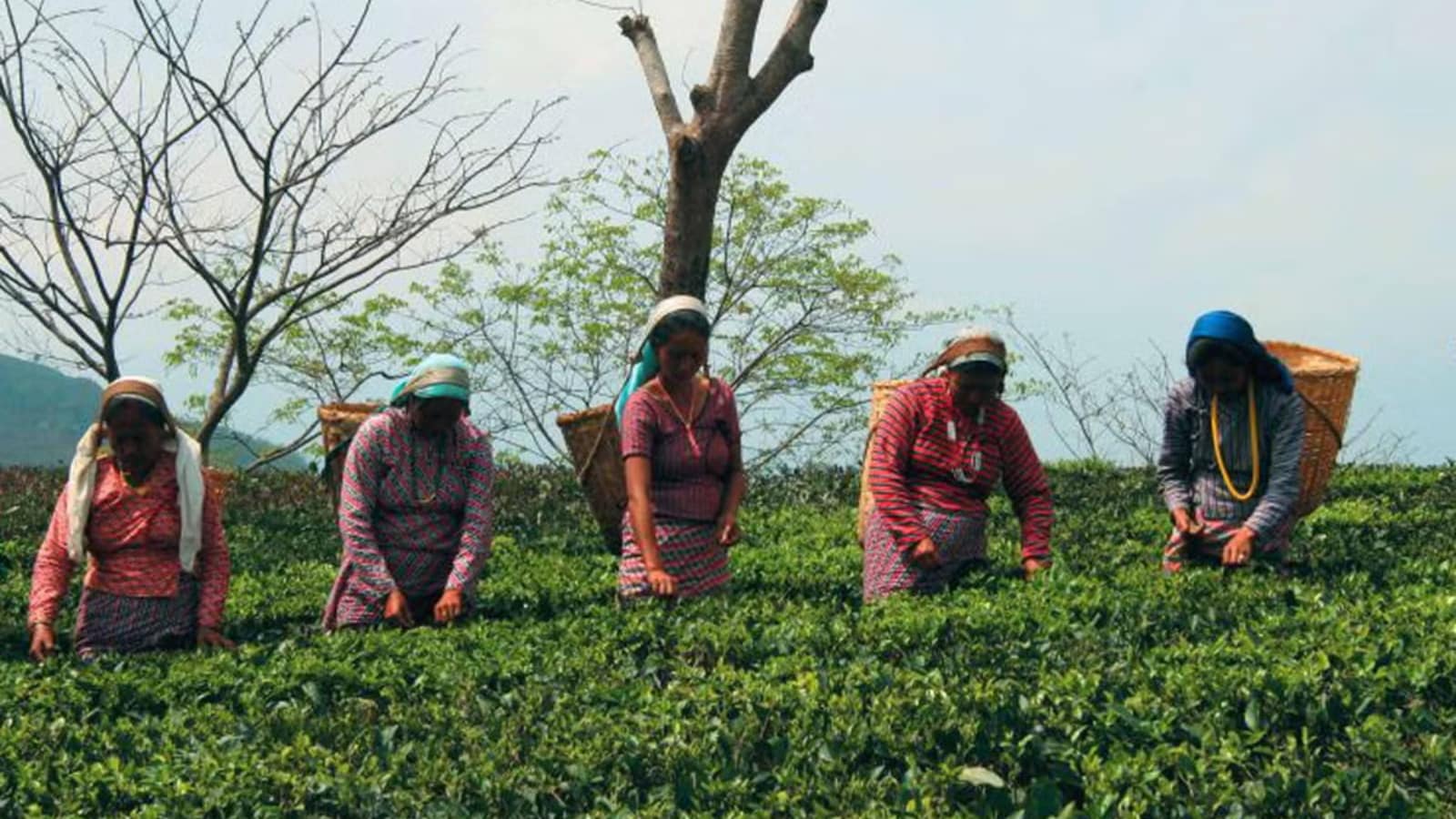
EC Clears Use of Tea Garden and Cinchona Records for Voter Verification in North Bengal
Move hailed by Raju Bista and Suvendu Adhikari as a major step towards electoral inclusion of plantation workers and forest-dwelling communities
Agencies with inputs from PTI, January 11, 2026 : Member of Parliament from Darjeeling, Raju Bista, on Sunday welcomed the Election Commission of India’s (ECI) approval allowing tea garden and cinchona plantation employment records to be used as valid documents for the Special Intensive Revision (SIR) of electoral rolls, stating that the decision would help thousands of citizens who had remained outside the electoral system for decades due to the absence of formal identity papers.
Senior BJP leader and Leader of the Opposition in the West Bengal Assembly, Suvendu Adhikari, also welcomed the decision and said the ECI had approved the use of employment records from tea gardens and cinchona plantations as proof of identity and residence for the SIR process. The approval applies to seven districts in the northern parts of West Bengal — Darjeeling, Kalimpong, Jalpaiguri, Cooch Behar, Alipurduar, Uttar Dinajpur and Dakshin Dinajpur.
Adhikari shared on social media platform X a letter dated January 11, issued by the Election Commission of India to the Chief Electoral Officer of West Bengal. The letter stated that the Commission had conveyed its “no objection” to accepting tea garden and cinchona plantation employment records as valid documents for the Special Intensive Revision of electoral rolls for 2026 in the identified districts.
Raju Bista said the approval was the result of sustained efforts made over several months to highlight the unique and longstanding challenges faced by people in north Bengal. He recalled that he had first written to the Chief Election Commissioner in October 2025, requesting that employment records maintained by tea gardens and cinchona plantations be recognised as valid documents for voter verification in West Bengal. This was followed by further representations in November 2025 to the Chief Electoral Officer of the state, placing detailed submissions before the authorities.
In his communications, Bista had drawn attention to the socio-economic realities of districts such as Darjeeling, Kalimpong, Jalpaiguri, Alipurduar, Cooch Behar, and North and South Dinajpur, which are home to large populations of tea garden workers, tea tribe communities and forest-dwelling families. He pointed out that since the British era, and even for many decades after Independence, a majority of workers employed in tea and cinchona plantations did not possess standard government-issued identity documents.
For generations, Bista noted, the only proof of identity and residence available to these workers and their families had been the employment records maintained by plantation managements. He further highlighted that many members of these communities continued to remain without land rights, leaving them without land ownership documents. Although the Forest Rights Act was enacted in 2006, its non-implementation in West Bengal had meant that forest-dwelling communities were still deprived of official records issued by the government. Limited access to education, he added, had further compounded the problem.
As a result of these factors, several generations of people had either been excluded from electoral rolls altogether or had faced repeated difficulties during voter verification drives. In view of these ground realities, Bista had requested that tea garden and cinchona plantation employment records be accepted as valid proof of identity and residence during the Special Intensive Revision process.
Welcoming the Election Commission’s decision, Bista said the approval had now cleared the way for these records to be officially used in voter verification, thereby enabling thousands of eligible citizens to exercise their democratic rights. He also acknowledged the role played by Suvendu Adhikari, stating that the Leader of the Opposition had raised his voice in support of the demand, which helped strengthen the case for safeguarding the rights and welfare of tea and cinchona plantation workers.
“This approval applies to the districts of north Bengal, where our hardworking tribal and forest-dwelling people and plantation workers have long been deprived of their democratic rights due to documentation hurdles and the negligence of the state government,” Bista said.
Echoing the sentiment, Adhikari urged all eligible voters in these areas to come forward and enrol themselves in the electoral rolls using their plantation employment records. He said that voting rights were the true strength of the people and essential for strengthening democracy.
0 Response to "EC Clears Use of Tea Garden and Cinchona Records for Voter Verification in North Bengal"
Post a Comment
Disclaimer Note:
The views expressed in the articles published here are solely those of the author and do not necessarily reflect the official policy, position, or perspective of Kalimpong News or KalimNews. Kalimpong News and KalimNews disclaim all liability for the published or posted articles, news, and information and assume no responsibility for the accuracy or validity of the content.
Kalimpong News is a non-profit online news platform managed by KalimNews and operated under the Kalimpong Press Club.
Comment Policy:
We encourage respectful and constructive discussions. Please ensure decency while commenting and register with your email ID to participate.
Note: only a member of this blog may post a comment.