
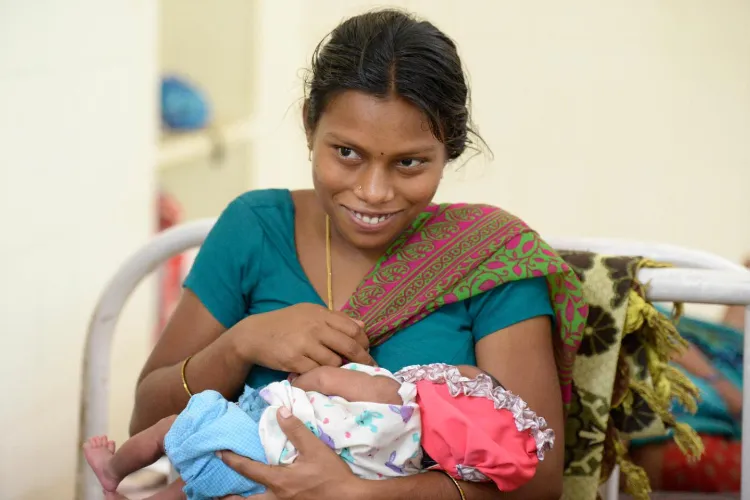
Uranium found in breastmilk in Bihar. AIIMS doctor says levels within limits, but flags potential risk
All samples collected from 40 randomly selected lactating women were tested for uranium, with the highest levels observed in the Katihar district.
ANI, 23 November 2025, New Delhi: A recent study has revealed alarming levels of uranium (U238) in the breastmilk of lactating mothers across several districts in Bihar, raising serious health concerns for their infants.
Researchers from multiple institutions have found that uranium exposure through breastmilk could pose significant non-carcinogenic health risks to infants.
Speaking with ANI, Dr Ashok Sharma of AIIMS Delhi, who is a co-author of the study, said, “The study analysed breast milk from 40 lactating mothers and found uranium (U-238) in all samples. Although 70% of infants showed potential non-carcinogenic health risk, the overall uranium levels were below permissible limits and are expected to have minimal actual health impact on both mothers and infants. The highest average contamination was observed in Khagaria district, and the highest individual value was observed in Katihar district. While uranium exposure may pose risks such as impaired neurological development and reduced IQ, breastfeeding should not be discontinued and remains the most beneficial source of infant nutrition unless clinically indicated.”
“The study showed that: 70% of the infants had HQ > 1, indicating possible non-carcinogenic health risks from uranium exposure through breast milk. Uranium exposure in infants may affect: Kidney development, Neurological development, Cognitive and mental health outcomes (including low IQ and neurodevelopmental delay) if long-term exposure continues.”
“However, based on the observed uranium concentrations in breast milk samples (0-5.25 ug/L), the study still concludes that the actual impact on infant health is likely low, and most uranium absorbed by mothers is excreted primarily through urine, not concentrated in breast milk. Therefore, breastfeeding remains recommended, unless a clinical indication suggests otherwise,” he said
Dr Ashok also said that such studies will be conducted in other states to know about the presence of heavy metals. “We are in the process of examining the heavy metals in other states and their impact on human health, which is a need of the hour.”
The study, conducted on 40 randomly selected lactating women from various districts of Bihar, quantified U238 in breastmilk. All samples tested contained uranium, with the highest levels observed in the Katihar district.
Health risk assessments showed that infants are particularly vulnerable due to their limited ability to eliminate uranium from their bodies.
The study estimates that 70 per cent of the infant population analysed could experience non-carcinogenic health effects from exposure.
Uranium, a naturally occurring radioactive element, is commonly found in granite and other rocks. It can contaminate groundwater through natural processes and human activities such as mining, burning coal, nuclear industry emissions, and the use of phosphate fertilisers.
On further studies to identify the presence of pesticides and environmental pollutants in breastmilk, Dr Ashok said, “The article does address future directions, and pesticides are included in their plans. The study’s discussion and conclusion sections indicate that this investigation focused on uranium (U-238) in breast milk; our previous work had already identified arsenic, lead, and mercury in breast milk. We further highlight the need for continued biomonitoring of toxic contaminants, including environmental pollutants such as pesticides in breast milk, to better understand infant exposure risk.”
The World Health Organisation (WHO) sets a provisional limit of 30 micrograms per litre (ug/L) for uranium in drinking water. At the same time, some countries, such as Germany, have adopted stricter limits of 10 ug/L.
In India, uranium contamination has been reported in an estimated 151 districts across 18 states, with 1.7 per cent of groundwater sources in Bihar affected.
Globally, elevated uranium levels have been observed in countries including Canada, the United States, Finland, Sweden, Switzerland, the United Kingdom, Bangladesh, China, Korea, Mongolia, Pakistan, and the lower Mekong Delta region.
Though prior global studies have shown high uranium concentrations in groundwater, clear clinical symptoms among exposed populations have not been consistently observed.
However, the current research underscores the urgent need to monitor U238 in Bihar to assess and mitigate potential health risks to mothers and their infants.
0 Response to "Uranium found in breastmilk in Bihar. AIIMS doctor says levels within limits, but flags potential risk"
Post a Comment
Disclaimer Note:
The views expressed in the articles published here are solely those of the author and do not necessarily reflect the official policy, position, or perspective of Kalimpong News or KalimNews. Kalimpong News and KalimNews disclaim all liability for the published or posted articles, news, and information and assume no responsibility for the accuracy or validity of the content.
Kalimpong News is a non-profit online news platform managed by KalimNews and operated under the Kalimpong Press Club.
Comment Policy:
We encourage respectful and constructive discussions. Please ensure decency while commenting and register with your email ID to participate.
Note: only a member of this blog may post a comment.