
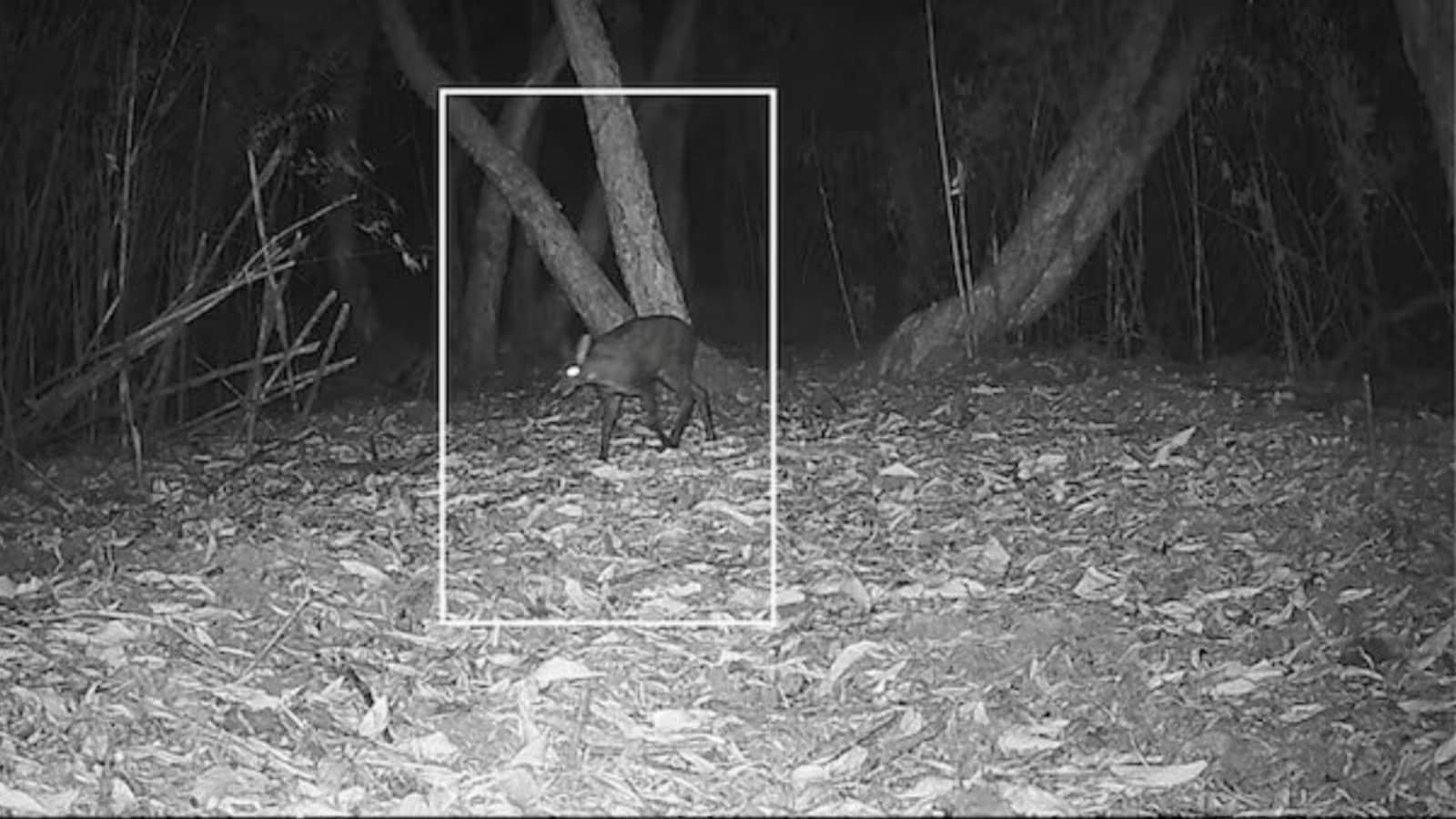
Musk Deer Photographed in Bengal After 70-Year Gap in Neora Valley
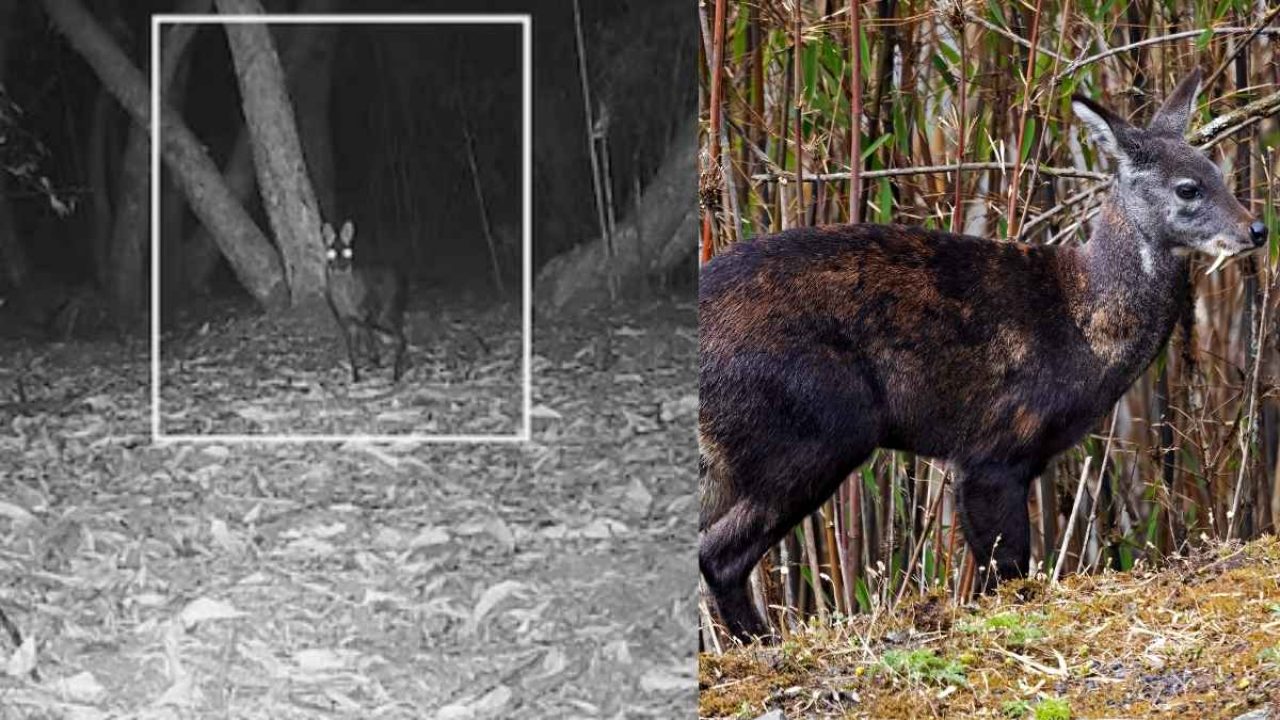 According to the study, the breakthrough occurred during a camera-trapping survey in Neora Valley National Park, conducted in December 2023 as part of the Pan-India Assessment and Monitoring of Endangered Species under the Integrated Development of Wildlife Habitats (IDWH)–Red Panda programme. While musk deer populations have been confirmed in Arunachal Pradesh, Himachal Pradesh, Jammu & Kashmir, Sikkim and Uttarakhand, records from Bengal have remained ambiguous for decades. The last known report dates back to 1955 in Singalila National Park, making the new photographic evidence particularly significant.
During the ongoing survey, a camera trap in Neora Valley National Park—spanning 160 sq km within the Kangchenjunga transboundary landscape—captured six consecutive images of a musk deer on December 17, 2024, at 00:08 hrs. The animal was recorded in a temperate forest at an elevation of 3,112 metres. The deer displayed key features of the genus Moschus, including elongated hare-like ears, absence of antlers and prominent upper canines. However, the nighttime images limited the ability to conclusively identify the exact species.
The study states that the find confirms the continued survival of musk deer in Bengal, overturning the assumption of their disappearance from the state. Experts attribute the animal’s persistence in Neora Valley to the park’s mosaic of temperate, subtropical and tropical habitats, which provide suitable ecological conditions. Wildlife scientists have emphasised the urgent need for further studies to determine the species involved, assess population status and frame targeted conservation strategies.
Commenting on this, Dwija Pratim Sen, Divisional Forest Officer (DFO), Gorumara Wildlife Division, while talking to Millennium Post, stated: “In these regions, the Himalayan white bellied musk deer is found. Preliminary findings are very positive. However, as the image has been captured at night by one camera, multiple camera tracks would be necessary for confirmation. A detailed study of the morphology needs to be done. Musk deer can be found in the core area of Sikkim. The presence of musk deer in the north-west parts of Neora Valley would mean expansion of the core area. As we keep round-the-clock vigil in Neora and poaching is next to nil, we wouldn’t be surprised if there is a presence of musk deer.”
Courtesy & source- Millennium Post
0 Response to " Musk Deer Photographed in Bengal After 70-Year Gap in Neora Valley "
Post a Comment
Disclaimer Note:
The views expressed in the articles published here are solely those of the author and do not necessarily reflect the official policy, position, or perspective of Kalimpong News or KalimNews. Kalimpong News and KalimNews disclaim all liability for the published or posted articles, news, and information and assume no responsibility for the accuracy or validity of the content.
Kalimpong News is a non-profit online news platform managed by KalimNews and operated under the Kalimpong Press Club.
Comment Policy:
We encourage respectful and constructive discussions. Please ensure decency while commenting and register with your email ID to participate.
Note: only a member of this blog may post a comment.