
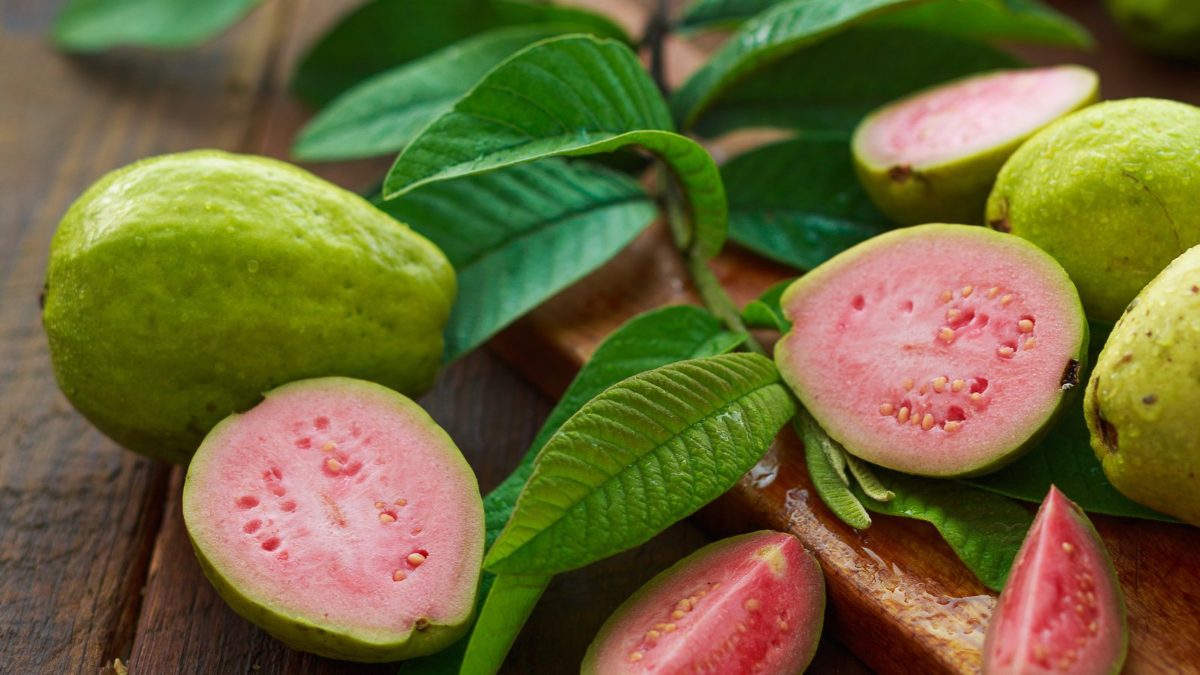
Can a Simple Guava Really Lower Your Cholesterol? Experts Reveal the Truth
A viral claim says guava can cut cholesterol naturally; here’s what evidence and doctors say
Sakshi Srivastava, First Check, November 28, 2025 :
Cholesterol levels are rising, and people often look for different medicines, home remedies, and healthier food options to manage them. But can a simple, everyday fruit help bring cholesterol down naturally?
In a viral reel, Dietitian Shweta J. Panchal discusses how a specific fruit can support cholesterol management while also highlighting key considerations.
According to Panchal, this fruit contains lycopene, antioxidants, and soluble fiber. She claims these nutrients help lower LDL, often called the bad cholesterol, and increase HDL, known as the good cholesterol.
“It has antioxidants and vitamin C. It fights off reactive oxygen species and prevents plaque formation in the arteries,” she further explains. “It binds with excess cholesterol in your gut and prevents it from reabsorption.”
Panchal recommends eating the fruit in the mid-morning or evening for the best benefits. She also adds a caution: “Do not combine it with any milk or milk products, tea, or coffee. It hampers the absorption to a great extent.”
Are Guavas Helpful in Lowering Cholesterol?
An older study conducted on 120 patients with essential hypertension investigated the effects of daily guava consumption over 12 weeks. The participants were divided into two groups: Group A, who included guava fruit preferably before meals as part of a “foods-to-eat” approach, and Group B, who did not.
“Nutrient intakes including saturated and total fat were significantly decreased; carbohydrates, total and soluble fiber, and vitamins and mineral intakes were significantly higher in group A than in group B at 12 weeks,” the study found. “There was a significant net decrease in serum total cholesterol (9.9%), triglycerides (7.7%) and blood pressures (9.0/8.0 mm Hg) with a significant net increase in high-density lipoprotein cholesterol (8.0%) after 12 weeks of guava fruit substitution in group A than in group B.”
The study revealed that “by adding moderate amounts of guava fruit in the usual diet, changes in dietary fatty acids and carbohydrates may occur, providing significant amounts of soluble dietary fiber and antioxidant vitamins and minerals without any adverse effects.”
“There is a greater decrease in lipoprotein metabolism and blood pressures,” it added.
Another 2016 randomized controlled study was conducted on 45 healthy MBBS students, divided into three groups. Group A was supplemented with 400 grams of ripe guava with peel, Group B with guava without peel, and Group C acted as a control.
“Supplementation of ripe guava fruit with peel reduced BMI as well as blood pressure in group A, whereas the FPG, Total cholesterol, and Triglycerides were found significantly increased,” the study found. “Group B registered a significant fall in BMI as well as blood pressure. Fall in FPG level after guava pulp supplementation was not significant. Serum Total cholesterol, Triglycerides, and Low-Density Lipoprotein Cholesterol (LDLc) levels decreased significantly, indicating that guava pulp without peel may have a favorable effect on lipid levels and blood sugar as well.”
The study pointed out that “guava fruit without peel is more effective in lowering blood sugar as well as serum total cholesterol, triglycerides, and LDLc,”
“It increases HDLc levels also,” it added.
Additionally, several randomized controlled trials indicate that consuming 500–1000 grams of guava fruit per day can lower blood pressure and cholesterol levels without reducing high-density lipoprotein cholesterol. A 2022 study also reported that eating ripe guava caused an overall decrease in blood pressure, further supporting its cardiovascular benefits.
Dr. Rahul R Gupta, Director of Cardiology at Gleneagles Hospital, Mumbai, explained that many fruits and vegetables naturally contain fiber and antioxidants, which can help reduce cholesterol levels to a mild extent. “Guavas, in very small studies, have been shown to reduce cholesterol levels by about 5 to 10 percent,” he said. He, however, emphasized that this does not mean guava is a remedy for people with high cholesterol. “It is not that once you start eating guavas, your cholesterol will become normal. It is just a part of overall health,” he added.
Dr. Gupta compared guava’s role in cholesterol management to a team effort. “It is not the captain of reducing cholesterol. It is one of the players who will perform and can help in reducing cholesterol a little bit,” he said.
He cautioned against believing claims that guava alone can completely lower cholesterol without other interventions. “The message should be that it is a healthy fruit to have, and the smaller studies have shown some effects. But it is not a substitute for an overall healthy lifestyle or medications if cholesterol is very high,” he noted.
Does Guava Help Reduce Oxidative Stress in the Body?
The antioxidant properties of guava have also been studied in preclinical and laboratory settings. One 2019 study tested a lycopene-rich extract from red guava (Psidium guajava) in hamsters with experimentally induced high cholesterol. The researchers found that the extract significantly lowered markers of oxidative stress, including plasma malondialdehyde (MDA) and myeloperoxidase (MPO). It also led to a modest improvement in triglyceride levels, though changes in LDL and HDL were limited.
These findings suggest that guava’s antioxidant compounds, such as lycopene, may help counter oxidative stress involved in atherosclerosis. However, the evidence comes from an animal study, not humans.
Most recently, a 2025 study highlighted that “Guava contains flavonoids, a family of polyphenolic chemicals that are well-known for their antioxidant qualities.” They “might aid in” lowering inflammation and oxidative stress in the body.
Dr. Gupta agreed that most of the available evidence comes from small-scale human studies or animal research and that large-scale, firm clinical trials are lacking. He emphasized that as part of a healthy diet, fruits such as guava, apples, and citrus fruits, along with vegetables, contribute to overall health. “Whenever any fruit or anything is high in fiber, the fiber prevents cholesterol absorption from the gut, from the food we are eating,” he explained.
Dr. Gupta added that different fruits contain different antioxidants, such as lycopene, vitamin C, or vitamin A. “When LDL, the bad cholesterol, is oxidized, it becomes atherogenic. By giving fruits and vegetables high in antioxidants, they help in reducing plaque formation,” he said. He clarified that this is not unique to guava alone. “Any food rich in fiber and antioxidants can help reduce plaque formation to a certain extent. It is part of an overall health regime,” he noted.
Regarding claims that combining guava with milk, tea, or coffee hampers nutrient absorption, Dr. Gupta said this was not correct.
“I don’t think so. Tea and coffee contain tannins, which can impact iron absorption, but guava is not iron-rich, so its other beneficial nutrients are generally not affected,” he said, adding that individuals should consult their doctor if they have any concerns or specific health conditions. “Generally speaking, eating guava with tea or coffee is not going to cause any harm,” he concluded.
How to Prevent Cholesterol?
Dr. Gupta explained that cholesterol levels in the body are influenced by two main factors: genetics, which can cause the body to produce more cholesterol, and lifestyle choices, including diet and exercise. He emphasized the importance of a balanced, anti-inflammatory lifestyle. “When you exercise daily, practice mindfulness, yoga, and meditation, and eat a healthy diet rich in fiber from fruits, vegetables, and salads, it helps manage cholesterol naturally,” he said.
Dr. Gupta highlighted the role of diet in controlling cholesterol. “Eating less trans fats, avoiding highly sugary foods, and focusing on complex carbohydrates instead of simple carbs is important. Excess simple carbs can increase triglycerides, which are part of the cholesterol family, while too much saturated fat and trans fat can raise LDL, the bad cholesterol,” he said.
He also pointed to the role of healthy fats and carbohydrates in maintaining heart health. “Good fats are found in almonds, walnuts, flaxseeds, and whole grains. Similarly, complex carbohydrates from fruits, vegetables, and salads provide fiber and essential nutrients, which support overall heart health,” Dr. Gupta added.
Dr. Gupta explained that inflammation plays a critical part in cholesterol imbalance. “Anything that is inflammatory in the body can increase LDL. Lack of exercise, stress, poor sleep, and unhealthy eating habits are all inflammatory. On the other hand, regular physical activity, adequate sleep, mindfulness practices, and a balanced diet are anti-inflammatory and help maintain healthy cholesterol levels.”
He also cautioned against lifestyle risk factors. “Excessive tobacco use, smoking, and an imbalanced diet can raise LDL and reduce HDL, the good cholesterol. Managing your diet, exercise, sleep, stress, and avoiding addictions is key to living a healthy life,” he concluded.
0 Response to " Can a Simple Guava Really Lower Your Cholesterol? Experts Reveal the Truth"
Post a Comment
Disclaimer Note:
The views expressed in the articles published here are solely those of the author and do not necessarily reflect the official policy, position, or perspective of Kalimpong News or KalimNews. Kalimpong News and KalimNews disclaim all liability for the published or posted articles, news, and information and assume no responsibility for the accuracy or validity of the content.
Kalimpong News is a non-profit online news platform managed by KalimNews and operated under the Kalimpong Press Club.
Comment Policy:
We encourage respectful and constructive discussions. Please ensure decency while commenting and register with your email ID to participate.
Note: only a member of this blog may post a comment.