
Borrowed Lives on Fake IDs: SIR Sparks Reverse Migration of 'Illegal Bangladeshis' at Hakimpur Border
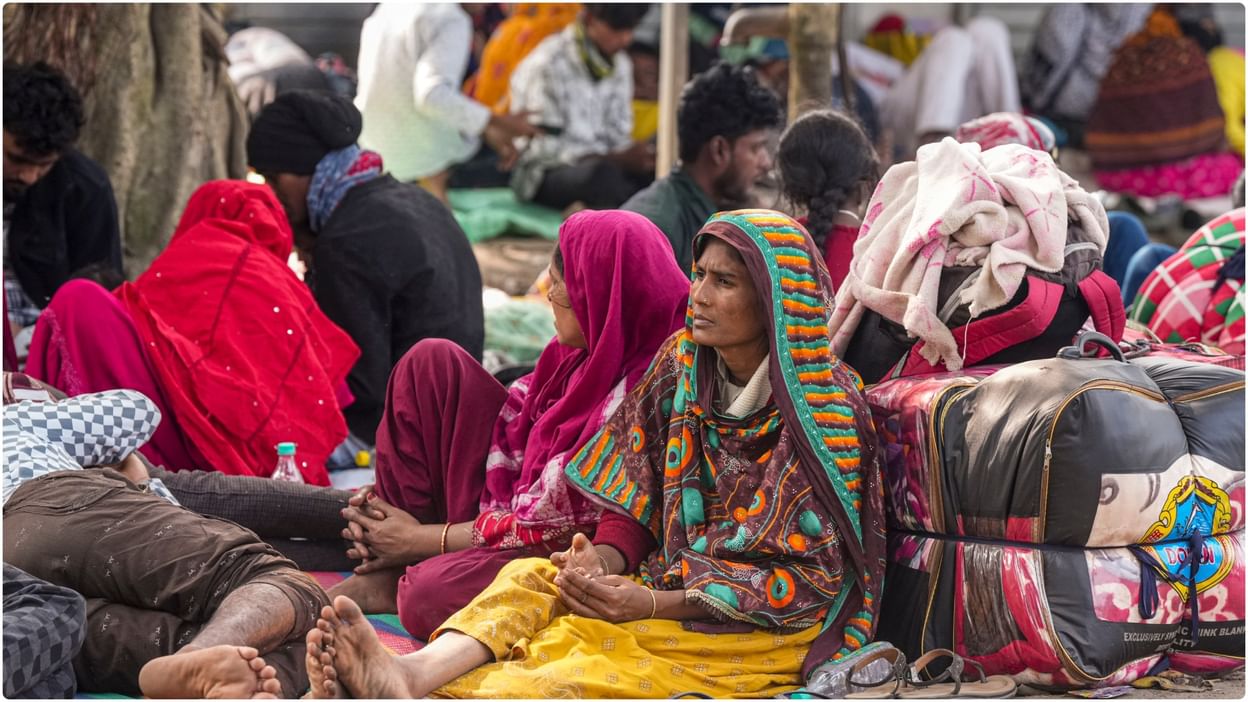
Under a sprawling banyan tree, families with small cloth bags, children clutching plastic bottles, and men waiting on their haunches formed a silent queue on Saturday, repeating a single plea before BSF personnel: “Let us go home.”
Across the South Bengal border belt, security personnel and local residents say the number of undocumented Bangladeshi nationals attempting to return to their country has risen sharply since early November. The movement has taken the shape of an unusual reverse migration, which officials and the migrants themselves link directly to the Special Intensive Revision (SIR) of electoral rolls underway in West Bengal.
Shahin Bibi, identifying herself as a resident of Khulna district who worked as a domestic help in New Town near Kolkata, waited with her toddler by the roadside. “I came because we were poor. I have no proper documents. Now, I want to return to Khulna. That is why I am here,” she said. She earned around Rs 20,000 a month, lived in a shared room with two women, and sent money home regularly.
Many in the queue admit they procured Aadhaar cards, ration cards, or voter IDs through touts and middlemen during their stay in West Bengal. With SIR demanding verification of older documents, several said they preferred leaving rather than risking questioning and possible detention. “No more staying here,” said a young waiter, who lived in Kolkata for eight years.
“If they check old papers, we cannot show anything. Better to leave before they ask questions.” The concern is echoed across the queue of men, women, and families who arrived from areas such as New Town, Birati, Dhulagori, Bamangachi, Ghusuri, and parts of Howrah’s industrial belt. Some had been in the state for over a decade; others arrived only a few years ago.
Border officials confirm the surge. They say 150-200 people a day are being detained and pushed back after verification. The queues began swelling from November 4, the day the SIR exercise began. “We cannot assume everyone here is simply returning home,” a BSF officer said. “Verification is mandatory. Biometric details are sent to district authorities and the state police. That takes time.”
Because of the volume, delays of two to three days are common. People wait outside the outpost gate on plastic sheets, newspapers, or under halted trucks. BSF personnel provide meals to those inside the camp, but people waiting outside depend on roadside stalls or occasional food distribution by local youth and shopkeepers.
A group of men from Satkhira said they paid between Rs 5,000 and Rs 7,000 to enter West Bengal earlier. Others spent significantly more. “I paid nearly Rs 20,000 to get documents,” said 29-year-old Manirul Sheikh, who worked in garment units in Dhulagori and collected scrap iron. “Everyone knew which middleman to approach. But, SIR changed everything. Now, people want to leave before the checking catches up.”
Another man, Imran Gazi, said softly: “I voted in 2016, 2019, 2021, and 2024. But, I have no papers from 2002. Hence, I am leaving.”
The surge has also strained local policing. “We had 95 detainees in two days. No station has the space or facilities to hold so many. We stopped taking custody after that,” an officer said.
On Saturday afternoon, a six-year-old girl tugged at her mother’s scarf and whispered, “I will miss my friends in New Town.” Her mother, carrying a newborn, said they paid 25,000 Bangladeshi taka last year to cross into West Bengal. Her husband, a rickshaw puller, added, “We came because we were poor. Now, we have to go because we are afraid.”
Local shopkeepers and traders say they want the situation to stabilise soon. “Let Delhi, Dhaka, and Kolkata fight their political battles. These people should not be suffering on the road,” said a member of the Hakimpur Traders’ Association, who supervised volunteers distributing khichri.
A semi-blind man who came 18 years ago for medical treatment and later earned his living singing in local trains, sat quietly near the fence. “I want to go back and sing again in Bangladesh,” he said. “But, I do not know if they will accept us after so long.”
Officials said around 1,200 people have returned to Bangladesh after undergoing official procedures in the past six days. Nearly 60 people were still waiting on Saturday.
As the sun dipped behind the barbed fence,a BSF jawan watched the line snake down themud road. “They came in the dark,” he said,referring to years of night crossings. “Now theyleave in daylight, through the proper channel.That is the difference.” For the families waitingunder a banyan tree, clutching small bags,wrapping children against the cold, andwaiting for their turn, SIR is no longer anadministrative exercise. It has become the pushtoward an uncertain return after years spent onborrowed names, documents and soil.Bangladeshi nationals await return to their homeland following the implementation ofthe special intensive revision of electoral rolls, at Hakimpur checkpost in North 24Parganas district, West Bengal, Saturday.
0 Response to " Borrowed Lives on Fake IDs: SIR Sparks Reverse Migration of 'Illegal Bangladeshis' at Hakimpur Border"
Post a Comment
Disclaimer Note:
The views expressed in the articles published here are solely those of the author and do not necessarily reflect the official policy, position, or perspective of Kalimpong News or KalimNews. Kalimpong News and KalimNews disclaim all liability for the published or posted articles, news, and information and assume no responsibility for the accuracy or validity of the content.
Kalimpong News is a non-profit online news platform managed by KalimNews and operated under the Kalimpong Press Club.
Comment Policy:
We encourage respectful and constructive discussions. Please ensure decency while commenting and register with your email ID to participate.
Note: only a member of this blog may post a comment.