
Are Women Hysterical?: A Reflection in Patriarchy
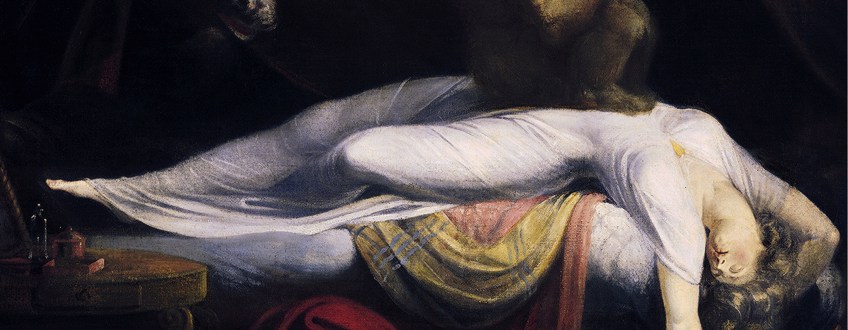
Selection from John Henry Fuseli’s The Nightmare, 1781 via Wikimedia Commons
I have lived my life surrounded by women: my grandmother, mother, stepmother, mother-in-law, aunts, sister, sisters-in-law, friends, wife, daughter, colleagues, students, and the many women who have crossed paths with my thinking and being. I have seen them struggle, nurture, create, and resist. I have seen them weep and rise, bend and endure. Yet, time and again, I have also witnessed how swiftly their emotions are converted into diagnoses. A man gets angry; a woman is overreacting. A man is assertive; a woman is hysterical.
The word hysteria itself has an ancient origin. Derived from the Greek hystera, meaning the womb, it once described a supposedly wandering uterus that caused emotional disturbances in women. The womb, imagined as an unruly organ, became the metaphor for woman’s instability. From Hippocrates to Freud, hysteria was the theatre in which male reason confronted the mystery of the female body. Freud’s hysteric was not a madwoman but one whose body spoke the repressed truths of her desire, a silent protest disguised as illness.
Later, Michel Foucault showed us that “madness” was not a natural state but a construct, a category produced by power to define what is normal. In that sense, hysteria was not about women’s biology; it was about social control. It named the discomfort of patriarchy when faced with women who refused to be docile, silent, or rational in the way men expected. The so-called hysterical woman was simply a woman who disturbed the order of things.
As a man (at least trying to be one in this world of genders) reflecting on these patterns, I realise that hysteria was never a feminine weakness but a masculine anxiety. When a woman expresses anger, frustration, or desire, the patriarchal instinct is to question her sanity rather than her reasons. The label “hysterical” is convenient; it spares us from listening. It converts political and emotional truth into private disorder. It is not the woman who is hysterical; it is society that panics at the sight of her emotion.
This tendency persists even in our modern world. A woman who protests is emotional; a woman who demands equality is aggressive; a woman who speaks too much is irrational. On social media, women who challenge dominant views are mocked, trolled, or dismissed as hysterical feminists. In workplaces, their assertiveness is read as volatility. In homes, their exhaustion is mistaken for moodiness. Hysteria has changed its vocabulary but not its function; it still polices women’s emotional boundaries.
The irony, however, is striking. The same society that condemns women for being emotional depends on their emotional labour. Women are expected to manage feelings, their own and everyone else’s. As mothers, they must soothe; as daughters, they must understand; as partners, they must forgive; as professionals, they must balance. The emotional intelligence that sustains families and institutions is rarely acknowledged as intellect. And when this emotional world collapses, when women finally express fatigue or rage, the system calls them hysterical, again.
If hysteria once belonged to medicine, today it belongs to morality. It is a way of saying: “Stay composed, stay silent, stay sane.” But what if hysteria is not pathology at all? What if it is an ethical gesture, an overflow that refuses to be contained by reason alone? The feminist theorist Hélène Cixous reimagined hysteria as a form of speech, écriture féminine, a writing of the body, an eruption of voice from the place patriarchy calls silence. The hysteric, in her view, is not a patient but a poet, whose cries disturb the logic of order.
When I think of the women in my own life, I do not see hysteria; I see histories. I see my mother’s quiet endurance, my sister’s balance between duty and dream, my friends who transform vulnerability into art and thought. If hysteria means excess, perhaps it is an excess of life, of imagination, of feeling; all that our social norms cannot regulate. The so-called hysterical woman is often the most alive person in the room.
Perhaps it is men, or rather patriarchy, that suffers from its own hysteria: the fear of losing control, the panic of being emotionally exposed. The hysteria of masculinity lies in its inability to accept dependence, tenderness, or fragility. It hides behind reason, objectivity, and control, yet trembles before emotion. The true hysterical subject of history, then, may not be woman, but the social order that cannot bear her freedom.
So, are women hysterical? The answer depends on how we define sanity. If sanity means accepting inequality quietly, then yes, women who resist are hysterical. If sanity means suppressing pain to maintain peace, then yes, women who cry are hysterical. But if sanity means to feel and to express, to speak truth to power, then hysteria is not madness; it is clarity.
The real question, then, is not “Why are women hysterical?” but “Why does society still need women to be hysterical?” What purpose does this label serve except to reassure the fragile architecture of masculine rationality? It allows us to believe that emotion is weakness, that passion is chaos, that reason alone can govern the world. Yet, a world built only on reason is a sterile one, without empathy, without compassion, without renewal.
To reflect on hysteria today is to confront our fear of emotion, our discomfort with the feminine, and our collective failure to humanise reason. It is also to acknowledge that men, too, are impoverished by this divide, forbidden to cry, to care, to feel too much. In denying hysteria, we have denied our own humanity.
Women are not hysterical. They are mirrors in which our collective anxieties shimmer. Their so-called hysteria is the pulse of a society still struggling to reconcile reason with emotion, power with tenderness. In their laughter, tears, anger, and silence lies a form of truth that rationality alone cannot hold. To dismiss that truth as hysteria is to miss the very heart of what it means to be human.
Anil Kumar is a Professor in the Department of Sociology and Social Anthropology at the Central University of Himachal Pradesh. His research interests include social theory, gender, morality, and contemporary Indian society.
0 Response to " Are Women Hysterical?: A Reflection in Patriarchy"
Post a Comment
Disclaimer Note:
The views expressed in the articles published here are solely those of the author and do not necessarily reflect the official policy, position, or perspective of Kalimpong News or KalimNews. Kalimpong News and KalimNews disclaim all liability for the published or posted articles, news, and information and assume no responsibility for the accuracy or validity of the content.
Kalimpong News is a non-profit online news platform managed by KalimNews and operated under the Kalimpong Press Club.
Comment Policy:
We encourage respectful and constructive discussions. Please ensure decency while commenting and register with your email ID to participate.
Note: only a member of this blog may post a comment.