
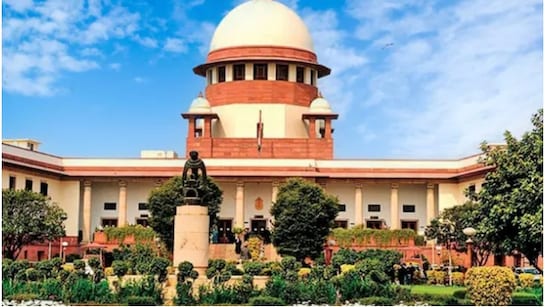
Supreme Court Raises Concerns Over Provisions of U.P. Conversion Act, Quashes Multiple FIRs
Court Highlights Issues of Privacy and State Interference in Religious Conversion Procedure
The Division Bench, comprising Justices J.B. Pardiwala and Manoj Misra, made these observations while considering appeals arising from six FIRs filed under various provisions of the Indian Penal Code (IPC) and the U.P. Conversion Act. The case also involved writ petitions seeking to quash several of these FIRs, lodged in connection with allegations of unlawful religious conversions.
The Allegations: Multiple FIRs, Similar Charges
The first FIR, filed in April 2022, was based on a complaint from the Vice President of the Vishwa Hindu Parishad, alleging a mass religious conversion event at the Evangelical Church of India in Fatehpur, Uttar Pradesh. As investigations progressed, additional FIRs were registered, all alleging unlawful conversion, often by means of allurement or fraudulent inducement. The FIRs involved a mix of accusations, including the taking away of Aadhaar cards, coercion, and offering promises of curing diseases like cancer in exchange for conversion to Christianity. The FIRs were spread across two districts, Fatehpur and Prayagraj, and together formed a complicated web of allegations.
Court's Assessment and Principles Governing Quashing of FIRs
In its assessment, the Court referenced several key legal principles governing the quashing of criminal proceedings, particularly under Article 226 of the Constitution of India and Section 482 of the Criminal Procedure Code (CrPC). It highlighted that the power to quash FIRs is typically exercised to prevent abuse of the judicial process or to secure the ends of justice. The Court also discussed the High Court’s ability to quash an FIR even after a chargesheet has been filed, provided it finds that the FIR does not disclose the commission of an offense or that continuing the proceedings would amount to an abuse of the process of law.
The Court also examined whether criminal proceedings could be quashed by the Supreme Court under Article 32 of the Constitution. It emphasized that when a grievance stems from the violation of a fundamental right, the Supreme Court has the power to intervene directly, even if alternative remedies are available.
Issues with Multiple FIRs for the Same Alleged Offense
One of the major issues addressed by the Court was the registration of multiple FIRs for the same alleged offense. The Court noted that Section 154 of the CrPC does not permit the registration of more than one FIR for the same offense, as this could result in an abuse of investigative powers and undue harassment for the accused. The Court referred to the principle laid down in T.T. Antony v. State of Kerala (2001), which limits the registration of multiple FIRs for the same incident. Based on this principle, the Court quashed several of the FIRs that had been registered in relation to the same alleged conversions.
Quashing of Specific FIRs
The Court's examination led to several significant decisions:
-
First FIR: The Court found that the first FIR, lodged by the Vice President of the Vishwa Hindu Parishad, was filed by an unrelated third party who had no direct connection to the individuals allegedly involved in the conversion. This violated the U.P. Conversion Act’s provision requiring that only an "aggrieved person" or their close relatives can lodge a complaint. The Court also found that the investigation lacked credibility, with material collected during the inquiry falling short of the standard needed to justify criminal prosecution. Consequently, the first FIR was quashed.
-
Second, Fourth, and Fifth FIRs: The Court found these FIRs to be part of a series of similar complaints regarding the same issue and quashed them on the grounds of impermissibility of multiple FIRs for the same offense.
-
Third FIR: While the Court acknowledged the need to prevent abuse of the criminal justice system, it determined that the third FIR involved a considerable delay in filing and was based on materials that lacked credibility. As such, this FIR was also quashed.
-
Sixth FIR: The Court pointed out that this FIR, filed in Prayagraj, also did not meet the statutory criteria required under the unamended Section 4 of the U.P. Conversion Act. It concluded that, although the allegations in the sixth FIR were serious, they did not support a case under the U.P. Conversion Act. However, the Court decided to allow further consideration of other charges under the IPC and ordered the matter to be de-tagged for separate proceedings.
Decision and Impact
The Supreme Court's judgment resulted in the quashing of FIRs 1 to 5, acknowledging the flaws in the procedural handling of these cases. With regard to the sixth FIR, the Court held that it should be reconsidered once all relevant documents were made available.
The ruling has significant implications for the application of the U.P. Conversion Act. It underscores the importance of safeguarding individual rights, particularly the right to privacy and freedom of conscience, while balancing the interests of state regulation. While the Court refrained from ruling on the constitutionality of the U.P. Conversion Act itself, it provided valuable commentary on the potential challenges and limitations of the law's current provisions.
The Court’s approach highlights the delicate balance between state interests in regulating religious conversions and the constitutional guarantees of individual rights, especially in a context where personal beliefs and freedoms are involved.
Conclusion
In the case of Rajendra Bihari Lal v. State of Uttar Pradesh (WRIT PETITION (CRL.) NO. 123 OF 2023), the Supreme Court’s decision reflects a cautious but firm approach to protecting constitutional rights while ensuring that the law is not misused. The quashing of multiple FIRs sends a strong message about the importance of upholding legal standards and preventing abuse in the criminal justice process.
For more details, you can view the full case report here.
0 Response to "Supreme Court Raises Concerns Over Provisions of U.P. Conversion Act, Quashes Multiple FIRs"
Post a Comment
Disclaimer Note:
The views expressed in the articles published here are solely those of the author and do not necessarily reflect the official policy, position, or perspective of Kalimpong News or KalimNews. Kalimpong News and KalimNews disclaim all liability for the published or posted articles, news, and information and assume no responsibility for the accuracy or validity of the content.
Kalimpong News is a non-profit online news platform managed by KalimNews and operated under the Kalimpong Press Club.
Comment Policy:
We encourage respectful and constructive discussions. Please ensure decency while commenting and register with your email ID to participate.
Note: only a member of this blog may post a comment.