
India and Bhutan Forge Historic Railway Links to Strengthen Trade, Connectivity, and Strategic Ties
Two Major Railway Projects: Kokrajhar-Gelephu and Banarhat-Samtse
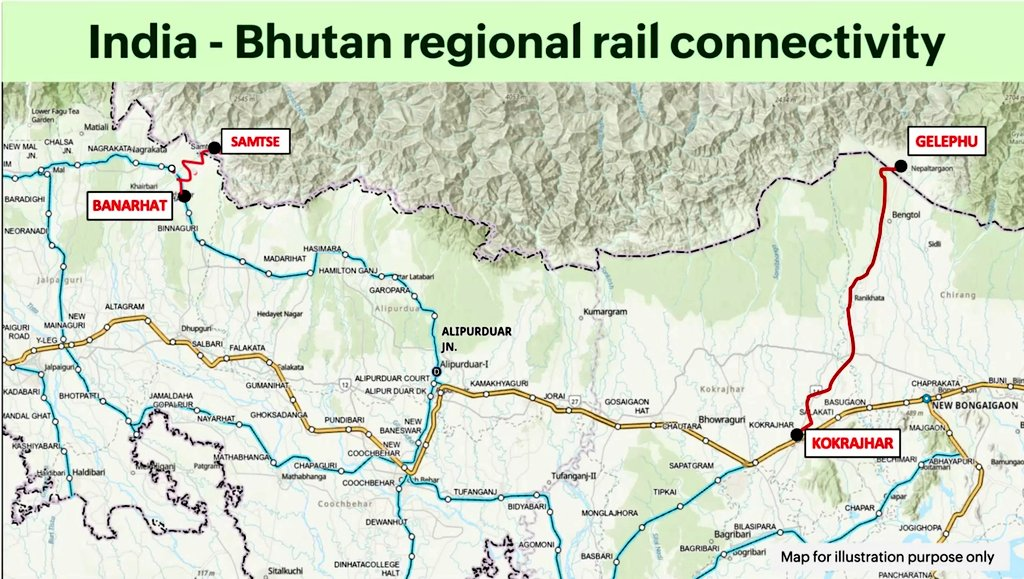
The two projects involve the construction of a 69-kilometer rail line between Kokrajhar (Assam) and Gelephu (Bhutan), and a 20-kilometer line linking Banarhat (West Bengal) with Samtse (Bhutan). The estimated cost for these projects is Rs 3,456 crore for the Kokrajhar-Gelephu line and Rs 577 crore for the Banarhat-Samtse line. The Indian government will fully fund the construction, covering both the infrastructure and the technology.
India’s Railway Minister Ashwini Vaishnaw and Foreign Secretary Vikram Misri officially unveiled the plan during a press conference. The announcement is a significant milestone, as Bhutan currently lacks a railway network, making these links the first-ever rail connections between the two nations.
A Long-Awaited Project Rooted in Decades of Cooperation
The roots of this project go back to 2005 when India and Bhutan signed a Memorandum of Understanding (MoU) to develop cross-border railway links. Since then, multiple feasibility studies and detailed project reports were submitted, and the plans gained momentum following Prime Minister Narendra Modi’s visit to Bhutan in March 2024. The project is a symbol of the strong and historically peaceful relationship between India and Bhutan, which has been rooted in mutual respect and shared security interests.
Gelephu and Samtse: Strategic and Economic Hubs
The decision to connect Bhutan’s Gelephu and Samtse to India’s rail network was driven by the economic significance of these two regions. Gelephu is an emerging “Mindfulness City,” part of Bhutan’s ambitious development project launched in December 2023 by King Jigme Khesar Namgyel Wangchuck. The city aims to blend Bhutanese values with modern technology and commerce, making it a hub for regional trade.
Samtse, located near the Indian border, is being developed as an industrial center, with a focus on manufacturing and exports like dolomite, ferro-silicon, and quartzite. The new rail links are expected to boost the movement of goods and people between India and Bhutan, facilitating trade and regional cooperation.
Connecting India’s Northeast with Bhutan
The Kokrajhar-Gelephu line will span 69 kilometers, connecting Bhutan’s Sarpag district to India’s Kokrajhar and Chirang districts in Assam. The project will have six stations and several key infrastructure features, including two important bridges, 29 major bridges, 65 minor bridges, 39 underpasses, and one overpass. The Banarhat-Samtse line will be 20 kilometers long, with stations at Ambari and Samtse, along with 25 bridges, 37 underpasses, and one major overpass.
Both rail links will be built to accommodate future electrified trains, such as the Vande Bharat Express. Construction is set to begin in 2025-2026, with the Kokrajhar-Gelephu project taking four years to complete, while the Samtse line will be finished in three years.
Geopolitical and Strategic Implications
The new railway projects also carry substantial geopolitical significance. Bhutan shares a border with India and China, with the latter becoming an increasingly influential player in the region. The rail links strengthen India’s ties with Bhutan, enhancing economic connectivity and security cooperation, particularly in light of ongoing tensions with China.
Bhutan is strategically located between India and China, with both countries eyeing the region’s potential for trade and influence. The construction of the rail links underscores India’s commitment to its “Neighbourhood First” policy, which aims to deepen economic and diplomatic ties with neighboring countries and counter China’s growing influence in the region.
Boosting India’s “Act East” Policy and Development of the Northeast
The railway projects are a vital component of India’s broader “Act East” policy, which focuses on enhancing connectivity and fostering cooperation with Southeast Asian nations and their neighbors. The development of infrastructure in India’s Northeast region, which includes states like Assam, Arunachal Pradesh, and Sikkim, is crucial to India’s economic integration and security strategy.
Additionally, these railway projects will boost the “Vikas through Connectivity” agenda, enhancing trade and commerce in the Northeast, which has historically lagged behind other regions of India in terms of infrastructure development. The focus on the Northeast is expected to bring long-term benefits to the region, both economically and socially.
Strengthening India-Bhutan Ties: A Historic Moment
Foreign Secretary Vikram Misri emphasized that the India-Bhutan relationship is one of “exceptional trust, mutual respect, and understanding,” which is reflected in the close ties shared by the two nations. These new railway links will facilitate greater cargo and passenger movement, promoting bilateral trade and people-to-people exchanges.
The establishment of rail connectivity with Bhutan is also aligned with India’s goals for regional stability and cooperation, and it strengthens its position as a confident regional power. Bhutan’s access to India’s vast railway network will help boost its economy and allow for more seamless trade, particularly with third countries like Nepal and Bangladesh.
A Bright Future for Bhutan’s Connectivity and Development
With the completion of these railway links, Bhutan will be better connected to India’s rail network, which spans over 1.5 lakh kilometers. This enhanced connectivity will promote Bhutan’s economic growth, improve mobility, and strengthen its ties with India, paving the way for future collaborations in infrastructure, trade, and security.
As Bhutan continues to modernize and develop, India’s support remains crucial in helping the Himalayan kingdom achieve its long-term goals. This historic rail project represents a key milestone in that journey, marking the beginning of a new era of connectivity, collaboration, and prosperity between the two nations.
The new railway links between India and Bhutan are more than just infrastructure projects; they are a testament to the enduring partnership between the two nations, built on trust, mutual respect, and shared goals. These projects will not only enhance trade and connectivity but also strengthen the geopolitical bonds between India and Bhutan in a region marked by shifting dynamics and rising challenges.
0 Response to "India and Bhutan Forge Historic Railway Links to Strengthen Trade, Connectivity, and Strategic Ties"
Post a Comment
Disclaimer Note:
The views expressed in the articles published here are solely those of the author and do not necessarily reflect the official policy, position, or perspective of Kalimpong News or KalimNews. Kalimpong News and KalimNews disclaim all liability for the published or posted articles, news, and information and assume no responsibility for the accuracy or validity of the content.
Kalimpong News is a non-profit online news platform managed by KalimNews and operated under the Kalimpong Press Club.
Comment Policy:
We encourage respectful and constructive discussions. Please ensure decency while commenting and register with your email ID to participate.
Note: only a member of this blog may post a comment.