
Nepal Unrest: Security Clampdown at India-Nepal Border; SSB & Police on ‘High Alert’
Fresh violence erupted across several Nepalese districts on Tuesday, a day after the capital Kathmandu witnessed pitched battles between demonstrators and police. In the face of mounting chaos, Prime Minister KP Sharma Oli tendered his resignation along with many other Ministers. The former Prime Minister’s house was also set ablaze. According to reports, at least 19 people have been killed in police firing, while more than 250 have been injured in clashes. Additionally, reports state that three policemen were lynched by rioting mobs after they had surrendered on Tuesday evening.
The protests, initially triggered by the government’s ban on 26 social media platforms, including Facebook, WhatsApp, and X, have grown into a wider movement against alleged corruption and inequality under the Oli-led government. Led largely by Gen Z—school and college students—the momentum shows little sign of ebbing. Authorities have imposed curfews in sensitive zones and deployed the Rapid Action Force, along with the Army, to restore order.
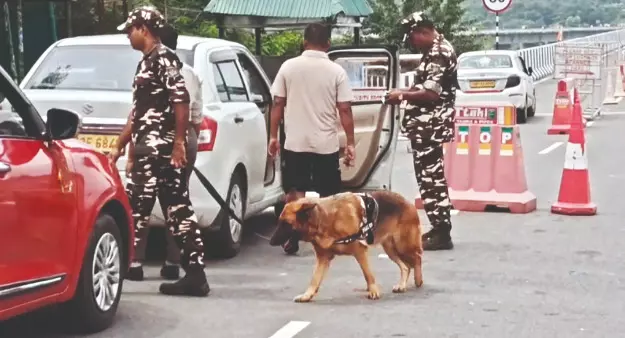
The unrest has prompted Indian security agencies to go on high alert. SSB jawans at Panitanki and Mechi Bridge checkpoints are meticulously recording details of all vehicles and individuals entering India from Nepal. Sniffer dogs are also being used by the SSB. The SSB is on high alert, and Darjeeling district police, especially Khaprail police station, have intensified vigilance in the border belt.
Rajesh Kumar Yadav, Inspector General of Police, North Bengal, visited the border areas. He stated : Several violent incidents have been reported from across the border, but no disturbances have been reported on the international border or on the Indian side of the border. However, we are alert and have increased manpower on this side of the border. Additional forces have been deployed from the police headquarters along with geared-up intelligence machinery. We are working in close coordination with the SSB.”
The India-Nepal border spans 1,751 km and runs along 5 Indian states: Uttarakhand (275 km), Uttar Pradesh (551 km), Bihar (726 km), Bengal (100 km), and Sikkim (99 km). It is an open border and is guarded by the SSB.
The 100-km border in Bengal primarily features the Panitanki-Kakarvitta crossing in the Darjeeling border. Panitanki offers land port facilities and is a vital commercial point for both trade and transit along the Mechi River. The border extends up to Sandakphu, at an altitude of 11,930 ft along the Singhalila Ridge. However, the close proximity of the Panitanki-Kakarvitta border to the Siliguri corridor, popularly known as the Chicken Neck—a narrow strip of land connecting the northeast states with the Indian mainland—makes it a matter of grave concern.
Bengal Chief Minister Mamata Banerjee, on a visit to North Bengal, called for peace, urging residents of the region bordering Nepal to maintain calm and avoid any activities that may create further trouble. She stated: “I urge the residents of the region bordering Nepal to maintain peace and avoid activities that create trouble because it is not our problem. Let normalcy prevail.”
Regarding stranded tourists, the Chief Minister stated: “We have no reports of any stranded tourists.”
0 Response to "Nepal Unrest: Security Clampdown at India-Nepal Border; SSB & Police on ‘High Alert’ "
Post a Comment
Disclaimer Note:
The views expressed in the articles published here are solely those of the author and do not necessarily reflect the official policy, position, or perspective of Kalimpong News or KalimNews. Kalimpong News and KalimNews disclaim all liability for the published or posted articles, news, and information and assume no responsibility for the accuracy or validity of the content.
Kalimpong News is a non-profit online news platform managed by KalimNews and operated under the Kalimpong Press Club.
Comment Policy:
We encourage respectful and constructive discussions. Please ensure decency while commenting and register with your email ID to participate.
Note: only a member of this blog may post a comment.