
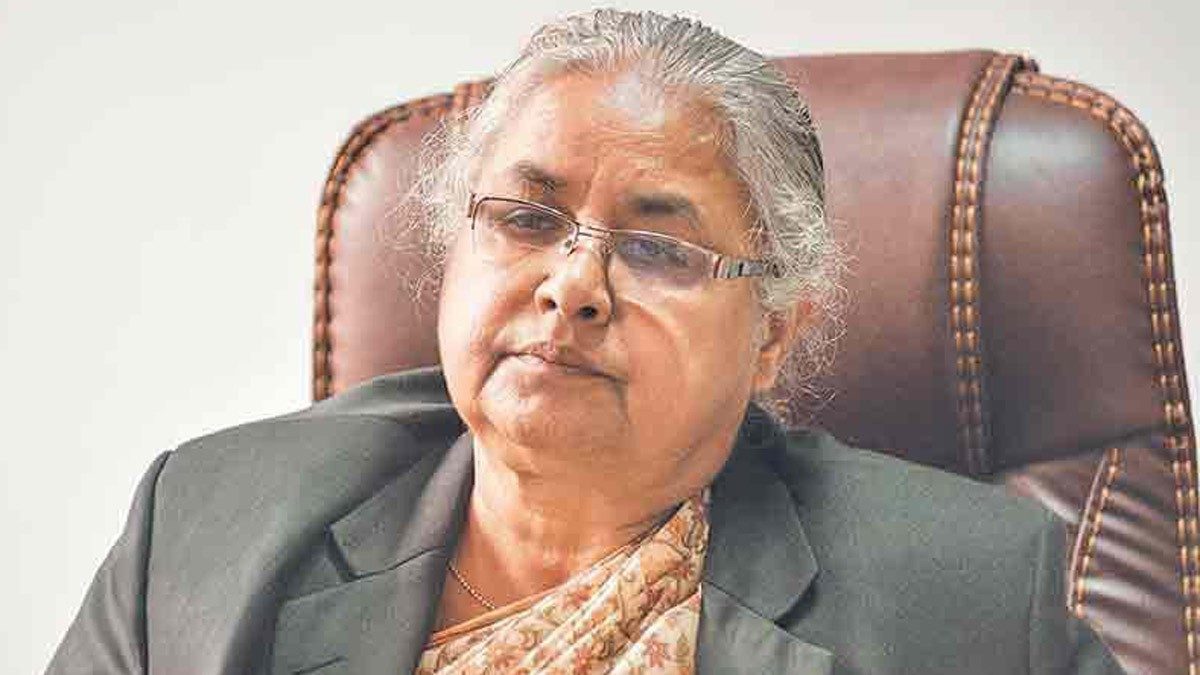
Nepal on the Brink: Former Chief Justice Sushila Karki Poised to Lead Amid Gen-Z Uprising, National Turmoil
The mass demonstrations — spearheaded by Nepal’s politically awakened Gen-Z youth movement — erupted earlier this week after the government imposed a short-lived ban on social media. The ban was swiftly lifted, but the move had already ignited public outrage. What began as peaceful protests quickly escalated into a national uprising, with thousands taking to the streets in Kathmandu, Pokhara, Butwal, and Birgunj, demanding accountability, transparency, and systemic reform.
Over the past four days, at least 34 people have been killed, and more than 1,000 injured in clashes with police and military forces. The Nepal Army, which has temporarily assumed control, is now working to stabilize the country amid calls for constitutional change and the dissolution of Parliament.
The Rise of Sushila Karki
Former Chief Justice Sushila Karki, a respected figure known for her judicial independence, has emerged as the consensus choice to head the interim administration. Media reports indicate she has begun discussions with top military officials and constitutional experts on forming a caretaker government.
In a televised interview with News18, Karki highlighted Nepal’s enduring relationship with India, stating, “There is a lot of respect and love for India. India has helped Nepal a lot.” She also conveyed her admiration for Indian Prime Minister Narendra Modi, saying, “I greet Prime Minister Modi. I have a very good impression of him.”
Karki’s inclusion in the list of potential interim leaders was supported during a six-hour virtual meeting of Gen-Z protest leaders, where her name was discussed alongside Kulman Ghising, the former chief of the Nepal Electricity Authority, and Kathmandu Mayor Balendra “Balen” Shah.
The Collapse of Order
The nationwide unrest has strained the country’s institutions to their limits. According to police sources, approximately 15,000 prisoners escaped from jails across Nepal during the upheaval. While the Nepal Army claims to have recaptured nearly 200 escapees, thousands remain unaccounted for.
In India, the Sashastra Seema Bal (SSB) — the paramilitary force guarding the 1,751 km-long open India-Nepal border — has detained around 60 individuals suspected of fleeing Nepalese prisons. These arrests were made over the past two days from border regions in Uttar Pradesh, Bihar, and West Bengal, and those apprehended have been handed over to local police for questioning.
The SSB, which operates under India’s Ministry of Home Affairs, has deployed around 50 battalions (nearly 60,000 personnel) along the border to prevent further spillover from the unrest in Nepal.
Gen-Z Demands: “This Is a Civilian Movement”
Speaking on Thursday, Gen-Z protest leaders reaffirmed their position that this is a non-partisan, civilian-led movement with no affiliation to existing political parties. They insisted that Parliament be dissolved and the Constitution amended to reflect the will of the people.
"This is purely a civilian movement. Do not politicize it for your vested interests," said one youth leader, emphasizing the need for dialogue, inclusion, and peaceful resolution of the crisis.
Some sections of the movement have proposed Kulman Ghising, credited with ending Nepal’s chronic electricity shortages, as a viable candidate for the interim leadership, reflecting public demand for a technocratic and accountable transitional authority.
Former Monarchy Speaks Out
In a rare intervention, former King Gyanendra Shah issued a statement calling for peace and national unity. "The recent violence, arson, and vandalism during public demonstrations, which caused significant human and material losses, have deeply saddened us. No system or ideology is greater than civic freedom," he said, urging restraint from all sides.
Backdoor Diplomacy and High-Level Consultations
Behind the scenes, President Ram Chandra Paudel has been engaged in intensive consultations with political leaders, legal experts, and the military. On Thursday evening at 7 PM, the President held a key meeting with Speaker Devraj Ghimire, where both parties discussed exploring solutions within the constitutional framework, without dissolving Parliament.
The Speaker reportedly advised the President to consider convening the Parliament, while the President assured his commitment to a constitutional exit from the current crisis. Meanwhile, legal luminaries including Bipin Adhikari, Bhimarjun Acharya, and Purnaman Shakya have met with the President to explore possible constitutional solutions.
Following these consultations, the President also met with former Chief Justice Sushila Karki, believed to be the top candidate to head the interim government, and discussed a way forward grounded in constitutional provisions.
Additionally, Army Chief General Ashokraj Sigdel, who has played a critical role in mediating among the various factions, confirmed that he has been in continuous dialogue with multiple stakeholders, including representatives of the Gen-Z movement. On Thursday evening, he also briefed the President on the ongoing negotiations with youth representatives and political actors.
Curfews and Emergency Measures
In an effort to restore calm, the Nepal Army has declared prohibitory orders in three districts of Kathmandu from 11 AM to 5 PM on Friday, followed by a curfew from 7 PM until 6 AM on Saturday. The military has stated that no gatherings of more than five people will be allowed during this period.
Military spokesperson Assistant General Rajaram Basnet confirmed that essential service personnel — including ambulance drivers, medical workers, journalists, government employees, and security forces — will be allowed to move freely upon showing proper identification.
Civilians will be permitted to buy essential supplies from 7 to 10 AM and again from 5 to 7 PM, after which the curfew will be strictly enforced. The military has indicated that the curfew may be extended based on the evolving situation.
As Nepal stands at a critical political juncture, the actions taken over the next 24 to 48 hours — including the likely swearing-in of Sushila Karki and the decisions from ongoing negotiations — will define the country’s path forward. Whether through constitutional continuity or bold reform, the demand for a just, transparent, and youth-responsive governance system has now become impossible to ignore.
0 Response to " Nepal on the Brink: Former Chief Justice Sushila Karki Poised to Lead Amid Gen-Z Uprising, National Turmoil"
Post a Comment
Disclaimer Note:
The views expressed in the articles published here are solely those of the author and do not necessarily reflect the official policy, position, or perspective of Kalimpong News or KalimNews. Kalimpong News and KalimNews disclaim all liability for the published or posted articles, news, and information and assume no responsibility for the accuracy or validity of the content.
Kalimpong News is a non-profit online news platform managed by KalimNews and operated under the Kalimpong Press Club.
Comment Policy:
We encourage respectful and constructive discussions. Please ensure decency while commenting and register with your email ID to participate.
Note: only a member of this blog may post a comment.