
Nepal Govt Launches Probe into Political Leaders Over Gen-Z Protest Deaths, Illicit Cash, and Possible Passport Freezes
Caretaker PM Karki affirms strong legal action and electoral roadmap amid ongoing investigations
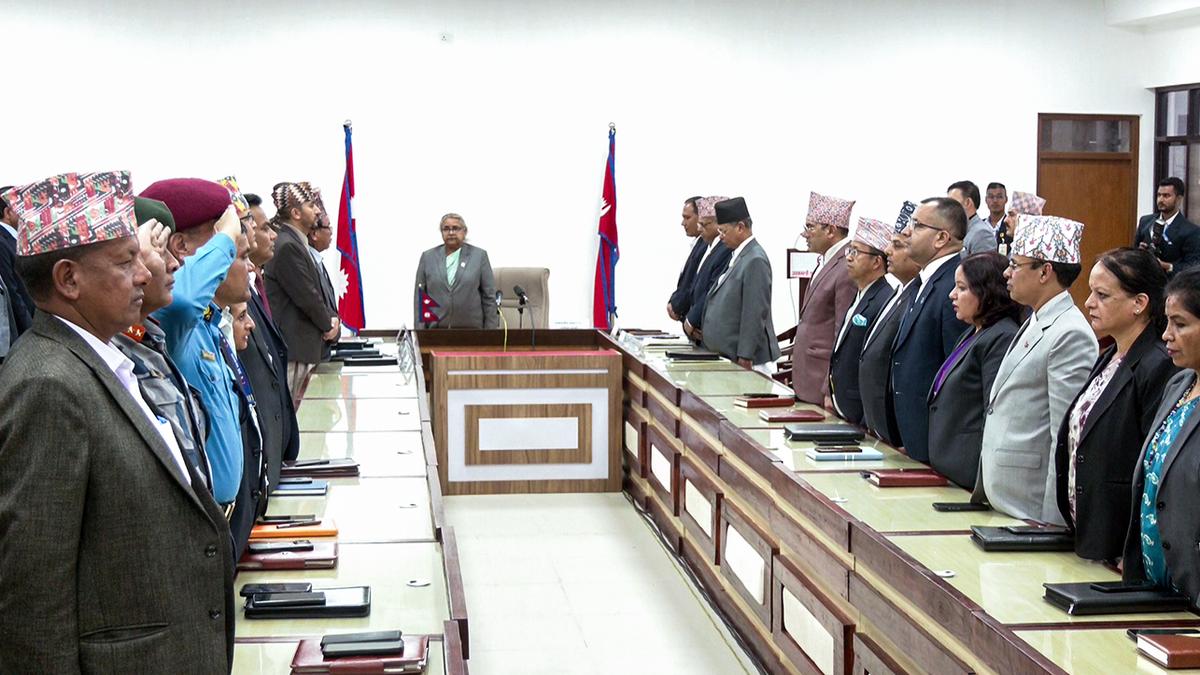
KalimNews, Kathmandu, Sep 25, 2025 : The interim Nepal government has begun formal preparations to investigate several senior political leaders in connection with the deadly Gen-Z protests of September 8 and 9, which resulted in 74 deaths, massive property destruction, and reports of hoarded illicit cash uncovered after arson attacks. Among the developing actions, the government is also reportedly preparing to freeze the passports of key figures under scrutiny.
A government statement issued Thursday said that a commission will be headquartered in the building of the Department of Environment and Science in Babermahal, which will be used to collect damage assessments and demands. The commission has been directed to gather data centrally from various agencies, which have been tasked to provide damage details.
Among those likely to be investigated are former Prime Minister K. P. Sharma Oli and former Home Minister Ramesh Lekhak. They are alleged to have ordered a forceful crackdown on the first day of protests, which led to at least 19 deaths. At a regular briefing, Minister for Communication and Information Technology Jagadish Kharel confirmed that state agencies have begun preliminary work. When asked about reports that leaders’ passports might be frozen, he responded, “What you’ve heard is close to the truth. Agencies are moving ahead, and the Prime Minister has already stated that no guilty person will be spared.”
A high‑level inquiry commission led by former Supreme Court Justice Gauri Bahadur Karki has already been formed. Once sworn in, its members may formally commence investigations, and the government may suspend the passports of those under scrutiny.
Pressure for accountability has also come from Kathmandu Mayor Balen Shah, who reportedly met the Prime Minister and pressed for action against Oli and Lekhak. Similarly, Sudhan Gurung has lobbied for legal proceedings against the former leaders.
Meanwhile, the government is extending its probe beyond the security crackdown to include senior members of the Congress and Maoist parties following reports of large amounts of cash being discovered and burnt inside residences torched by protesters. At the Budhanilkantha residence of former Prime Minister Sher Bahadur Deuba, officials from the Department of Money Laundering Investigation and the Nepal Police’s Central Investigation Bureau (CIB) have reportedly collected evidence after charred stacks of Nepali and foreign currency were found. The discovery has provoked speculation of “cash tunnels” within the compound, though Deuba’s office dismissed the claims as politically motivated and false. Nonetheless, during a virtual meeting of the Nepali Congress, district leaders publicly demanded clarifications. NC General Secretary Bishwa Prakash Sharma also confirmed that state agencies have launched investigations.
Similarly, Deepak Khadka, former Energy Minister, faced inspection of his residence after videos circulated of US dollars being burned and scattered during the violent protests. Maoist Centre chair Pushpa Kamal Dahal’s home in Khumaltar was also searched for evidence of destroyed cash, though officials have not released details.
Political analysts view the government’s willingness to probe high‑level leaders as a striking departure from past practice, where senior politicians were often shielded from accountability.
In a related move, three government investigative departments that had been placed under the Prime Minister’s Office during former Prime Minister Oli’s tenure (2074 BS) have been returned to their original ministries. In Thursday’s cabinet meeting, the interim government decided that the Department of Money Laundering Investigation and the Department of Revenue Investigation would be placed under the Ministry of Finance, while the National Investigation Department (Nepal’s only intelligence agency) would return to the Home Ministry.
Minister Kharel explained that under the Prime Minister’s Office, these agencies had suffered from political interference and reduced efficiency. The Gen‑Z protests, he said, exposed the drawbacks of concentrating oversight in the PM’s Office. Returning them to their rightful ministries, he added, is expected to restore institutional balance and accountability.
The cabinet also designated the Communication and Information Technology Minister Jagdish Kharel as the government’s official spokesperson. It further restored the registration and renewal of online news media to the Department of Information and Broadcasting, reversing a previous policy under the Oli administration that required such registration through district administrations. Kharel clarified that under the Press and Publication Act 2048, the Director General of that department will now act as the local authority for online media registration, eliminating the need to approach district offices.
In humanitarian and relief measures, the cabinet announced that the families of those who died during the Gen‑Z protests on Bhadra 23 and 24 will receive NPR 10 lakh each and additional amounts for funeral rites, food, and transportation costs up to NPR 5 lakh. The interim government will also award special assistance to those whose identities have been confirmed—excluding those who died in escape attempts or were incarcerated.
The total count of deaths in the Gen‑Z protests remains at 74. In her first address to the nation as interim Prime Minister, Sushila Karki reaffirmed the government’s commitment to hold elections by Falgun 21 (March 5, 2026), to act firmly against violence and corruption, and to respect constitutional processes. She emphasized that her caretaker administration is not authorized to change the constitution or governance system — those will be decided by the new Parliament. She also vowed to address public sector inefficiencies, curb corruption, and respond swiftly to public grievances, including delays, bribes, and harassment in service delivery.
Karki, 73, assumed office on September 12 after political turbulence following the protests and the removal of former Prime Minister Oli. She described the Gen‑Z demands — including accountability and justice — as legitimate, and pledged that her government will present clear findings of corruption within a short period, with legal action against the guilty. She also reaffirmed that the interim administration will conclude its term in six months, handing over power to the democratically elected Parliament.
0 Response to "Nepal Govt Launches Probe into Political Leaders Over Gen-Z Protest Deaths, Illicit Cash, and Possible Passport Freezes"
Post a Comment
Disclaimer Note:
The views expressed in the articles published here are solely those of the author and do not necessarily reflect the official policy, position, or perspective of Kalimpong News or KalimNews. Kalimpong News and KalimNews disclaim all liability for the published or posted articles, news, and information and assume no responsibility for the accuracy or validity of the content.
Kalimpong News is a non-profit online news platform managed by KalimNews and operated under the Kalimpong Press Club.
Comment Policy:
We encourage respectful and constructive discussions. Please ensure decency while commenting and register with your email ID to participate.
Note: only a member of this blog may post a comment.