
Mayor Balen Shah Endorses Former Chief Justice Sushila Karki to Lead Interim Government of Nepal
Nepal in Crisis: Gen Z Demands Interim Leadership as Security Forces Collapse
When approached about the proposal, Dharan Mayor Harka Sampang—another prominent youth‑favoured figure—remarked, “Who am I to agree or disagree? The young generation will decide on this,” reflecting the fluidity of leadership discussions within the grassroots movement.
Meanwhile, Nepal has descended into a state of profound insecurity. The national police force has effectively collapsed: stations have been burned, officers attacked or disarmed in the streets, and armored law enforcement disbanded amid chaos. Protesters have not only paraded surrendered officers publicly but also—tragically—killed three Deputy Superintendents of Police (DSPs), with disturbing footage of physical assaults circulating widely.
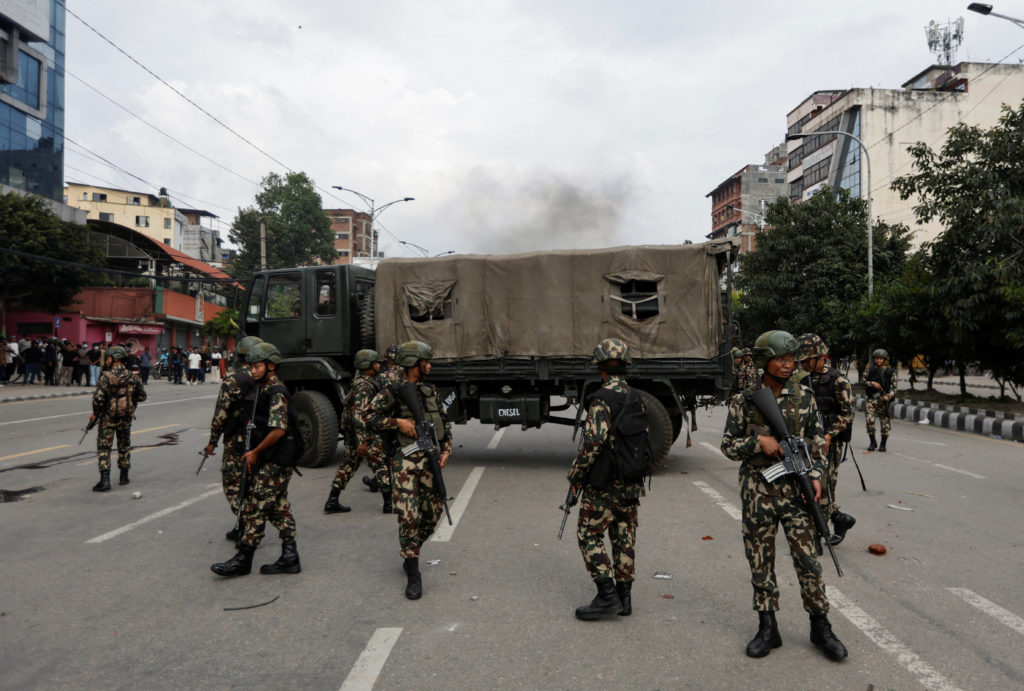
Kathmandu’s streets lay eerily deserted, wrapped in thick smoke and punctuated only by the distant hum of military vehicles—as citizens scanned for law enforcement presence that had effectively vanished. Despite violent protests engulfing the city, there was no trace of police officers on the roadways, in the neighborhoods, or at stations. Instead, armored soldiers took over—guarding key government buildings and enforcing an indefinite curfew under tense silence.
Traffic ground to a standstill as blockades, burning barricades, and abandoned vehicles turned thoroughfares into impassable stretches. Even essential services like ambulances and airport-bound shuttles were unable to move, as there were no police to direct or manage disruptions
Meanwhile, police stations—once symbols of local authority—stood empty or were destroyed, with many damaged by fire and vandalism. With law enforcement incapacitated or absent, protesters effectively seized control, parading surrendered officers, attacking stations, and in some tragic cases, committing lethal violence and killings.
In response to the security vacuum, the Nepal Army has taken control, transporting former Prime Minister KP Sharma Oli and other political leaders to protective custody at the Army Command and Staff College in Shivapuri. These evacuations followed reports of threats to their safety and arson attacks on their residences. Oli, in a personal letter addressed to the youthful protesters, confirmed his secluded location and urged calm, offering a rare glimpse into the typically closed affairs of high politics.
With law enforcement incapacitated and political leadership in hiding, the army remains the sole institution capable of restoring order—a role that observers say is being exercised cautiously but authoritatively amid continuing turmoil and an uncertain transition.
On September 10, 2025, in Kathmandu, the nation stood at the cusp of an extraordinary political transformation ignited by an unprecedented uprising led predominantly by Generation Z. The dramatic fallout from mass protests—initially sparked by a sweeping ban on social media platforms and longstanding grievances over government corruption—precipitated the resignation of Prime Minister K. P. Sharma Oli and plunged the country into an urgent search for stabilizing leadership.
Amid escalating pressure and demands for reform, Kathmandu’s mayor, Balendra “Balen” Shah, publicly declared his full support for the proposal by Gen Z activists to appoint former Chief Justice Sushila Karki as the head of an interim, electoral government tasked with guiding the nation toward fresh elections.
The Gen Z youth movement had previously selected Karki—Nepal’s first female chief justice—as their preferred interim leader during a nearly four‑hour virtual consultation, citing her independent stature and unifying reputation. She was proposed to the Chief of Army Staff, General Ashok Raj Sigdel, as the figure most suited to guide the nation toward institutional renewal.
Following mass demonstrations that turned deadly—claiming at least 30 lives and injuring more than a hundred in Kathmandu alone—government buildings, including the parliament and party headquarters, were set ablaze, and the army was deployed to impose curfews and restore order. In the ensuing security operations, 27 individuals were detained on charges of arson, looting, and destructive behavior, and 31 firearms were recovered across Kathmandu and Pokhara.
The situation rapidly spiraled beyond control as law enforcement forces effectively collapsed, with reports of police stations across Kathmandu being burned, officers attacked, disarmed, beaten, paraded in public, and in some tragic instances, killed in mob violence.
One horrifying video, widely circulated, showed a DSP’s body being mauled, while other footage captured officers surrendering defenselessly to enraged crowds. Only the central police headquarters in Naxal and a handful of officers remained protected, some thanks to interventions by Good Samaritans. In the chaos, protestors systematically sought out police personnel who had fired on them, including students and youth not involved in violence, and incidents of retaliatory aggression amplified the breakdown of law and order.
Meanwhile, medical responders reported that 23 injured police officers and three civilians were receiving care in military hospitals.
Nepal stood on a precipice as Gen Z pushed forward a movement that combined the demand for digital freedom with deep-seated frustration over corruption and political stagnation, leaving the country’s institutions in flux.
0 Response to "Mayor Balen Shah Endorses Former Chief Justice Sushila Karki to Lead Interim Government of Nepal"
Post a Comment
Disclaimer Note:
The views expressed in the articles published here are solely those of the author and do not necessarily reflect the official policy, position, or perspective of Kalimpong News or KalimNews. Kalimpong News and KalimNews disclaim all liability for the published or posted articles, news, and information and assume no responsibility for the accuracy or validity of the content.
Kalimpong News is a non-profit online news platform managed by KalimNews and operated under the Kalimpong Press Club.
Comment Policy:
We encourage respectful and constructive discussions. Please ensure decency while commenting and register with your email ID to participate.
Note: only a member of this blog may post a comment.