
First Full West Bengal Budget of BJP ruled WB Government Unveils with Focus on Welfare, Jobs, Infrastructure and Fiscal Reform
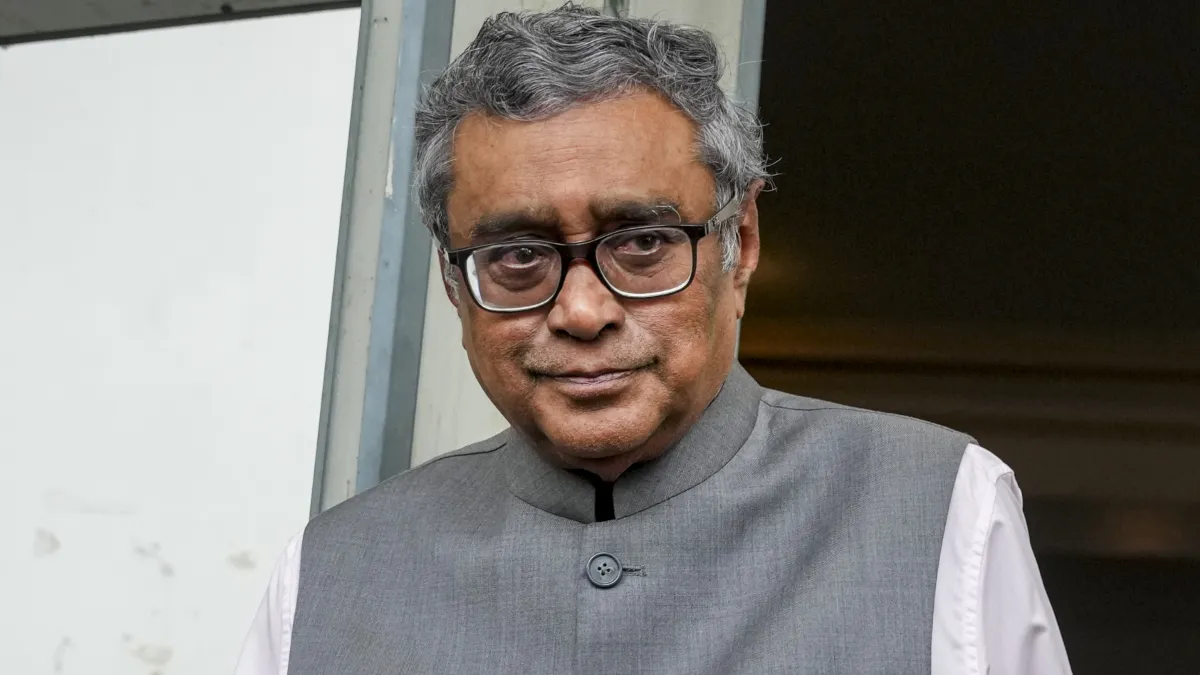
Presenting the Budget on behalf of the government led by Chief Minister Suvendu Adhikari, Dasgupta said the administration had inherited a debt burden of approximately ₹8.15 lakh crore to ₹8.55 lakh crore, but remained committed to continuing all existing social welfare schemes while pursuing economic growth and financial discipline. He stated that the government's mission was to restore Bengal’s glory and build a “Viksit Bengal” as part of a “Viksit Bharat.”
One of the most significant announcements was the allocation of ₹36,000 crore for the Annapurna Yojana, which has replaced the previous Lakshmir Bhandar scheme. The government reaffirmed its commitment to supporting women through direct financial assistance and social security measures.
Women received special attention in the Budget. The government allocated ₹550 crore for completely free bus travel for women across the state and announced the introduction of a Pink Card to facilitate the benefit. Scholarships of ₹50,000 will be provided to girl students studying in government and government-aided schools. Women's universities will be established in Contai, Kaliachak and Falta, while sanitary vending machines will be installed in schools and colleges. Financial assistance will also be provided to homemakers interested in starting cloud kitchen businesses, encouraging women-led entrepreneurship.
The government announced a substantial increase in social welfare benefits. Monthly allowances for senior citizens, widows and persons with disabilities will rise by ₹500. Retired journalists will receive a monthly pension of ₹5,000, while individuals who were imprisoned for political reasons will be entitled to ₹10,000 per month.
A major relief was announced for government employees and pensioners. Dearness Allowance (DA) will be increased by 20 percent, raising the total DA entitlement to 38 percent. The revised rate will come into effect from October 1, 2026. Pensioners will receive a corresponding increase in Dearness Relief.
Employment generation emerged as one of the central themes of the Budget. Dasgupta announced that the government would recruit one lakh people to fill vacant government posts. Of these, 33 percent of the positions will be reserved for women, while 10 percent of applicable vacancies will be earmarked for Agniveers. The recruitment drive will include 20,000 positions in the police department and 50,000 teaching and non-teaching posts. The existing five-year relaxation in the upper age limit for government recruitment will continue for another two years.
The government also announced financial support for unemployed youth through the Bhorsa Karmasathi Scheme, under which eligible beneficiaries will receive ₹3,000 per month.
Several categories of workers will benefit from enhanced remuneration. Monthly salaries of civic police personnel, home guards and Green Police workers will increase by ₹2,000 from August 2026. Civic volunteers, NVF personnel, Prani Bandhu and Prani Mitra workers will also receive an additional ₹2,000 per month. ASHA and Anganwadi workers will receive a ₹5,000 increase in their honorarium, while para-teachers will receive an additional ₹5,000 per month. Cook-cum-helpers working under the PM POSHAN programme will receive a ₹1,000 increase in their monthly remuneration.
The Budget also announced a significant increase in the annual MLA Local Area Development Fund, raising it from ₹70 lakh to ₹1 crore per legislator.
In the housing sector, the government revealed that 25 lakh additional beneficiaries would receive assistance under the Pradhan Mantri Awas Yojana. The number of workdays under the employment guarantee programme has been increased from 100 days to 125 days, while a welfare board will be established for gig workers. Special facilities, including free charging points and drinking water arrangements, will be created for gig workers across the state.
Infrastructure development featured prominently in the Budget. The government plans to establish a greenfield airport near Kolkata, identifying 1,000 to 1,500 acres of land in Kalyani for the project. Additional airports are proposed in Purulia, Balurghat and Malda under the Centre’s UDAN scheme, while Cooch Behar Airport will be expanded with an allocation of ₹10 crore. The state will also provide land to the Hasimara and Kalaikunda Air Force Stations for expansion.
To improve connectivity, the government allocated ₹900 crore for an elevated corridor between Chingrighata and New Town in Kolkata and ₹1,200 crore for a new bridge over the Bhagirathi River. Studies will be conducted for metro rail projects in Durgapur, Asansol and Siliguri, while a four-lane bridge over the Mayurakshi River in Birbhum has also been proposed.
The Budget announced the establishment of an integrated deep-sea port at Dadanpatrabarh in Purba Medinipur, a project expected to significantly strengthen Bengal’s maritime economy and industrial development.
In education and higher learning, the government proposed the establishment of a new IIT, IIM, and AIIMS in North Bengal. Two Kendriya Vidyalayas and a Tribal University will be set up in Jhargram. Additional medical colleges will be established in Kalimpong and Dakshin Dinajpur, while hospitals in Haripal, Bamangola and Digha will be upgraded and modernised.
The state also announced the launch of a dedicated Bengal AI Mission to promote artificial intelligence, innovation and digital technology. A new Startup Policy will be introduced, supported by two funds worth ₹40 crore and ₹60 crore, bringing the total startup allocation to ₹100 crore. The government also proposed reviving the historic Calcutta Stock Exchange to boost investment and financial activity.
Agriculture received a substantial boost through an annual assistance of ₹3,000 per farming family for seed purchases. Electricity subsidies will be provided for submersible pumps, and an Annapurna Income Protection Scheme will be launched. Cold storage facilities will be created for potato farmers, while flower cultivation clusters will be developed in Howrah, Nadia and Purba Medinipur.
To strengthen flood protection, the government allocated ₹1,000 crore for the construction of a 60-kilometre embankment in the Sundarbans. The long-pending Ghatal Master Plan will also be implemented with Central Government assistance, backed by an allocation of ₹1,200 crore.
The Budget introduced several law-and-order initiatives. Every subdivision in Bengal will have a dedicated women’s police station, while every police station will establish a women’s help desk. Special Durga Suraksha Squads, comprising women police personnel, will patrol crowded urban areas and public spaces.
Tourism and cultural development also received attention. The government announced plans for a global branding campaign centred on Durga Puja, alongside the preservation and promotion of heritage and pilgrimage destinations including Kalighat, Tarapith, Kankalitala and Madan Mohan Temple. New pilgrimage circuits linked to Sri Chaitanya Mahaprabhu and the Shakti Peeths will be developed. Darjeeling will be promoted as an eco-adventure tourism destination, while a tiger safari will be established at Jhargram Zoo.
In another significant policy announcement, the government declared that no liquor shop licence would be granted within one kilometre of a school, while within the Kolkata Municipal Corporation area the minimum distance requirement will be 500 metres.
The Budget further announced that July 6, the birth anniversary of Syama Prasad Mookerjee, will be observed as a state government holiday. An allocation of ₹200 crore has been proposed to preserve his ancestral home at Zirat and develop a memorial complex, library and park in his honour.
The Finance Minister described the Budget as a blueprint for economic revival, employment generation and social welfare, asserting that the government intends to maintain welfare programmes while simultaneously creating jobs, attracting investments and improving Bengal’s fiscal health over the coming years.
0 Response to "First Full West Bengal Budget of BJP ruled WB Government Unveils with Focus on Welfare, Jobs, Infrastructure and Fiscal Reform"
Post a Comment
Disclaimer Note:
The views expressed in the articles published here are solely those of the author and do not necessarily reflect the official policy, position, or perspective of Kalimpong News or KalimNews. Kalimpong News and KalimNews disclaim all liability for the published or posted articles, news, and information and assume no responsibility for the accuracy or validity of the content.
Kalimpong News is a non-profit online news platform managed by KalimNews and operated under the Kalimpong Press Club.
Comment Policy:
We encourage respectful and constructive discussions. Please ensure decency while commenting and register with your email ID to participate.
Note: only a member of this blog may post a comment.