
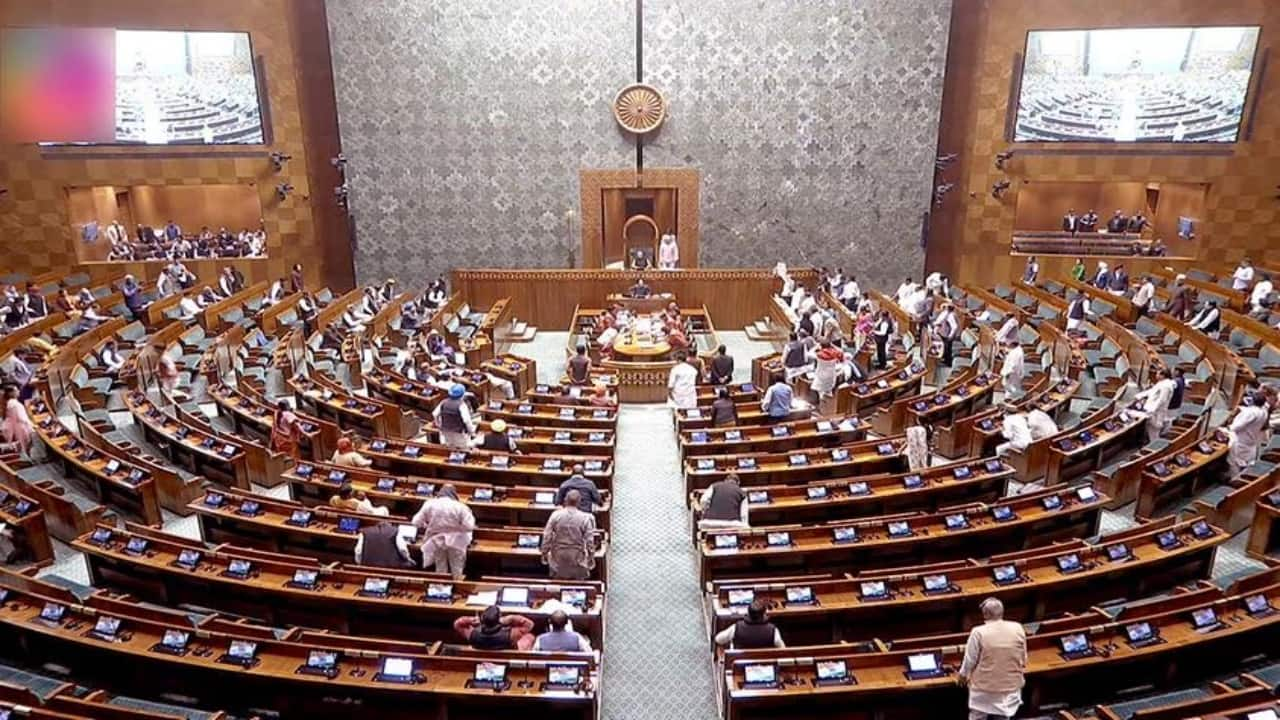
Lok Sabha Seats Likely to Rise to 850 to Implement 33% Women’s Reservation Before 2029 Polls
PTI, April 14, 2026, New Delhi : Lok Sabha seats will be increased to a maximum of 850 from the current 543 to "operationalise" the women's reservation law before the 2029 parliamentary polls following a delimitation exercise to be carried out on the basis of last published census.
According to the draft Constitution amendment bill, which will be introduced and expected to be passed in the upcoming special sitting of Parliament, seats would also be increased in state and Union territory assemblies to accommodate 33 per cent reservation for women.
The seats reserved for women in Lok Sabha and legislative assemblies "shall be allotted by rotation to different constituencies in a state or Union territory," the bill circulated among Lok Sabha members said.
Besides other provisions, the bill seeks to amend Article 81 of the Constitution.
It states that "The House of the People (Lok Sabha) shall consist of not more than 815 members chosen by direct election from territorial constituencies in the states; and not more than 35 members to represent the Union territories, chosen in such manner as Parliament may by law provide."
NDA sources, meanwhile, explained that the final number of seats will be determined by the Delimitation Commission, hence, the bill does not specify an exact seat count or a fixed percentage (such as 50 per cent).
The figure of 850 represents only the upper limit for the total number of Lok Sabha seats.
Seat allocation will be based on proportional representation and southern states are likely to benefit under this formula.
The 2011 Census is being used as the reference point.
Due to more effective population control in southern states, they could see a relative advantage in seat allocation compared to northern states, where population growth has been higher.
Expressing scepticism, opposition has questioned the principle being planned for delimitation.
Two prominent non-BJP chief ministers from the south, M K Stalin and A Revanthy Reddy, on Tuesday sharpened their attack against the Centre over delimitation, with the Tamil Nadu chief minister warning of "massive agitation" if the state was harmed and his Telangana counterpart flagging "injustice".
Separately, the Congress said when the intent behind a bill is mischievous and the content of it is devious, the extent of damage to parliamentary democracy is enormous.
The government will have to carry out back channel talks to get the Constitution amendment cleared.
The delimitation commission bill and the enabling bill for Union territories with assemblies are ordinary bills which can be passed by a simple majority.
Amending the Constitution requires a special majority in both Houses of Parliament: a majority of the total membership (more than 50 per cent) and a two-thirds majority of members present and voting.
The total strength of NDA in Lok Sabha stands at 292, while the major opposition parties have 233 MPs.
According to the bill, the expression "population" means the population as ascertained at such census "as Parliament may by law determine", of which the relevant figures have been published.
As of now figures of 2011 Census are available. The 2027 Census exercise, which began on April 1, is ongoing.
The government plans to bring a Constitution amendment bill, a bill on delimitation law and an enabling bill to apply the proposed law in Delhi, Jammu and Kashmir and Puducherry — three Union territories with legislature — on Thursday in Lok Sabha to fast track implementation of the women's reservation Act of 2023.
Prime Minister Narendra Modi had said this week that amendments to the 'Nari Shakti Vandan Adhiniyam' should be passed in the three-day special sittings of Parliament, beginning April 16, and "any further delay will be unfortunate and a gross injustice to the women of India".
According to the statement of objects and reasons of the draft Constitution amendment bill, the next census and the consequential delimitation exercise thereafter will take considerable time and thus delay the effective participation of women in democratic polity.
Hence, the objective of the proposed bill is to operationalise one-third reservation for women, including women belonging to the Scheduled Castes and the Scheduled Tribes, in the House of the People and the legislative assemblies through delimitation based on the latest census figures.
The reservation of seats for women in Lok Sabha and legislative assemblies will end after 15 years from the commencement of the women's reservation law of 2023 unless Parliament extends the period.
In September 2023, Parliament passed the 'Women's Reservation Act', commonly known as the 'Nari Shakti Vandan Adhiniyam', marking a significant step towards enhancing women's representation in legislative bodies.
The Act provided for the reservation of one-third of seats for women in Lok Sabha and state legislative assemblies.
Under the current law, the reservation for women would not have become enforceable before 2034, as it was tied to the completion of the delimitation exercise post 2027 Census.
0 Response to "Lok Sabha Seats Likely to Rise to 850 to Implement 33% Women’s Reservation Before 2029 Polls"
Post a Comment
Disclaimer Note:
The views expressed in the articles published here are solely those of the author and do not necessarily reflect the official policy, position, or perspective of Kalimpong News or KalimNews. Kalimpong News and KalimNews disclaim all liability for the published or posted articles, news, and information and assume no responsibility for the accuracy or validity of the content.
Kalimpong News is a non-profit online news platform managed by KalimNews and operated under the Kalimpong Press Club.
Comment Policy:
We encourage respectful and constructive discussions. Please ensure decency while commenting and register with your email ID to participate.
Note: only a member of this blog may post a comment.